Summarise this article with:
 ChatGPT
 Mistral
 Claude
 Perplexity
 Grok
Craving a bit of deep rest? Curious about a massage that feels more like a gentle wave than hard work on your muscles? That’s the Californian massage in a nutshell.
In this guide, we’ll explain what it actually is, how it compares to firmer styles like Thai massage, what a session feels like from start to finish, and how to bring that calm straight to your own living room.
What Is a Californian Massage?
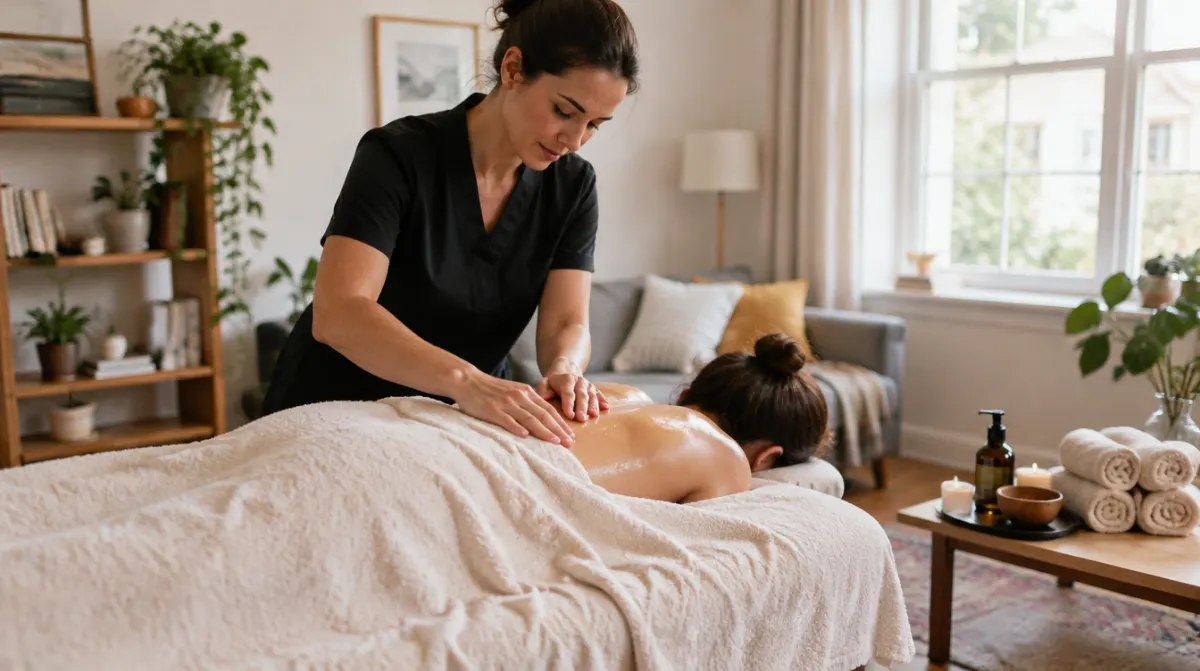
Think of it as the massage equivalent of a long exhale. A Californian massage is a holistic, full-body treatment built on long, gentle, enveloping strokes designed to soothe both body and mind, rather than dig into tight spots.
The story behind it is rather lovely: it was born in the 1970s at the Esalen Institute in Big Sur, California, during the Human Potential Movement, a time when therapists were exploring new ways to connect physical touch with emotional wellbeing. That’s where the “Californian” in the name comes from. In Europe, you’ll sometimes hear it called “sensitive massage,” a nod to its gentle, intuitive style of massage therapy that treats you as a whole person, not just a set of muscles.
A few things to know:
- Gentle, not deep: pressure stays light and flowing, never sharp or probing.
- Whole-person focus: the aim is relaxation and reconnection, not just muscle relief.
- Warm oils: smooth, continuous strokes glide easily over the skin.
- Suits all ages: a soft enough technique for almost anyone to enjoy.
Californian Massage vs Thai Massage: What Are the Key Differences?
If you’ve narrowed your choice down to these two, the decision really comes down to what your body is asking for. A Californian massage traces its roots back to Swedish massage, but softened further into long, continuous, fluid movements that glide across the whole body, so you stay on the massage table throughout, with the therapist maintaining hands-on contact from start to finish. Thai massage works quite differently: it’s more active, involving stretching, pulling and pressure-point work, often performed on a mat with you fully clothed.
Here’s how the two compare at a glance:
| Californian massage | Thai massage | |
|---|---|---|
| Pace | Slow and flowing | Brisker, more dynamic |
| Pressure | Light to medium | Firm, targeted |
| Main goal | Deep relaxation | Flexibility and mobility |
| Best for | Unwinding, easing mental load | Stiffness, tight joints |
| Clothing/oils | Minimal clothing, warm oils | Loose clothing, no oils |
Neither technique is “better,” they simply serve different needs.
How Does a Californian Massage Session Work?
Picture this: dim lighting, soft music, the faint scent of warm oil in the air. That’s the setting you’re stepping into. You’ll lie on a comfortable massage table, and your therapist will use warm oils to glide long, enveloping strokes over your whole body, from shoulders down to your toes and back again.
There’s no rushing here. Every movement flows into the next, which is exactly what makes a Californian massage session so effective at easing tension and boosting circulation. Over time, this rhythmic, whole-body approach also builds body awareness, helping you notice where you’re holding stress before it builds up.
This gentle technique is not just about the hour on the table, either. Many people find it deeply relaxing and report feeling noticeably lighter afterwards, while the steady, hypnotic rhythm encourages deep relaxation that many people find helps them sleep better that night.
Before your session, find a quiet spot, switch your phone to silent, and tell your therapist the pressure you prefer, and don’t be shy about telling your therapist your preferred pressure.
Is a Californian Massage Right for You?
Here’s the truth: you don’t need to be a regular spa-goer to enjoy this one. Californian massage suits busy parents running on empty, professionals juggling endless to-do lists, and anyone simply carrying too much on their mental load right now.
It’s gentle enough for all ages, too. If you’re pregnant, check with your midwife or GP first, and let your therapist know so they can adapt the session.
So if you’re after deep, targeted muscle work, this might not be it. But if what you’re craving is genuine rest, a moment to switch off and let your body recover, clients consistently find this the gentlest, most welcoming way in. This is for you too.
Enjoy a Californian Massage at Home
Why fit a spa trip into an already packed week when the calm can come to you? With Wecasa, certified massage therapists arrive at your door for a session tailored to how you’re feeling that day, no travelling, no rushing home after.
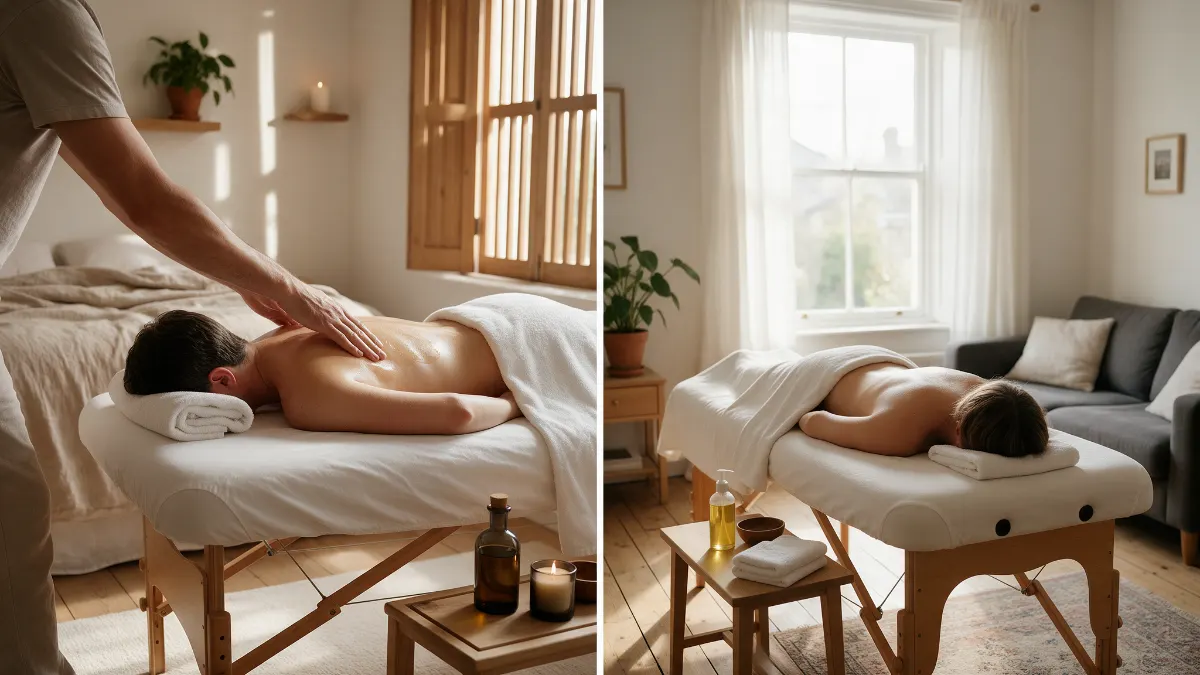
Sessions typically run 60, 75 or 90 minutes, with prices starting from £59.90 Booking takes less than a minute:
- Enter your postcode and select Californian massage as your service.
- Pick a date and time that suits your schedule.
- Add your payment details securely online.
- Relax while a qualified therapist arrives at your door, ready to begin.
Fancy trying it for yourself? You can book a Californian Massage in just a few clicks.
Frequently Asked Questions
How long does a Californian massage last?
Most sessions run 60, 75 or 90 minutes. If it’s your first time, 60 minutes is a lovely introduction; choose 90 if you want the full-body technique to really sink in and leave you properly unwound.
Do you use oil during a Californian massage?
Yes, warm vegetable oils are standard. They help your therapist’s hands glide smoothly through the long, enveloping strokes. Clients can always ask for a lighter or heavier touch of oil depending on skin sensitivity or preference.
Is a Californian massage good for stress and sleep?
Absolutely. The slow, rhythmic pace calms your nervous system and eases physical tension, which often translates into better, deeper sleep afterwards, especially if you book an evening session.