Summarise this article with:
 ChatGPT
 Mistral
 Claude
 Perplexity
 Grok
Grok
Let’s be honest — even if you wipe down your bathroom every week, there comes a point when a surface-level clean just doesn’t cut it anymore. Soap scum builds up behind the taps, grout lines start turning grey, and that faint whiff of mildew creeps in no matter how much air freshener you spray. That’s when it’s time for a proper deep clean bathroom session.
Don’t worry — it doesn’t need to take all day or cost a fortune. In this guide, we’ll walk you through exactly how to deep clean a bathroom from top to bottom, with practical tips, a printable checklist, and the best products to get the job done.
Why You Need to Deep Clean Your Bathroom Regularly
Your bathroom might look clean on the surface, but germs and bacteria love warm, damp environments. Research shows that a toothbrush holder can harbour more bacteria than a toilet seat — which says a lot about what’s lurking on the surfaces you can’t see.
A regular weekly wipe-down tackles visible dirt, but it doesn’t address the limescale crusted around your taps, the mould growing behind your shower curtain, or the grime trapped in your grout lines. Over time, this build-up doesn’t just look unpleasant — it can actually damage your tiles, sealant, and fixtures.
Deep cleaning your bathroom regularly helps you:
- Prevent mould and mildew from taking hold in corners and silicone seals
- Remove limescale and hard water deposits before they cause permanent staining
- Eliminate bacteria from high-touch surfaces like toilet handles, light switches, and taps
- Extend the life of your bathroom tiles, grout, and fixtures
If your bathroom is part of a bigger spring cleaning project, our room-by-room guide to deep cleaning can help you tackle every room systematically.
How Often Should You Deep Clean the Bathroom?
As a general rule, aim to deep clean your bathroom once a month. A quick weekly clean — wiping surfaces, scrubbing the toilet, and mopping the floor — will keep things tidy in between. However, if your household is particularly busy or the bathroom gets heavy use, you may want to deep clean every two to three weeks.
| Cleaning Task | Frequency |
|---|---|
| Wipe surfaces & bathroom mirror | Weekly |
| Scrub toilet bowl | Weekly |
| Mop bathroom floor | Weekly |
| Deep clean shower & tiles | Monthly |
| Clean grout lines | Monthly |
| Descale taps & showerhead | Monthly |
| Clean extractor fan | Every 2–3 months |
| Wash shower curtain/bath mat | Monthly |
What You Need: Best Products to Deep Clean Your Bathroom
Having the right deep clean bathroom products on hand makes the whole process faster and far less painful. You don’t need a cupboard full of specialist sprays — a few versatile essentials will do the trick.
| Product | Best Used For |
|---|---|
| White vinegar | Limescale, hard water stains, showerheads |
| Bicarbonate of soda | Scrubbing grout, sinks, and bathtubs |
| Bleach or bleach-based spray | Disinfecting the toilet, killing mould |
| Anti-bacterial bathroom spray | Surfaces, taps, and countertops |
| Glass cleaner | Bathroom mirror and shower screens |
| Grout cleaner or pen | Stained or discoloured grout lines |
| Microfibre cloths | Streak-free wiping on all surfaces |
White vinegar is one of the most effective natural cleaners for the bathroom — if you’re unsure how to use it safely, our guide on cleaning with white vinegar covers everything. You’ll also want a good toilet brush, a scrubbing brush for tiles, rubber gloves, and a mop or floor cloth. For a full rundown of essentials, check our must-have cleaning supplies guide.
Best Way to Deep Clean a Bathroom Step by Step
Now for the main event. The golden rule when you deep clean your bathroom is to work from top to bottom — dust and dirty water naturally fall downward, so you won’t end up re-cleaning surfaces you’ve already done. Here’s the full process, broken down into manageable steps.
Step 1 — Declutter and Prepare the Space
Before you scrub a single tile, remove everything from your bathroom. Take out towels, bath mats, shower curtains, toiletries, and any decorative items. Pop your towels and bath mats straight into the washing machine.
Throw away empty bottles, expired products, and anything you haven’t used in months. The fewer items cluttering your surfaces, the easier and faster the deep clean will be. If storage is a challenge, our bathroom storage hacks are full of clever ideas for keeping things organised.
Open a window or switch on the extractor fan — good ventilation is essential when you’re using bleach or strong cleaning products.
Step 2 — Dust From Top to Bottom
Grab a dry microfibre cloth or duster and start at the ceiling. Dust the extractor fan, light fixtures, the tops of cabinets, and any shelving. Don’t forget the top of the mirror frame and the towel rail — these collect far more dust than you’d expect.
This is a step most people skip, but it makes a huge difference. Dust mixes with moisture in the bathroom to form a sticky film that clings to surfaces. Removing it before you start spraying and scrubbing saves you from spreading grime around.
Step 3 — How to Deep Clean Bathroom Tiles
Bathroom tiles take a beating from constant exposure to water, soap scum, and steam. For ceramic or porcelain tiles, spray generously with an anti-bacterial bathroom cleaner and let it sit for 5–10 minutes. Then scrub with a non-abrasive brush or sponge, paying close attention to corners and edges where grime tends to accumulate.
For natural stone tiles such as marble or granite, avoid acidic cleaners like vinegar — these can etch the surface. Instead, use a pH-neutral cleaner specifically designed for stone. If you’re dealing with stubborn stains or discolouration, our guide to properly cleaning your tiles covers every tile type in detail.
Rinse all tiles thoroughly with warm water after scrubbing to remove cleaner residue.
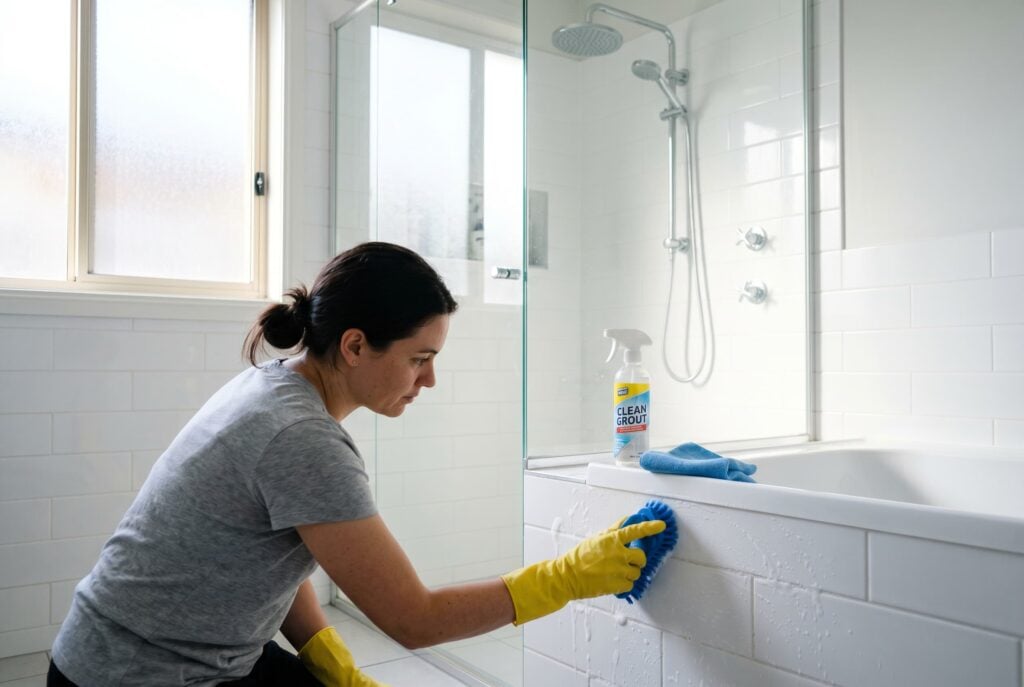
Step 4 — How to Deep Clean Bathroom Grout
Grout is porous, which means it absorbs dirt, soap scum, and mildew like a sponge. If your grout lines have turned grey, brown, or even black, don’t panic — they can usually be restored.
Make a paste with bicarbonate of soda and water (roughly 2:1 ratio), apply it to the grout lines, and leave it for 10–15 minutes. Then spray white vinegar over the paste — it will fizz as it reacts. Scrub with an old toothbrush or a dedicated grout brush, working in small sections. Rinse clean and repeat on any particularly stubborn areas.
For seriously discoloured grout, a specialist grout cleaner or even a bleach pen can work wonders. And if you’re wondering whether bicarbonate of soda is the same as baking soda — yes, it is, so either term works.
Step 5 — How to Deep Clean the Shower and Bathtub
The shower is often the biggest challenge when you deep clean your bathroom. Between hard water deposits, soap scum, and mould in the silicone seals, there’s a lot to tackle.
Shower walls and door: Spray with a bathroom cleaner or a mixture of equal parts white vinegar and water, plus a teaspoon of washing-up liquid. Let it sit for at least 10 minutes, then scrub with a non-scratch sponge. Use a squeegee on the glass to avoid streaks.
Showerhead: Fill a plastic bag with white vinegar, secure it around the showerhead with a rubber band, and leave it to soak for at least an hour (or overnight for heavy limescale). For more detail, see our full guide on how to clean a shower head.
Bathtub: Sprinkle bicarbonate of soda across the surface, spray with vinegar, and let it fizz for a few minutes. Scrub with a soft brush and rinse thoroughly. For yellowed or stained shower trays, you’ll find targeted advice in our guide to whitening a yellowed shower tray.
Don’t forget to check the drain — remove hair and debris, and pour a mixture of bicarbonate of soda and vinegar down the plughole to clear any build-up in your drain.
Step 6 — How to Deep Clean the Toilet
The toilet should always be the last fixture you clean (to avoid spreading germs to other surfaces). Here’s how to give it a thorough deep clean:
- Squirt toilet bowl cleaner or bleach under the rim and let it sit while you clean the exterior
- Spray the entire outside of the toilet — lid, seat, tank, base, and handle — with disinfectant
- Wipe down the exterior with a microfibre cloth, working from cleanest to dirtiest areas
- Scrub the inside of the bowl with a toilet brush, focusing on the waterline and under the rim
- Flush, and wipe the seat and lid one final time
For persistent brown staining or limescale inside the bowl, our guide on getting rid of brown stains in the toilet bowl has several tried-and-tested methods. And for a more comprehensive routine, check out our full how to clean a toilet guide.
Step 7 — Clean the Bathroom Sink, Taps, and Mirror
Sprinkle bicarbonate of soda into the bathroom sink basin and scrub with a damp sponge. For the taps, wrap them in a cloth soaked in white vinegar to dissolve limescale — leave for 15 minutes, then buff dry with a microfibre cloth.
Use an old toothbrush to get into the crevices around the base of the taps where grime and mould tend to collect. Clean the mirror with glass cleaner and a lint-free cloth, wiping in an S-pattern to avoid streaks.
Step 8 — How to Deep Clean Bathroom Walls
Bathroom walls accumulate a film of moisture, dust, and soap residue over time, especially around the shower area. Wipe them down with a damp microfibre cloth and a mild anti-bacterial spray. For painted walls, avoid anything too abrasive — a solution of warm water and washing-up liquid works well.
If you spot mould patches on the walls or ceiling, treat them promptly with a mould-specific cleaner or a diluted bleach solution. Persistent mould in the bathroom often points to a ventilation issue — our guide on how to get rid of black mould explains both removal and prevention. For general wall care, see our tips on how to clean walls throughout the house.
Step 9 — How to Deep Clean the Bathroom Floor
Save the floor for last, since all the dust and dirty water from the steps above will have ended up here.
- Sweep or vacuum to remove loose hair, dust, and debris
- Mop with warm water and a suitable floor cleaner — for tiled floors, a mild detergent or vinegar solution works well
- Pay extra attention to corners, behind the toilet, and along skirting boards
- Scrub the floor grout lines with a brush if they’re looking discoloured
- Dry the floor with a clean towel or cloth to prevent water spots
Avoid using steam mops on vinyl flooring, as the heat can cause damage. And always check your floor type before using acidic cleaners — vinegar is brilliant on ceramic tiles but can harm natural stone.
Deep Cleaning Bathroom Checklist
Use this deep cleaning bathroom checklist to make sure you don’t miss a thing. Tick off each task as you go:
| Area | Tasks |
|---|---|
| Preparation | Remove all items, towels, mats; open window; gather supplies |
| Ceiling & walls | Dust extractor fan, light fixtures; wipe walls; treat mould spots |
| Shower & bath | Spray and scrub tiles; clean grout; descale showerhead; scrub tub/tray; clean drain |
| Toilet | Apply bowl cleaner; scrub bowl; disinfect and wipe exterior; clean base |
| Bathroom Sink & vanity | Scrub basin; descale taps; clean mirror; wipe countertop; organise cabinet |
| Floor | Sweep/vacuum; mop; scrub floor grout; dry |
| Finishing touches | Replace fresh towels; rehang shower curtain; empty bin; restock supplies |
For a broader whole-house version, our ultimate house cleaning checklist has you covered.
Bathroom Cleaning Tips to Make the Job Easier
Even a big bathroom deep clean doesn’t have to be overwhelming if you work smart. Here are some practical bathroom cleaning tips from the pros:
- Let products do the work. Spray your cleaner and leave it for 10–15 minutes before scrubbing. This dwell time breaks down grime and saves your elbows.
- Use separate cloths. Keep one colour for the toilet and another for the sink and shower to avoid cross-contamination.
- Clean your tools too. Rinse your toilet brush with bleach, wash your microfibre cloths regularly, and replace sponges monthly.
- Squeegee after every shower. This takes 30 seconds and dramatically reduces soap scum and limescale build-up on glass.
If the thought of tackling the whole bathroom at once feels daunting, try the 20-minute method — set a timer, focus on one area, and stop when it goes off. You’ll be surprised how much you get done. And if motivation is the problem, our article on how to get motivated to clean has some brilliant hacks.
How to Maintain a Clean Bathroom Between Deep Cleans
The real secret to a sparkling bathroom isn’t the monthly deep clean — it’s what you do between them. A few small daily habits will keep your bathroom looking fresh and make your next deep clean far quicker:
- Wipe the sink and taps after your morning routine
- Squeegee the shower screen after each use
- Keep a tub of disinfectant wipes under the sink for quick touch-ups
- Run the extractor fan for at least 20 minutes after a bath or shower to reduce moisture
- Hang towels properly so they dry fully and don’t develop a musty smell
Good ventilation is your biggest ally against mould and mildew. If your bathroom tends to feel damp even with the fan running, it might be worth investigating — a lingering damp smell can signal a deeper issue, and our guide on getting rid of damp smell can help you identify the cause.
How Much Does It Cost to Deep Clean a Bathroom?
If you’d rather leave the hard work to a professional, a one-off bathroom deep clean in the UK typically costs between £50 and £100, depending on the size of the bathroom and how much work is needed. A standard bathroom as part of a full house clean will generally be included in the overall price.
At Wecasa, you can book a professional cleaning service tailored to your needs — whether that’s a one-off deep clean or regular visits to keep everything spotless. It’s a worthwhile investment, especially if limescale, mould, or grout staining has built up over time.
FAQ
How do I completely deep clean my bathroom?
Start by removing all items and towels, then work from top to bottom: dust light fixtures and vents, spray and scrub the shower and tiles, clean the toilet (always last), scrub the sink and taps, wipe walls, and finish by mopping the floor. Let cleaning products sit for 10 minutes before scrubbing to dissolve soap scum and limescale more effectively.
What is the 20 minute rule of cleaning?
The 20 minute rule is a simple productivity trick: set a timer for 20 minutes, pick one task or area, and focus on it until the timer goes off. It’s a great way to tackle a bathroom deep clean without feeling overwhelmed — you’ll be surprised how much you can achieve in short, focused bursts.
How to clean an extremely dirty bathroom?
For a bathroom that hasn’t been cleaned in a long time, start by removing clutter and sweeping up loose debris. Spray every surface generously with cleaner and leave it to soak for 15–20 minutes. Begin with the shower walls and tiles, then move to the toilet, sink, and floor. You may need to repeat the process on heavily stained areas. Bicarbonate of soda and vinegar are particularly effective for cutting through thick layers of grime and soap scum.
What is included in a bathroom deep clean?
A thorough bathroom deep clean covers: scrubbing tiles and grout, descaling the showerhead and taps, cleaning limescale from the toilet, washing the shower screen, cleaning the extractor fan, polishing mirrors, sanitising all surfaces, mopping floors, and treating any mould or mildew. It goes well beyond a standard weekly clean.
How to deep clean a bathroom that hasn’t been cleaned in years?
Patience is key. Soak everything in strong cleaning solutions — vinegar for limescale, bleach for mould and disinfecting. Let products sit for at least 20–30 minutes before scrubbing. You may need to repeat applications several times. Focus on one area at a time and don’t rush. A drill brush attachment can be a game-changer for stubborn soap scum on tiles and grout.
How do I deep clean without getting overwhelmed?
Break the job into small sections — shower one day, toilet the next, floor the day after. Alternatively, use the 20-minute rule and tackle as much as you can in a timed session. Having all your cleaning supplies ready before you start also prevents interruptions and keeps you in the zone. Put on some music or a podcast and you’ll find it goes faster than you expected.