Summarise this article with:
 ChatGPT
 Mistral
 Claude
 Perplexity
 Grok
Grok
Dust seems to appear out of nowhere — you wipe down a shelf, and two days later it’s coated again. If you’ve ever wondered why your home gets so dusty no matter how often you clean, you’re not alone. The good news? With the right approach, you can dramatically reduce dust in your home and keep it away for longer. Here’s everything you need to know about how to get rid of dust in a room, from quick fixes to long-term prevention strategies.
What Causes Dust in a House?
Before you grab a cloth, it helps to understand what you’re actually dealing with. Dust isn’t just one thing — it’s a cocktail of tiny particles that accumulate on every surface in your home.
| Dust component | Where it comes from |
|---|---|
| Dead skin cells | Humans shed around 1.5 grams daily |
| Pet dander | Fur and skin flakes from cats, dogs, and other pets |
| Pollen | Enters through open windows and on clothing |
| Textile fibres | Released by carpets, curtains, bedding and upholstery |
| Dust mites | Microscopic creatures that thrive in warm, humid environments |
| Outdoor dirt | Tracked in on shoes and carried by air currents |
Dust also contains allergens that can trigger sneezing, itchy eyes, and respiratory discomfort — which is why tackling it regularly matters for your health as much as for appearances. If your home doubles as a haven for furry friends, pet dander is likely a major contributor to the dust settling on your surfaces.
How to Get Rid of Dust — Step by Step
Whether you’re giving your bedroom a refresh or tackling a full spring cleaning, these methods will help you remove dust effectively.
Start from the Top and Dust Your Way Down
Always begin with the highest surfaces — ceiling fans, light fittings, the tops of wardrobes — and work downwards. This way, any dust that falls will be caught when you clean the lower surfaces. It’s a simple technique, but it makes a huge difference.
Use a Microfibre Cloth for Every Surface
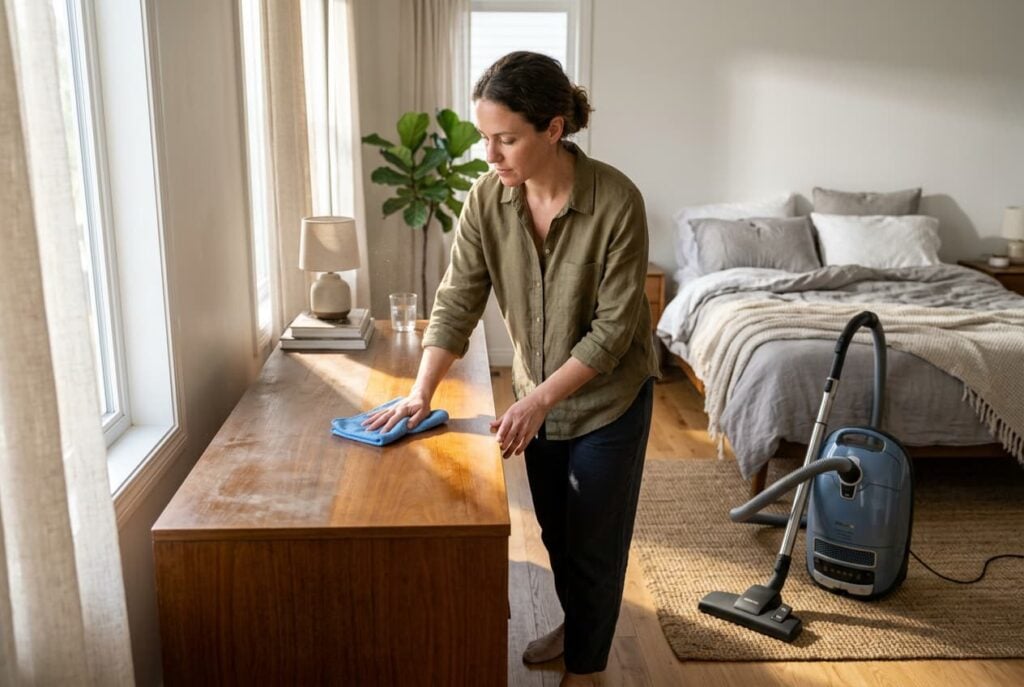
Ditch the feather duster. A damp microfibre cloth is far more effective because it traps and holds dust particles rather than pushing them into the air. For shelves, desks, skirting boards, and windowsills, microfibre is your best friend. You can also pair it with a little white vinegar for cleaning stubborn grime alongside the dust.
Vacuum with a HEPA Filter for Best Results
A standard vacuum can actually blow fine dust particles back into the air. Investing in a vacuum fitted with a HEPA filter makes all the difference — these filters trap 99.97% of particles as small as 0.3 microns. Run it over carpets, rugs, upholstered furniture, and even curtains at least once a week.
Mop Hard Floors After Vacuuming
Vacuuming alone won’t catch everything on hard floors. Follow up with a damp mop to pick up the finest dust particles that settle between floorboards or on tiles. A microfibre mop works brilliantly and doesn’t require harsh chemicals — just water is enough for day-to-day mopping.
How to Reduce Dust at Home Long-Term
Removing dust is one thing; reducing how much of it builds up in the first place is even better. These habits will help you keep dust levels low between cleans.
Invest in an Air Purifier for Dust
An air purifier equipped with a HEPA filter can capture airborne dust, pollen, and allergens before they settle on your surfaces. Place one in the rooms where you spend the most time — particularly the bedroom. Running an air purifier overnight can make a noticeable difference to the amount of dust you wake up to.
Declutter to Reduce Dust-Trapping Surfaces
The more objects you have on display, the more surfaces dust can cling to. Ornaments, stacked books, and open storage all act as dust magnets. Reducing clutter and storing items in closed drawers or cabinets means less dusting for you overall. If you’re looking for a full room reset, a thorough bedroom cleaning checklist can help you stay organised.
Wash Bedding Weekly to Fight Dust Mites
Your bed is one of the dustiest spots in the house. Dead skin cells accumulate in sheets and pillows, creating the perfect environment for dust mites to thrive. Washing your bedding at 60°C every week kills dust mites and removes allergens effectively. You might also want to check how often you should wash your bed sheets to keep things hygienic.
- Pillows: Wash every 3–6 months, or use dust mite-proof covers
- Duvets: Wash every 3–6 months at 60°C
- Mattress: Vacuum monthly and use a protective cover
- Mattress protector: Wash every 1–2 months
Keep Curtains and Blinds Clean
Curtains and blinds are notorious for trapping dust, yet they’re often overlooked. Vacuum curtains with an upholstery attachment every couple of weeks, and wash them every few months. For blinds, wipe each slat with a damp microfibre cloth — it’s faster than you’d think.
How to Prevent Dust in Bedroom Naturally
Not keen on relying solely on gadgets? There are effective natural ways to reduce dust and improve air quality in your home.
Houseplants That Purify Air Naturally
Certain houseplants act as natural air purifiers, filtering airborne particles and improving indoor air quality. The best options include:
- Spider plant — easy to care for, removes toxins effectively
- Peace lily — filters dust and allergens while adding moisture to the air
- Snake plant — releases oxygen at night, ideal for bedrooms
- English ivy — one of the most efficient plants for air purification
Place a couple of these in your bedroom and living room, and they’ll quietly work alongside your regular cleaning routine.
Control Humidity Levels
Dust mites thrive in warm, humid conditions. Keeping indoor humidity between 40% and 50% helps create an environment that’s less welcoming for them. A dehumidifier can help in damp rooms, while good ventilation — opening windows briefly on dry days — keeps air circulating. Maintaining the right humidity levels also prevents mould, which adds yet more particles to the air.
How to Reduce Dust in a House with Dogs
If you share your home with pets, pet dander is likely a significant contributor to your dust problem. Brush your dog (or cat) regularly — ideally outdoors — to reduce the amount of loose fur and dander that ends up on your furniture. Washing pet bedding weekly and vacuuming high-traffic pet areas with a HEPA filter vacuum will keep things under control.
How to Dust Properly — Best Techniques
Not all dusting methods are created equal. Here’s a quick comparison to help you choose the best way to dust your home:
| Method | Effectiveness | Best for | Notes |
|---|---|---|---|
| Dry microfibre cloth | ★★★★☆ | Light, regular dusting | Traps dust without spreading it |
| Damp microfibre cloth | ★★★★★ | Deep dusting on hard surfaces | The gold standard for dust removal |
| Feather duster | ★★☆☆☆ | Quick touch-ups | Tends to scatter dust rather than capture it |
| Anti-static spray + cloth | ★★★★☆ | Electronics, shelves | Creates a protective barrier that repels dust |
| Vacuum with brush attachment | ★★★★★ | Upholstery, curtains, textured surfaces | Best for fabrics and soft furnishings |
Pro tip: Always dust before you vacuum. This way, any particles knocked into the air will settle on the floor and get picked up by your HEPA filter vacuum in the next step.
Is It Unhealthy to Sleep in a Dusty Room?
In short — yes, it can be. Sleeping in a dusty room exposes you to allergens, dust mites, and even tiny particles of chemicals like flame retardants that accumulate in household dust. Over time, this can lead to:
- Sneezing and a blocked or runny nose
- Itchy, watery eyes
- Coughing or wheezing, especially at night
- Worsened symptoms for asthma or allergy sufferers
If you often wake up congested or with irritated eyes, dust in your bedroom could be to blame. Combining regular dusting with an air purifier and protective bedding covers can significantly improve your sleep quality.
How to Tell If a Room Is Too Dusty
Sometimes dust builds up so gradually that you barely notice it. Watch for these telltale signs:
- Visible dust on surfaces even shortly after cleaning
- A musty or stale smell in the room
- Unexplained allergy symptoms like sneezing or itchy eyes indoors
- Dusty air vents or grimy fan blades
- Grey residue on fingers when you run a hand across a shelf or ledge
If several of these ring true, it’s time for a thorough dust-busting session. When things feel overwhelming, a professional house cleaner can give your home the deep refresh it needs.
Quick Daily Habits to Stop Dust Building Up
You don’t need to spend hours cleaning every day. These small habits make a real difference:
- Take shoes off at the door — outdoor dirt is one of the biggest dust contributors
- Air out your bed for 20 minutes before making it each morning — this reduces moisture that dust mites love
- Wipe surfaces daily with a dry or slightly damp microfibre cloth
- Close windows on high-pollen days to keep pollen and outdoor particles out
- Change your HVAC or air filter regularly — every 3 months is a good rule of thumb
Building these into your routine alongside a weekly vacuum and mop means you’ll spend less time battling dust and more time enjoying your home. Pair them with a spring cleaning checklist for a seasonal deep clean that keeps things fresh all year.
Need a Helping Hand?
Let’s be honest — keeping dust at bay takes effort, especially in busy households. If you’d rather leave it to the pros, Wecasa professional cleaners are just a few taps away. From regular weekly cleans to thorough deep cleaning sessions, our trusted cleaners know exactly how to tackle dust in every room — so you can breathe easy.
FAQ
What kills dust in the air?
An air purifier with a HEPA filter is the most effective way to remove dust particles floating in the air. These filters capture 99.97% of airborne particles, including pollen, pet dander, and dust mite debris. For a natural boost, houseplants like peace lilies and spider plants also help filter the air.
How do I make my room less dusty?
Focus on a combination of regular cleaning and prevention. Dust surfaces with a damp microfibre cloth weekly, vacuum with a HEPA filter, wash bedding at 60°C, and reduce clutter. Running an air purifier and keeping humidity between 40–50% will also help significantly.
Does opening windows help with dust?
It depends. Opening windows briefly on calm, dry days helps circulate fresh air and clear out stale indoor particles. However, on windy days or during high pollen season, keeping windows closed prevents outdoor dust, dirt, and pollen from entering your home.
How often should you dust your house?
Ideally, once a week for most rooms. High-traffic areas, bedrooms, and homes with pets may need dusting more frequently — every 3 to 4 days. Hard-to-reach spots like ceiling fans and the tops of wardrobes can be done fortnightly or monthly.
Why shouldn’t you make your bed first thing in the morning?
Dust mites thrive on the moisture we release through sweat while sleeping. Making your bed immediately traps that warmth and humidity under the covers, creating ideal conditions for mites. Pulling back the duvet and letting your bedding air out for at least 20 minutes helps reduce moisture and keeps dust mites at bay.
Can you dust with just water?
Absolutely. A damp microfibre cloth with plain water is one of the most effective dusting tools available. The moisture helps trap dust particles, and microfibre’s fine weave holds onto them rather than spreading them around. You don’t need sprays or chemicals for everyday dusting.
Can houseplants help reduce dust?
Yes — certain species are particularly good at filtering airborne particles. Spider plants, peace lilies, snake plants, and English ivy are among the best natural air purifiers. While they won’t replace regular cleaning, they’re a great complement to your dust-reducing routine.
How can I reduce dust if I have pets?
Groom your pets regularly, preferably outdoors, to minimise pet dander indoors. Wash pet bedding weekly, vacuum soft furnishings and carpets with a HEPA filter vacuum at least twice a week, and consider keeping pets out of bedrooms to reduce allergens where you sleep.