Summarise this article with:
 ChatGPT
 Mistral
 Claude
 Perplexity
 Grok
Grok
Suede furniture has a way of making any room feel instantly warmer and more refined. That soft, velvety texture is hard to resist — until someone spills tea on it or the dog settles in for a nap. Knowing how to clean suede furniture properly is the key to keeping that luxurious look intact, without accidentally causing more damage than the original stain.
Whether you’re dealing with natural suede, nubuck, or faux suede upholstery, this guide covers everything from routine maintenance to stubborn stain removal. The techniques below will help you clean your suede sofa, armchair, or footstool safely and confidently.
Why Does Suede Require Special Cleaning Methods?
Suede is made from the underside of animal hide, which gives it its signature soft nap. But that same porous, open-fibre structure also makes it highly sensitive to moisture, oils, and friction. Unlike materials you’d encounter when learning how to clean a fabric sofa, suede absorbs liquids almost instantly and can stiffen, darken, or develop water marks if cleaned incorrectly.
Here’s why suede demands a different approach:
- It absorbs moisture quickly and unevenly
- Water can leave visible rings and dark patches
- Oils and dirt get trapped deep in the nap
- Excessive scrubbing flattens the texture permanently
The golden rule? Always start with the gentlest, driest method available before introducing any liquid.
Natural Suede vs Faux Suede: How to Tell the Difference
Before reaching for any cleaning product, you need to identify what type of suede you’re working with. The care method depends entirely on the material.
| Feature | Natural Suede | Faux Suede (Microfiber) |
|---|---|---|
| Made from | Animal hide (underside) | Polyester / nylon fibres |
| Texture | Very soft, slightly irregular | Uniform, consistent feel |
| Water sensitivity | Extremely high | Moderate — more forgiving |
| Cleaning approach | Dry methods preferred | Water-based cleaners usually safe |
| Durability | Delicate, needs regular care | More stain-resistant and durable |
Always check the care label on your furniture. You’ll usually find one of these fabric codes:
- W — Safe for water-based cleaners
- S — Solvent-based cleaning only
- W-S — Both water and solvent cleaners are fine
- X — Vacuum only, no liquid cleaners
These codes are essential for choosing the right technique, especially when cleaning faux suede furniture at home.
What Tools Do You Need to Clean Suede Furniture?
Having the correct suede sofa cleaning kit ready before you start makes the job much smoother. Gather the following:
- A suede brush (soft bristle)
- A suede eraser or rubber cleaning block
- White microfiber cloths (to avoid colour transfer)
- A vacuum cleaner with an upholstery attachment
- White vinegar
- Baking soda
- A spray bottle
- Mild dish soap (for faux suede only)
Avoid coloured cloths, stiff brushes, or any abrasive sponges — these can damage the nap or transfer dye onto the suede.
Suede Sofa Cleaner : Step-by-Step Routine
Regular maintenance is by far the most effective way to keep suede furniture looking fresh. You don’t need specialist products for this — just consistency.
Weekly care routine:
- Vacuum thoroughly using a soft brush attachment to lift dust from seams and crevices
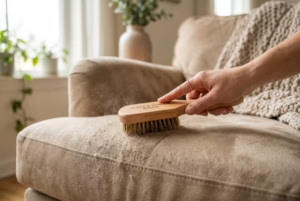
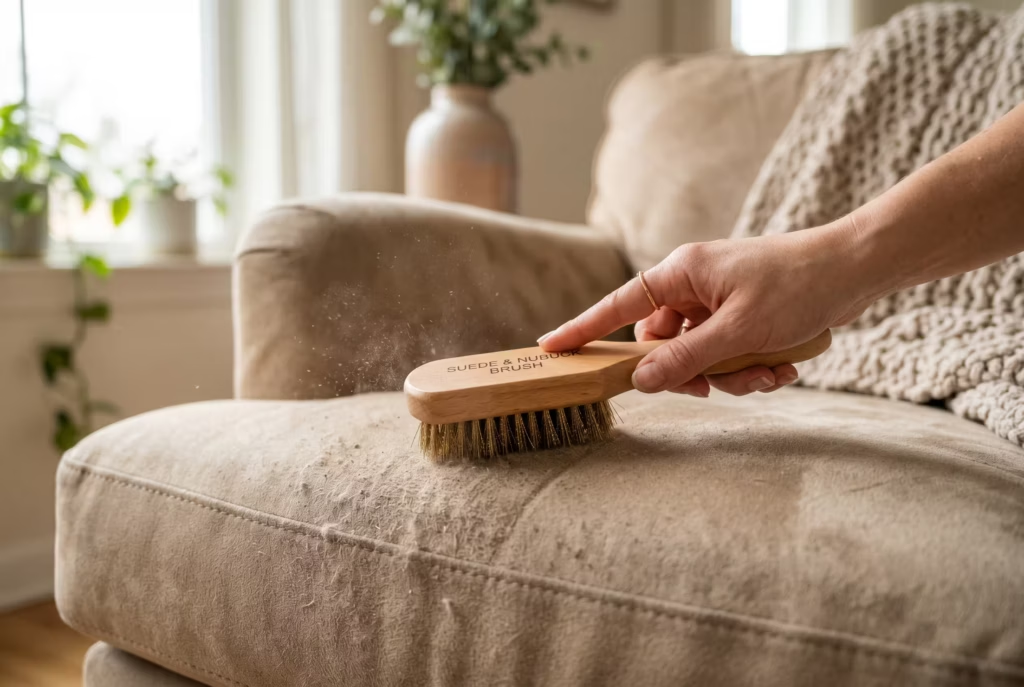
- Brush the surface gently with a suede brush in one direction to raise the nap
- Remove crumbs and pet hair from between cushions
- Rotate cushions regularly to prevent uneven wear
If you maintain this routine, you’ll rarely need to deal with deep stains. It’s the same philosophy behind keeping any sofa clean — prevention beats cure.
How to Clean Suede Furniture with Vinegar
For light stains and general freshening, white vinegar for cleaning is one of the safest home remedies for suede.
Method:
- Mix 70% water with 30% white distilled vinegar in a spray bottle
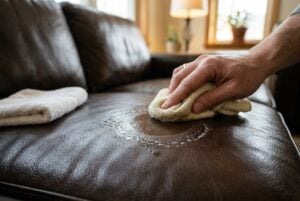
- Dampen a white cloth with the solution — never spray directly onto the suede
- Gently blot the stained area, working from the outside inward
- Allow it to air dry completely
- Brush the nap back into place with a suede brush
This vinegar solution works particularly well on surface grime, light food marks, and general dullness. Always test on a hidden area first.
How to Clean Suede Furniture with Baking Soda
For oil-based stains and odours, baking soda is your best friend.
For grease and oil stains:
- Blot any excess oil with a dry cloth immediately
- Sprinkle a generous layer of baking soda over the stain
- Let it sit for several hours (overnight is ideal)
- Brush off the powder gently with a suede brush
- Repeat if the stain persists
For odours: Sprinkle baking soda across the entire surface, leave for 2–3 hours, then vacuum it off. This method is especially effective when your suede couch has absorbed cooking smells or pet odours.
How to Remove Stains from a Suede Couch
Different stains require different treatments. Here’s a quick reference:
| Stain Type | Treatment | Key Tip |
|---|---|---|
| Water marks | Lightly dampen the entire area evenly, blot, air dry | Even moisture prevents visible edges |
| Oil / grease | Baking soda or cornstarch, sit overnight | Never use water on oil stains |
| Ink / pen marks | Dab with rubbing alcohol on a cotton bud | Work gently, don’t rub |
| Food / drink spills | Blot immediately, dry, then brush | Act fast — speed is everything |
| Old, dried stains | Suede eraser or rubber block, then brush | Gentle friction lifts embedded dirt |
If you’re dealing with tougher upholstery stains beyond suede, our guide on how to remove stains from a sofa covers additional techniques for different fabrics.
How to Clean Faux Suede Furniture
Faux suede (sometimes called microfiber suede) is significantly easier to maintain. It’s made from tightly woven synthetic fibres, making it more resistant to moisture and staining.
Cleaning method for faux suede:
- Vacuum the surface with a soft brush attachment
- Mix a few drops of mild dish soap with warm water
- Dampen a white cloth with the solution and gently wipe in circular motions
- Dab with a clean, damp cloth to remove soap residue
- Air dry fully, then brush the fibres to restore texture
Faux suede can handle water-based methods that would damage natural suede — but avoid soaking the fabric or using harsh chemicals.
What Not to Clean Suede With: Common Mistakes to Avoid
Most suede damage comes not from stains, but from incorrect cleaning. Here are the biggest pitfalls:
- Using too much water — suede absorbs it unevenly, causing dark patches
- Scrubbing aggressively — this flattens the nap permanently
- Applying household cleaners — bleach, all-purpose sprays, and shoe polish are all harmful
- Drying with heat — hairdryers and radiators cause stiffening and cracking
- Skipping regular brushing — dust embeds over time, becoming much harder to remove
Also, despite the temptation, steam cleaning a couch is not suitable for suede. The combination of heat and moisture can cause permanent texture loss and water marks.
How to Protect Suede Furniture After Cleaning
Once your suede is clean, protecting it from future damage is just as important.
Preventive habits:
- Apply a suede protector spray after each deep clean
- Keep food and drinks at a safe distance
- Blot any spills the moment they happen
- Avoid placing suede furniture in direct sunlight (UV causes fading)
- Use throws or blankets in high-traffic spots
These small steps make a significant difference over time and extend the life of your suede considerably — much like caring for other delicate materials such as faux leather furniture or velvet sofas.
How Do Professionals Clean Suede?
Professional suede cleaning follows a systematic approach based on the fabric care code:
- Inspection — identifying the suede type and stain composition
- Dry cleaning — brushing and vacuuming to remove surface dirt
- Targeted stain treatment — using specialist solvents or controlled moisture
- Nap restoration — brushing the fibres back to their original texture
- Protection — applying a professional-grade suede protector
Consider professional help when stains are widespread, home methods haven’t worked, or you’re dealing with a particularly valuable piece of furniture. Most experts recommend professional suede cleaning every one to two years.
If the task feels overwhelming, Wecasa’s professional house cleaners can take care of upholstery and deep cleaning throughout your home — so you can enjoy your furniture without the stress.
How Often Should a Suede Couch Be Cleaned?
| Task | Frequency |
|---|---|
| Vacuum and brush | Weekly |
| Spot-treat stains | As they occur |
| Full surface clean | Every 2–3 months |
| Professional clean | Every 1–2 years |
| Apply suede protector | After every deep clean |
Staying on top of this schedule prevents dirt from building up and keeps your suede looking as good as the day you bought it.
FAQ
Can you clean a suede sofa with a damp cloth?
Yes, but with caution. A lightly dampened white cloth can be used to wipe away surface dust on faux suede. For natural suede, keep moisture to an absolute minimum and always blot rather than rub. Make sure the cloth is well wrung out, and let the suede air dry completely afterwards.
How to make a suede couch look new?
Start by vacuuming and brushing the entire surface to remove embedded dust. Treat any visible stains with the appropriate method (vinegar solution, baking soda, or suede eraser). Once dry, brush the nap in one consistent direction. Finish by applying a suede protector spray for a refreshed, uniform appearance.
What is the best thing to clean suede furniture with?
For most situations, a suede brush and suede eraser handle everyday dirt without risk. For stains, a mixture of white vinegar and water (30/70) works effectively. Oil stains respond best to baking soda. Always avoid household sprays, bleach, or all-purpose cleaners.
Does baking soda clean suede?
Yes. Baking soda is excellent at absorbing grease, oil, and odours from suede. Sprinkle it over the affected area, let it sit for several hours, then brush it off gently. It’s one of the safest home remedies you can use on suede furniture.
How do you dry suede after cleaning?
Always let suede air dry naturally in a well-ventilated room. Blot excess moisture with a dry, clean cloth first. Never use a hairdryer, radiator, or direct heat — this causes stiffening, cracking, and permanent texture damage. Once fully dry, brush the nap to restore softness.
What are common mistakes when cleaning suede?
The most frequent errors include using too much water, scrubbing instead of blotting, applying household cleaners not designed for suede, and using heat to speed up drying. Skipping regular brushing and vacuuming also allows dirt to embed deeply, making stains harder to treat later.
How to clean a suede couch that smells?
Sprinkle baking soda liberally across the surface, let it absorb odours for 2–3 hours (or overnight for stronger smells), then vacuum thoroughly. For persistent odours, lightly mist the suede with a diluted white vinegar solution and allow it to air dry completely before brushing.