Summarise this article with:
 ChatGPT
 Mistral
 Claude
 Perplexity
 Grok
A grimy fridge does more than look unpleasant, it can harbour bacteria and cause food to spoil faster. Whether you’re dealing with sticky spills, forgotten leftovers, or musty smells, a proper clean makes all the difference. This guide walks through emptying shelves, tackling stains with soapy water, vinegar or bicarbonate of soda, and sorting out the drain hole, seals and drip tray. Give your fridge a deep clean at least every few months, and keep it between 0 and 5°C.

What is the first thing you should do when cleaning a fridge?
The very first step before you start wiping down surfaces is to prepare the appliance safely by turning off the power and clearing everything out:
- Switch off or unplug the appliance: Turn off the fridge at the wall socket or switch it off via the control panel to save energy and protect internal components while the door remains open.
- Empty the contents completely: Take out all food items and condiments so the entire interior is fully accessible.
- Protect perishable items: Transfer dairy, raw meat, and sensitive groceries into a into a cool bag with ice packs. Chilled food shouldn’t stay out of the fridge for more than four hours, so work quickly.
- Sort and discard food waste: Check the dates: bin anything past its use-by date, which is about safety. Best before dates are about quality, so food past that date is usually still safe to eat.
Once the fridge is completely empty, remove all the loose components, including shelves, bottle racks, and salad crispers, and set them aside so they can safely reach room temperature before washing.
How to Clean Fridge Parts
Fridge Shelves and Drawers
Washing your shelves and drawers properly ensures food remains safe from cross-contamination and bad odours.
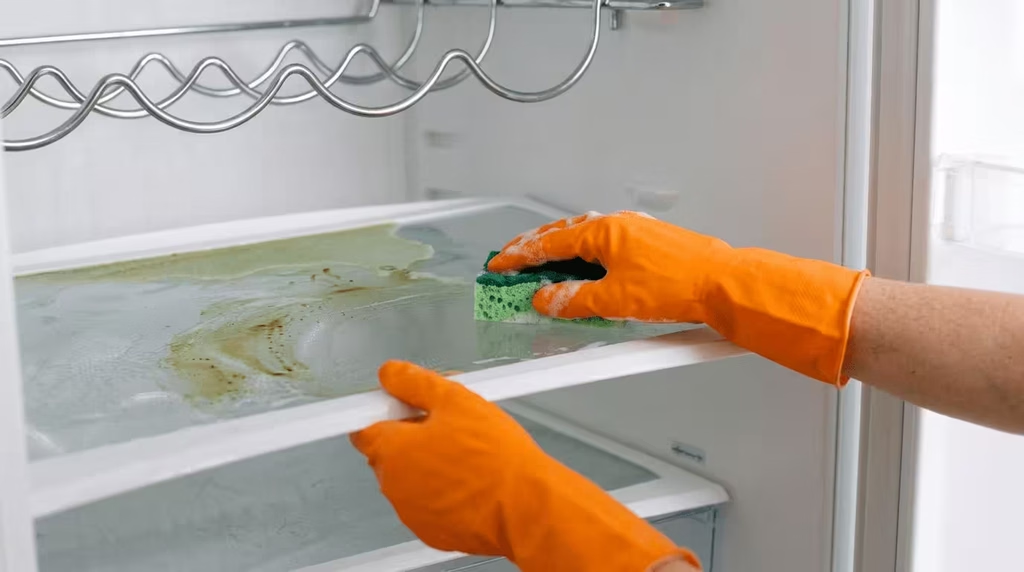
- Soak in warm soapy water: Wash removable parts in the sink or a large basin using washing-up liquid and warm water.
- Tackle sticky residues: Apply a paste of bicarbonate of soda to stubborn dried spills, then scrub gently with a soft sponge.
- Check before using the dishwasher: Consult your user manual before placing drawers in the dishwasher, as hot cycles can warp delicate plastics.
- Dry thoroughly: Wipe every component dry with a clean microfibre cloth before sliding it back into the fridge.
Water Dispenser
Regular maintenance prevents bacteria and limescale from tainting your drinking water. Follow these quick steps to refresh the dispenser and its internal line:
- Clean the exterior: Wipe the nozzle and drip tray with warm soapy water or a cloth dampened with white vinegar.
- Scrub the spout: Use an old toothbrush or a small straw cleaner to gently clear any mineral build-up inside the nozzle opening.
- Flush the system: Check your manual for how to flush the system, and replace the water filter as often as the manufacturer recommends.
- Rinse thoroughly: Reconnect the line, turn the water back on, and run fresh water into a jug until the vinegar smell and taste are completely gone.
Drain Hole
To clear the drain hole at the back of the fridge, insert a cotton bud, pipe cleaner, or the provided plastic plunger to dislodge food crumbs and slime. Next, use a syringe or turkey baster to flush the channel with warm water mixed with a splash of white vinegar. Finally, wipe away any remaining moisture pooling at the bottom to stop blockages and foul odours returning.
Freezer
Cleaning a freezer alongside your fridge prevents heavy ice build-up, frees up valuable storage space, and keeps your appliance running efficiently:
- Empty and protect frozen food: Transfer all contents into cooler bags lined with ice packs or newspaper to stop items from thawing while you work.
- Unplug and melt the ice: Turn off the power, line the base with old towels to catch drips, and let the frost melt naturally, never chip away at ice with sharp metal tools.
- Wash drawers and shelves: Remove the compartments once they reach room temperature and clean them with warm soapy water or a mild cleaning solution.
- Wipe down the interior and seals: Clean the internal walls and rubber door seals with a damp microfibre cloth, dry every surface completely with kitchen towel to prevent instant refrosting, then switch the appliance back on.
Condenser Coils
To clean the condenser coils, always unplug the appliance first. Locate the coils either behind the lower front kick plate or at the back of the fridge, then gently brush away trapped dust, pet hair, and lint using a specialised long coil brush.
Finally, use a vacuum with a brush attachment to clear up loosened debris and the surrounding floor, which prevents overheating and helps your fridge run efficiently
Cleaning Fridge with Natural Ingredients
Baking Soda
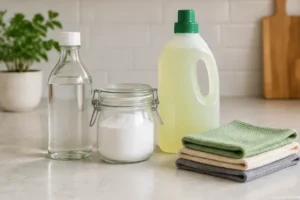
Baking soda (bicarbonate of soda) is an effective, food-safe cleaner that lifts stubborn grime and neutralises unpleasant odours without leaving chemical scents behind.
| Method | Mixture | Best For |
|---|---|---|
| Cleaning spray / wipe | 2 tbsp baking soda per 1 litre warm water | Wiping down the inside of the fridge, shelves, and door seals |
| Spot-cleaning paste | 3 parts baking soda to 1 part warm water | Scrubbing dried-on spills and stubborn stains at the bottom of the fridge |
| Odor absorber | Open jar or small dish of baking soda | Keeping the fridge smelling fresh; replace every 3 months |
Always wipe down treated surfaces with a clean, damp cloth and dry thoroughly before restocking your food.
Vinegar
White vinegar is handy for lifting sticky marks and neutralising light odours across the fridge interior:
- All-purpose spray: Mix equal parts white vinegar and warm water in a spray bottle to wipe down the inside walls, shelves, and door compartments.
- Tackle sticky spills: Spray directly onto dried-on food marks and let the solution sit for five minutes before wiping it away with a microfibre cloth.
- Clean door seals: Mist the vinegar mixture lightly onto rubber seals and use a cotton bud to clean inside the grooves, preventing mould and grime build-up.
Always wipe down metal parts promptly after cleaning to prevent surface dulling or corrosion.
FAQ
How often should you be cleaning and defrosting a freezer?
You should aim to defrost and deep-clean a manual freezer at least once or twice a year, or whenever the ice layer reaches roughly 5 mm (a quarter of an inch) thick. Frost-free models do not require manual defrosting, but giving the drawers and interior surfaces a thorough wipe-down every three to six months keeps odours at bay and maintains food hygiene.
What is the best odor absorber for fridge ?
Activated charcoal and an open dish of bicarbonate of soda are the best natural odour absorbers to neutralise stubborn smells.
Why does my fridge smell bad even after cleaning?
A lingering unpleasant smell is usually caused by trapped bacteria in the door seals, food residue hidden under the drip tray, a blocked drain hole, or odours absorbed into the plastic interior itself.
Can I use baking soda to get rid of fridge smell?
Yes, placing an open dish of baking soda inside the fridge absorbs and neutralises bad odours.