Summarise this article with:
 ChatGPT
 Mistral
 Claude
 Perplexity
 Grok
Let’s face it, cleaning the oven is one of those jobs that’s easy to put off. One minute there’s a small splash of sauce on the bottom, and before you know it, you’re dealing with layers of burnt-on grease and a glass door you can barely see through.
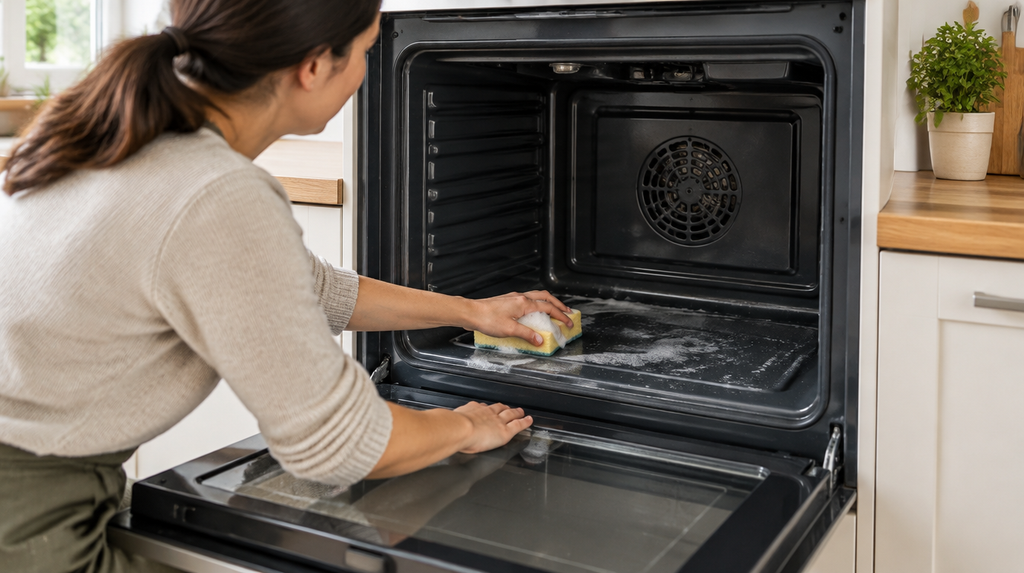
The good news? Learning how to clean an oven doesn’t have to mean hours of scrubbing. Warm soapy water, bicarbonate of soda or a suitable oven cleaner spray can all help, depending on how dirty your oven is.
Whether you’re tackling the inside of the oven, greasy racks or stubborn stains on the door glass, here’s how to get everything clean without damaging your appliance.
What’s the best way to clean an oven?
The best way to clean an oven depends on how much grease has built up and the type of oven you have.
For everyday spills and light grease, warm soapy water and a soft cloth are often enough. More stubborn marks may need bicarbonate of soda or a specialist oven cleaning product.
If your oven has a self-cleaning function, such as pyrolytic or steam cleaning, you may be able to use that instead.
Whatever method you choose, always check the manufacturer’s instructions first. Some oven surfaces have special coatings that can be damaged by ordinary cleaning products.
Why your oven needs regular cleaning
Ovens collect grease, food splashes and crumbs every time you cook. Leave them long enough, and repeated heating can turn them into stubborn, burnt-on residue.
Regular cleaning helps prevent unpleasant smells, smoke from food deposits and the build-up of grime on cooking surfaces.
How often should you clean your oven?
There’s no single cleaning schedule that works for every household. It depends on how often you cook and what you’re making.
If you regularly roast meat or cook dishes that splatter, you’ll probably need to clean your oven more often than someone who only uses it occasionally.
A good approach is to:
- Wipe up spills once the oven has cooled.
- Remove loose crumbs and food debris regularly.
- Give the oven a more thorough clean every few months, or sooner if grease builds up.
- Follow the manufacturer’s recommended cleaning schedule if your oven has a self-cleaning function.
The important thing is not to wait until the oven starts smoking or smells strongly of burnt food.
Signs your oven needs a deep clean
Not sure whether it’s time to give your oven some attention?
Look out for:
- Grease or burnt-on food on the oven floor
- Smoke caused by food residue when heating the oven
- Unpleasant burning smells during cooking
- A greasy film on the oven door glass
- Food splashes and stains that don’t come away with a quick wipe
If you notice unusual heating problems or persistent smoke after cleaning, don’t assume dirt is the cause. Your oven may need checking by a qualified professional.
What you’ll need before you start
You don’t need a cupboard full of specialist products to clean your oven.
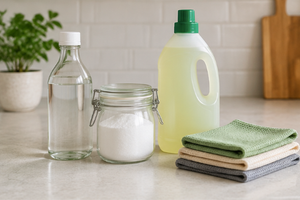
For everyday dirt and grease, a few basic supplies are often enough:
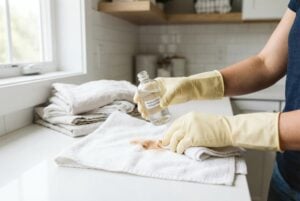
- Rubber cleaning gloves
- Washing-up liquid
- Warm water
- Soft cloths or sponges
- A non-scratch cleaning pad
- A soft brush or old toothbrush
- Bicarbonate of soda, if suitable for your oven
- A plastic scraper suitable for the surface
For heavier build-up, you may need a dedicated oven cleaner that’s approved for your appliance.
Safety precautions before cleaning
Always switch off the oven and let it cool completely before cleaning it by hand.
Check the manufacturer’s instructions before applying cleaning products, especially if your oven has catalytic liners, a pyrolytic cleaning programme or another special coating.
When using stronger chemical cleaners:
- Wear the protective gloves and eye protection specified on the label.
- Keep the kitchen well ventilated.
- Keep children and pets away from the cleaning area.
- Never mix different cleaning chemicals.
- Avoid spraying products onto heating elements, fans, electrical components or door seals.
- Follow the product’s instructions for application, contact time and rinsing.
Some commercial oven cleaners contain caustic soda, which can cause serious skin burns and eye damage. Never assume a product is safe simply because it’s sold for household use.
How to clean the inside of an oven, step by step
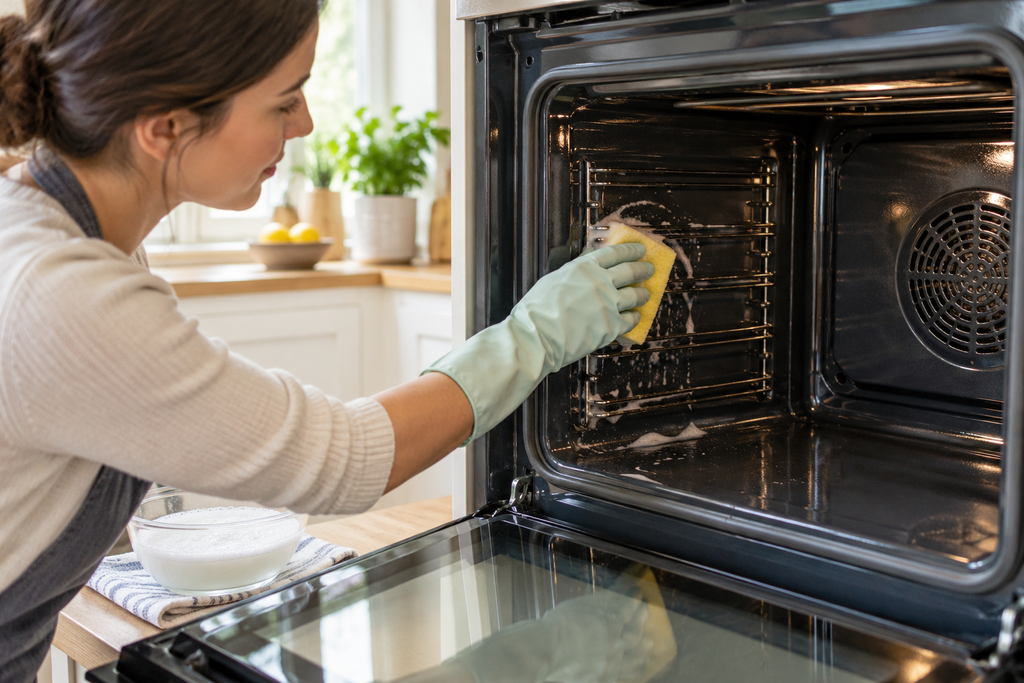
For a standard oven interior without special self-cleaning coatings, the following method can help remove everyday grease and food residue.
Always check the appliance manual first, particularly before using bicarbonate of soda.
Step 1: Remove the oven racks and trays
Once the oven is completely cool, take out the racks, trays and any other removable accessories.
This gives you better access to the oven floor and walls.
Brush away loose crumbs and food debris with a soft cloth or brush.
Step 2: Clean light grease with soapy water
Start with warm water and a little washing-up liquid.
Dip a soft sponge or cloth into the solution and wipe the oven’s accessible interior surfaces.
For light grease, this may be all you need.
Avoid soaking the oven interior or allowing water to enter vents, electrical components or other sensitive areas.
Step 3: Tackle stubborn marks with bicarbonate of soda
If your oven manufacturer allows it, bicarbonate of soda can help loosen stubborn residue on suitable enamel surfaces.
Mix a few tablespoons of bicarbonate of soda with enough water to make a thick paste.
Apply a small amount to the affected areas and leave it for a while to soften the residue.
Do not apply the paste to catalytic liners, heating elements, fans, door seals or other surfaces that the manufacturer says must not be treated.
On ovens with catalytic liners, only clean ordinary enamel surfaces, such as the oven floor or inside of the door, if the manufacturer’s instructions permit it.
Step 4: Wipe away the residue
Use a damp cloth or soft sponge to remove the paste and loosened grease.
You may need to repeat the process for particularly stubborn patches.
Avoid scraping aggressively, as this can damage the oven’s enamel or protective coatings.
Step 5: Rinse and dry
Wipe the cleaned surfaces with a fresh, damp cloth until all cleaning product residue has been removed.
Dry accessible surfaces with a clean cloth and allow any remaining moisture to evaporate before using the oven again.
Only replace the racks and trays once they’re clean and dry.
How to steam clean an oven
Steam cleaning can make it easier to remove light grease and recent food splashes without heavy scrubbing.
Some modern ovens have a built-in steam-cleaning programme designed to soften residue with moisture.
Depending on the model, you may need to add water to a specific tray, reservoir or recess before starting the programme.
Follow the manufacturer’s instructions for the amount of water, programme settings and cleaning process.
Once the programme has finished and the oven has cooled sufficiently, wipe away the loosened residue with a soft cloth.
Steam cleaning can be particularly useful for routine maintenance, although it may not be enough for thick layers of burnt-on grease.
Can you steam clean an oven without a steam function?
Some homemade cleaning methods suggest heating a bowl of water inside the oven to create steam.
However, not every oven is designed for this approach. Using an unsuitable container or allowing water to spill inside the appliance could cause damage or injury.
If your oven doesn’t have a dedicated steam-cleaning programme, check the manufacturer’s instructions before trying any water-based heating method.
For most light cleaning jobs, warm soapy water and a soft cloth are a simpler alternative.
Can you use lemon to steam clean an oven?
You may have seen tips suggesting heating water and lemon juice inside the oven.
Although steam can soften some food residue, adding lemon doesn’t necessarily make the cleaning process more effective.
Lemon juice is acidic and may not be suitable for certain oven surfaces.
If your oven has a steam-cleaning function, use it as instructed rather than adding ingredients that the manufacturer hasn’t approved.
How to clean oven racks and shelves
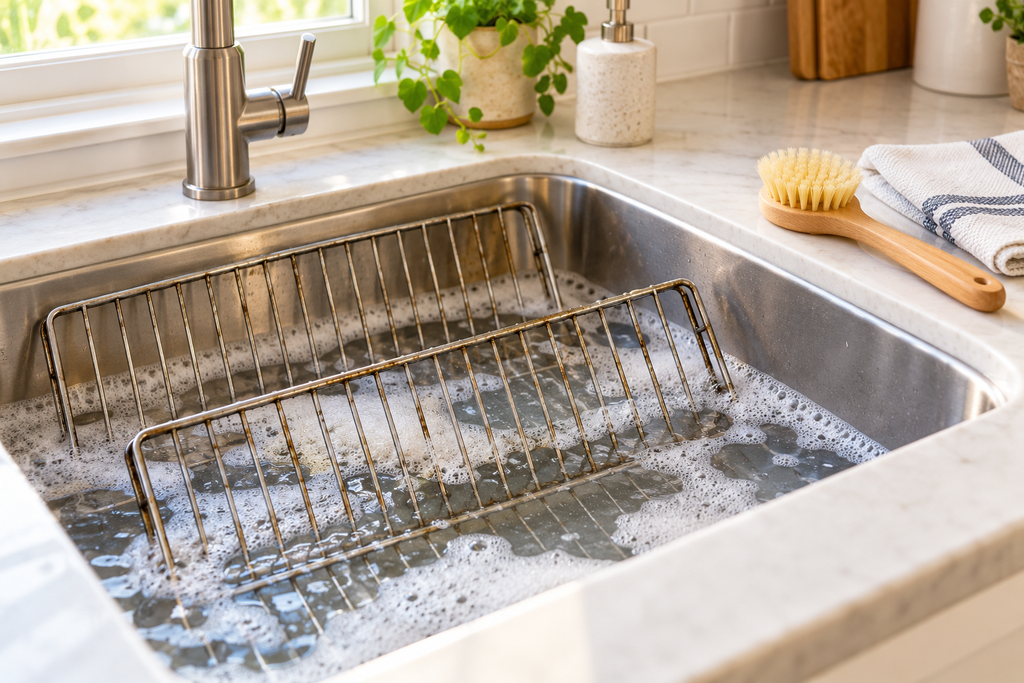
Oven racks can collect a surprising amount of grease, especially if food regularly drips onto them.
The easiest approach is to remove them and clean them separately.
- Let the racks cool completely.
- Place them in a sink or suitable container with warm soapy water, if permitted by the manufacturer.
- Leave them until the grease has softened.
- Use a soft brush or non-scratch sponge to remove residue.
- Rinse thoroughly and dry before replacing them.
If you’re cleaning racks in a bath, place an old towel underneath to protect the surface from scratches.
Avoid wire wool and aggressive scraping, particularly on chrome-plated or coated racks.
Some oven racks have special coatings and aren’t suitable for prolonged soaking or certain cleaning products, so check the manufacturer’s instructions first.
Cleaning an oven glass door
A greasy oven glass door can make the whole appliance look dirty, even when the rest of the kitchen is spotless.
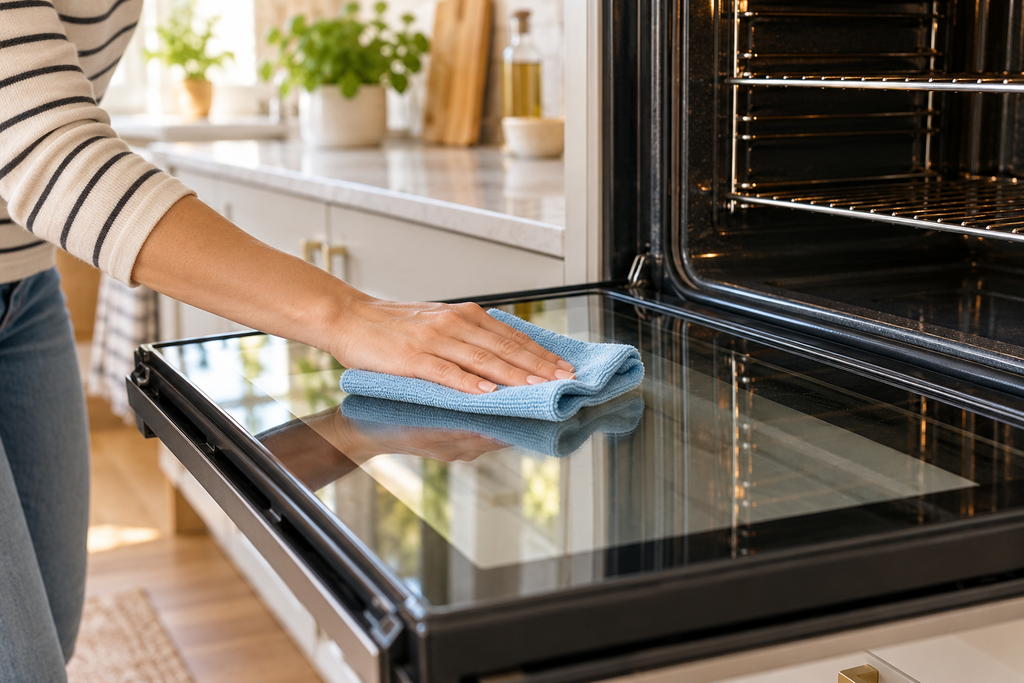
Start by switching off the oven and allowing the glass to cool completely.
Then follow these steps:
- Wipe the glass with warm soapy water and a soft cloth.
- Gently work over greasy areas without applying excessive pressure.
- For stubborn marks, use a glass-safe cleaner recommended for your oven.
- Remove any cleaning residue with a fresh, damp cloth.
- Dry the glass with a clean microfibre cloth to avoid streaks.
Avoid abrasive powders, rough scouring pads and sharp scrapers unless your appliance instructions specifically approve a suitable cleaning tool.
How do you clean between oven door glass panels?
Some oven doors have removable glass panels that can be cleaned separately.
However, the removal process varies between models.
Always follow the manufacturer’s instructions before attempting to take the door or glass panels apart.
If the glass isn’t designed to be removed by the user, don’t force it. Damaging the door mechanism or seal can create a safety problem.
How to clean an oven tray
Oven trays are particularly prone to burnt-on grease because oil and food juices collect directly on their surface.
Start with warm water and washing-up liquid.
If the tray is suitable for soaking, leave it in the water until the grease begins to soften.
Then use a soft sponge or non-scratch pad to remove the residue.
For more stubborn marks, a suitable cleaning product may help, but check the tray material first.
Non-stick coatings, aluminium and enamelled trays can react differently to cleaning products and abrasive tools.
Avoid using bicarbonate of soda, vinegar or strong oven cleaner on trays unless the manufacturer confirms they’re suitable.
Dry the tray thoroughly before putting it away.
Cleaning an oven with baking soda: does it work?
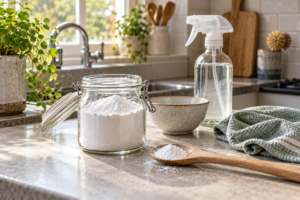
Baking soda, known as bicarbonate of soda in the UK, is a popular household cleaning ingredient.
It can help loosen certain types of food residue and grease, particularly when mixed with a little water to form a paste.
For suitable oven surfaces, mix a few tablespoons of bicarbonate of soda with enough water to create a thick, spreadable consistency.
Apply it gently to stubborn marks, leave it to work and wipe away thoroughly.
Bicarbonate of soda is mildly abrasive, so avoid heavy scrubbing and don’t use it on catalytic liners or other sensitive surfaces.
Can you clean an oven with baking soda and vinegar?
Combining bicarbonate of soda and vinegar is a common homemade cleaning trick.
When the two ingredients meet, they react and produce bubbles. This fizzing can look impressive, but it doesn’t automatically mean the mixture will remove grease more effectively.
Because the acid and bicarbonate react with each other, combining them also reduces their individual cleaning properties.
For everyday oven cleaning, it’s usually better to start with warm soapy water. If you need something stronger, use a suitable cleaning product according to your appliance manufacturer’s instructions.
Avoid applying vinegar to oven surfaces unless the manufacturer confirms it’s safe.
Is bicarbonate of soda safe to use inside an oven?
Bicarbonate of soda can be suitable for cleaning some oven interiors, but not every surface.
It shouldn’t be applied to catalytic liners, heating elements, fans, door seals or other components that aren’t designed to come into contact with cleaning paste.
Because bicarbonate is mildly abrasive, aggressive scrubbing can also damage certain coatings.
Always check your appliance instructions before using it and wipe away all residue thoroughly before cooking again.
Oven cleaner spray: when should you use it?
An oven cleaner spray can be useful when ordinary soapy water isn’t enough to remove heavy grease or burnt-on food.
These products are designed to break down stubborn deposits, but their ingredients and strength vary.
Some contain caustic soda or other corrosive substances that can cause severe skin burns and eye injuries.
Before using an oven cleaning spray:
- Check that it’s suitable for your oven.
- Read the safety instructions carefully.
- Wear appropriate protective gloves and eye protection.
- Keep the room well ventilated.
- Protect surfaces that shouldn’t come into contact with the product.
- Follow the recommended contact time.
- Remove residues exactly as instructed on the label.
Never use a chemical oven cleaner on catalytic liners or other self-cleaning coatings unless the appliance manufacturer explicitly permits it.
Some sprays are also unsuitable for aluminium, non-stick surfaces and certain door components.
Is oven cleaner spray better than bicarbonate of soda?
It depends on the job.
Bicarbonate of soda may help with relatively light or localised residue on compatible surfaces.
A dedicated oven cleaning spray can be more effective on heavy grease, but it may require stricter safety precautions.
Neither option is automatically suitable for every oven.
If you’re unsure, start with the gentlest method permitted by your appliance manufacturer.
How do self-cleaning ovens work?
Not all self-cleaning ovens use the same technology.
Some rely on very high temperatures, while others have special liners or steam-assisted programmes.
Understanding which type you have is important before deciding how to clean it.
Pyrolytic ovens
A pyrolytic oven uses extremely high temperatures, often around 500°C, to break down grease and food residue into ash.
During the programme, the oven door locks for safety.
Before starting, remove loose food debris, excess grease and any accessories the manufacturer says must be taken out.
Once the cycle has finished and the oven has cooled completely, the remaining ash can usually be wiped away with a damp cloth.
Pyrolytic cleaning doesn’t eliminate the need for every other cleaning task. Door edges, seals and other areas may still require attention according to the appliance’s instructions.
Follow the manufacturer’s guidance on ventilation and keep children and pets away from the hot appliance during the cycle.
Catalytic ovens
Catalytic ovens have special porous liners that absorb grease splashes and help break them down when the oven reaches sufficiently high temperatures.
Unlike pyrolytic ovens, they don’t heat the entire cavity to around 500°C.
Some manufacturers recommend running an empty oven at approximately 250°C for around an hour to activate the catalytic cleaning process. Others provide a dedicated cleaning programme.
Always follow the instructions for your particular model.
Never use oven cleaner, bicarbonate paste, abrasive scourers or other detergents on catalytic liners. These can damage the coating.
Catalytic liners also don’t necessarily cover the entire oven. The base, door and other uncoated areas may still need cleaning by hand.
Steam-cleaning ovens
Steam-assisted cleaning programmes use moisture to soften dirt and grease.
They generally operate at lower temperatures than pyrolytic cleaning and require manual wiping afterwards.
Some ovens have a dedicated steam-cleaning setting, while others use a specific water-based cleaning procedure.
Check your manual before adding water or selecting a programme.
How to clean an electric oven safely
Electric ovens need the same basic care as other ovens, but extra attention is needed around their heating elements and electrical components.
Always switch the appliance off and let it cool before cleaning.
Avoid spraying water or cleaning products directly onto:
- Heating elements
- Fan openings
- Electrical connections
- Temperature sensors
- Door seals
Use a lightly damp cloth to clean accessible surfaces around these components, only where permitted by the manufacturer.
If grease has built up around a heating element or inside a fan assembly, don’t attempt to dismantle electrical parts yourself.
For stainless steel exteriors, use a soft cloth and a cleaner suitable for the appliance’s finish. Abrasive pastes may leave fine scratches.
Cleaning your cooker: don’t forget the hob
If you’re giving your oven a proper clean, it’s worth paying attention to the rest of the cooker too.
Grease and food splashes can collect on the hob, control knobs and surrounding surfaces.
Once everything has cooled, wipe accessible surfaces with a soft cloth and a suitable cleaning product.
For gas hobs, removable pan supports and burner caps may need separate cleaning. Make sure they’re completely dry and correctly positioned before using the burners again.
For ceramic or induction hobs, use products designed for glass-ceramic surfaces and avoid abrasive scourers.
Don’t let water or cleaning products enter control panels, ignition components or electrical openings.
Cleaning the oven and hob together can be an easy way to keep the whole cooking area looking tidy.
Oven cleaning tips to keep your cooker clean for longer
A few small habits can make oven cleaning much less of a chore.
- Wipe spills once the oven cools. Fresh marks are usually easier to remove than repeatedly heated residue.
- Use suitable roasting trays. Choose trays deep enough to catch cooking juices and reduce spills.
- Avoid overfilling dishes. This helps prevent sauces and liquids from bubbling over.
- Clean racks and trays regularly. Grease is easier to remove before it becomes heavily burnt on.
- Check the door seal. If it’s damaged or loose, follow the manufacturer’s repair guidance.
- Use self-cleaning programmes correctly. Follow the instructions rather than running them unnecessarily.
- Choose suitable cleaning products. Using the wrong cleaner can cause more problems than the grease itself.
Avoid placing foil or liners directly on the oven floor unless the manufacturer specifically allows it, as they can interfere with heat circulation or damage the surface.
Keeping up with the occasional quick wipe is usually easier than dealing with months of burnt-on grease.
Frequently asked questions
What is the best way to clean the inside of my oven?
Start with warm soapy water and a soft cloth once the oven has cooled completely. For stubborn residue, a bicarbonate of soda paste may help on compatible surfaces. Always check your appliance instructions, especially if it has catalytic liners or another self-cleaning coating.
What is best to use to clean an oven?
For everyday grease, washing-up liquid and warm water are often enough. Heavier burnt-on residue may need a suitable oven cleaner spray or an approved self-cleaning programme. The best option depends on your oven’s materials and cleaning features.
How do I get burnt stuff off the bottom of my oven?
Allow the oven to cool, then remove loose food debris and soften remaining marks with warm soapy water. If the manufacturer’s instructions allow it, use a suitable cleaning paste or oven cleaner. Avoid sharp scrapers and abrasive tools that could damage the enamel.
Can you clean an oven with a dishwasher tablet?
Dishwasher tablets aren’t designed for every oven surface, and their detergents may damage certain coatings. Unless your appliance manufacturer recommends this method, it’s better to use a cleaner specifically approved for ovens.
Is baking soda the same as bicarbonate of soda?
Yes. Baking soda is the American name for bicarbonate of soda, which is the term commonly used in the UK. They’re the same substance and are sometimes used for household cleaning.
Can I use bicarbonate of soda and vinegar together to clean my oven?
You can mix them, but the fizzing reaction doesn’t necessarily improve cleaning performance. It’s generally better to use an appropriate cleaning method for your oven surface rather than combining ingredients without checking their suitability.
Is it safe to use bicarbonate of soda in an oven?
It can be safe on certain compatible surfaces, but it shouldn’t be applied to catalytic liners, heating elements, fans or door seals. Always check the manufacturer’s instructions and remove any residue thoroughly before using the oven again.
How do you clean an oven glass door without scratching it?
Use a soft cloth with warm soapy water or a suitable glass-safe cleaner. Avoid abrasive pads, harsh powders and sharp scrapers unless they’re specifically approved for your oven.
How often should you clean an oven?
There’s no fixed schedule for every household. Wipe spills once the oven has cooled and consider a deeper clean every few months, depending on how often you cook and how much grease accumulates. Follow your manufacturer’s instructions for any self-cleaning programme.
Do self-cleaning ovens still need cleaning?
Yes. Pyrolytic programmes can turn much of the oven’s food residue into ash, but some areas may still need wiping by hand. Catalytic liners only clean the surfaces they cover, so the oven floor, door and other untreated areas may still require regular cleaning.
Is it safe to use oven cleaner spray on a self-cleaning oven?
Not automatically. Catalytic liners and other specialist coatings can be damaged by chemical cleaners. Check the manufacturer’s guidance before using any product, and never apply oven cleaner to surfaces where it’s prohibited.