Summarise this article with:
 ChatGPT
 Mistral
 Claude
 Perplexity
 Grok
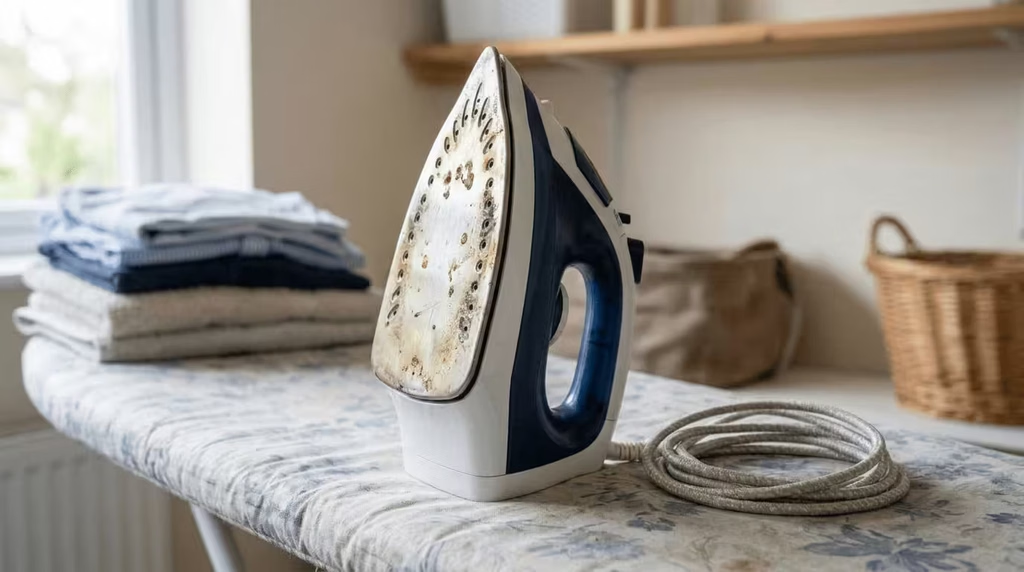
Sticky marks on your favourite shirt? Rusty water spitting out mid-press? If your iron’s seen better days, you’re not alone. People often put off dealing with a grubby soleplate simply because they don’t know where to start.
Good news: cleaning your iron takes minutes and needs nothing fancy, just things already in your kitchen cupboard. This guide covers soleplate stains, descaling the steam vents, and when a shop-bought cleaner is worth it.
What Causes Buildup on a Dirty Iron?
So what’s actually going on under there? A few usual suspects: starch residue from spray-on fabrics, synthetic fabrics that melt slightly under high heat and leave sticky or brown gunk behind, and mineral deposits from hard water building up inside the tank. Each one leaves its own calling card.
How do you know your iron needs attention? Look out for:
- Scorch marks or brown patches that transfer onto lighter clothes.
- A dull, dragging feel as the plate moves over fabric instead of gliding smoothly.
- Chalky white marks or burnt residue flecking onto your clothes mid-iron.
Spotted any of these? Time for a proper clean.
What You Need and What to Avoid
You probably already own everything this job needs.
| Tool | Purpose |
|---|---|
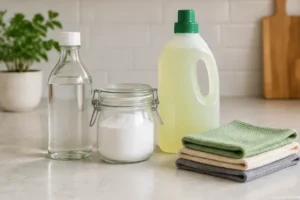
| White vinegar | Loosens light residue and limescale |
| Baking soda | Lifts stubborn, baked-on marks |
| Damp cloth | Wipes away loosened grime |
| Old towel | Protects your surface and catches drips |
| Cotton bud | Clears fine steam vents |
| Toothbrush | Scrubs gently into grooves |
A few things to leave in the cupboard:
- Metal scrapers or knives.
- Harsh scrubbing pads.
- Abrasive cleaners that scratch coatings.
Always unplug the iron and let it cool fully before cleaning, and check your user manual first.
The Best Way to Clean an Iron Soleplate at Home
Before you do anything, make sure your iron is cooled down and unplugged. Every method below works the same way: wipe the soleplate in circular motions, using gentle pressure rather than scrubbing hard.
DIY Cleaning with White Vinegar
White vinegar is ideal for dissolving light residue, mineral buildup, and dull films without scratching the soleplate. Follow these simple steps to refresh the base of your appliance safely:
- Start with the gentlest option, a damp cloth, and check your manual before using vinegar, as some manufacturers advise against it. If your model permits, combine equal parts white vinegar and water in a small bowl.
- Dip a soft microfibre cloth into the mixture, wringing out any excess liquid so it is damp rather than dripping.
- Wipe the entire soleplate gently using circular motions until the grime lifts away.
- Dry the surface thoroughly with a separate clean cloth.
Whatever method you choose, test it on a small corner of the soleplate first, and avoid anything gritty on non-stick or ceramic coatings.
Removing Burn Marks with Baking Soda
For scorch marks that vinegar alone won’t shift, follow these simple steps:
- Mix two parts baking soda with one part water to form a thick paste (avoid combining baking soda and vinegar together, as the reaction fizzes away and will not create a usable paste).
- Apply the paste and scrub gently with a soft cloth or an old toothbrush.
- Wipe the entire plate thoroughly with a clean damp cloth.
- Check the steam vents, and remove any stray paste using a cotton bud.
Cleaning the Iron Plate with Toothpaste
Dab a little plain white toothpaste, not gel, onto a cloth and rub it over any stubborn marks before wiping clean. Toothpaste contains mild abrasives, so use it sparingly and test a small patch first.
Here’s a quick side-by-side if you’re not sure which method suits your situation:
| Method | Best for | Caution |
|---|---|---|
| White vinegar | Everyday dull film and light residue | Never mix with salt |
| Baking soda paste | Stubborn burn marks | Don’t combine with vinegar |
| Toothpaste | Small, localised marks | Mild abrasive, use sparingly |
How to Descale a Steam Iron Safely
Limescale builds up inside your appliance and blocks the steam vents, which is one reason for brown or chalky spray landing on clean clothes. However, the type of water you use can also cause these dirty drips. Brown streaks often stem from using softened water, perfumed ironing water, tumble dryer condensation, rainwater, or bottled and filtered water, as well as descaling agents added to the reservoir. Most appliances are designed to run on standard tap water, mixed 50/50 with distilled water only if you live in a very hard water area. Clear out the buildup step by step:
- Always consult your user manual before adding anything to the tank. While some appliances allow diluted descalers, many manufacturers explicitly advise against using vinegar or chemical descaling products, as these substances can corrode internal components and permanently damage anti-scale valves.
- Fill the water tank partway with water according to your model’s guidelines.
- Run the self-clean cycle if your iron has this feature.
- Hold the iron over an old towel and trigger the steam button continuously for a few minutes until only clear steam and clean water emerge.
- Use a cotton bud to dislodge any remaining chalky deposits from individual steam vents once the unit is turned off and cooled.
Shop-Bought Iron Cleaner Sticks and Sprays
For stubborn, baked-on residue, a ready-made iron cleaning stick or soleplate spray from the supermarket can help. Follow the instructions on the pack, as most sticks are used on a warm plate in a well-ventilated room. Some newer irons also have a built-in self-clean function, which is worth trying first.
FAQ
How do you get brown sticky stuff off an iron?
Once the iron is unplugged and cool, wipe the plate with a damp cloth, then work a baking soda paste into any sticky areas.
How do you clean a ceramic iron?
Always wait until the appliance is completely cool and unplugged, then wipe the ceramic plate using a soft microfibre cloth dampened with warm water or diluted white vinegar. For stubborn residue, gently work in a smooth baking soda paste or a dab of white toothpaste, polishing rather than scrubbing so you do not scratch or chip the delicate coating. Avoid abrasive scouring pads, steel wool, or harsh chemical cleaners at all costs, as these can permanently ruin the non-stick surface.
Sources: