Summarise this article with:
 ChatGPT
 Mistral
 Claude
 Perplexity
 Grok
Grok
Stains rarely happen at a convenient moment. A drop of blood, yellow sweat marks, a spill on the carpet or a mattress accident can quickly become permanent if handled the wrong way. This is why hydrogen peroxide for stains remains a trusted solution among professional cleaners. It is affordable, widely available, and extremely effective when used with precision.
However, hydrogen peroxide is not a casual cleaner. It works by oxidation, meaning it can lift colour just as easily as it lifts stains. Understanding where, when and how to use it is what separates successful stain removal from irreversible damage. Used correctly, hydrogen peroxide for stains is an effective stain remover and a genuinely versatile cleaner. Used incorrectly, it can shorten fabric shelf life or bleach colored clothes.
Let us break down how professionals actually use it.
Hydrogen peroxide for cleaning stains
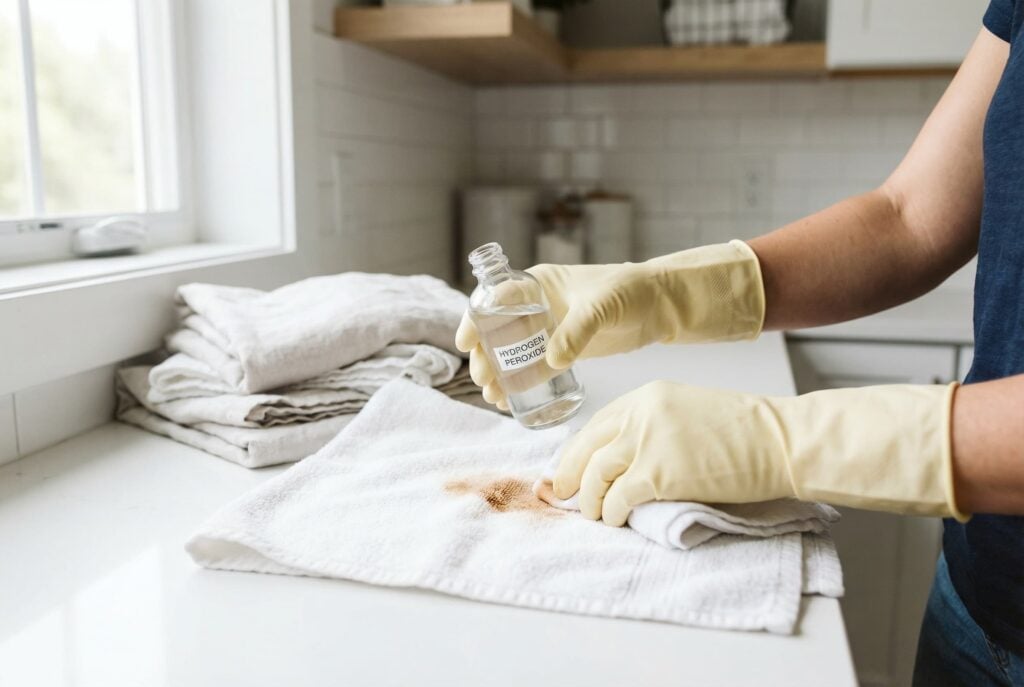
Hydrogen peroxide for cleaning stains works by breaking down organic compounds through oxygen release. This reaction is particularly effective on protein-based stains such as blood, sweat and food residue. Professional cleaners never apply it blindly. They assess the fabric, the age of the stain and whether cold water has already been used.
In practice, hydrogen peroxide for cleaning stains is applied after blotting, never before. Blotting removes excess material and prevents the stain from spreading deeper into fibres. Cleaners rely on a small amount of hydrogen, applied with a cloth rather than poured directly, to maintain control.
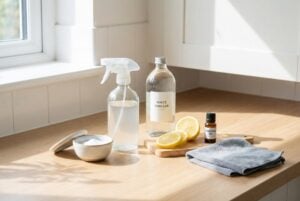
Hydrogen peroxide for stains also fits well into routines that favour natural cleaning products . It is often used alongside homemade cleaning products when clients prefer low-fragrance or minimalist solutions.
Hydrogen peroxide white clothes
Hydrogen peroxide white clothes treatments are among the safest applications. White cotton, linen and synthetic blends tolerate oxidation well, making hydrogen peroxide for stains a reliable whitening agent.
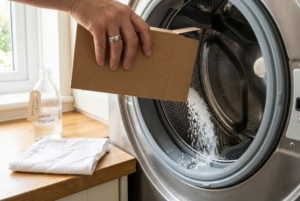
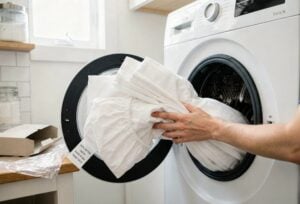
Professionals often use hydrogen peroxide white clothes treatments when washing alone does not restore brightness. In the washing machine, it is added directly to the drum rather than the detergent drawer, ensuring even dilution. Overuse is avoided, as repeated oxidation can weaken fibres and reduce shelf life.
Hydrogen peroxide white clothes treatment is always done with cold water, as heat can lock stains in place and reduce effectiveness.
Baking soda and hydrogen peroxide for stains
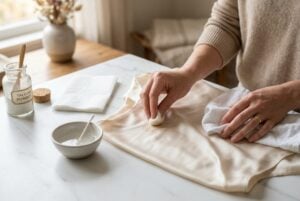
Baking soda and hydrogen peroxide for stains is a combination reserved for stubborn residue. Baking soda provides gentle abrasion while hydrogen peroxide oxidises the stain itself.
Professional cleaners apply this mixture as a paste, never as a soak. Baking soda and hydrogen peroxide for stains are left only briefly on the surface before rinsing. Allowing the mixture to dry fully can leave residue that attracts dirt.
This method is commonly used within homemade cleaning products, particularly for mattresses or durable fabrics where repeated scrubbing is not advisable.
Hydrogen peroxide for stain removal
Hydrogen peroxide for stain removal is most effective on fresh stains. The sooner it is applied, the less oxidation is required. Professionals always blot first, then apply hydrogen peroxide for stain removal in controlled amounts.
Hydrogen peroxide for stain removal is suitable for cotton, polyester blends and carpets, but it is not universal. On delicate fibres or dark fabrics, alternatives such as salt water for cleaning or enzyme-based solutions are often safer.
Despite its power, hydrogen peroxide for stains is never treated as a soak. Targeted application preserves fabric integrity.
Treating stains with hydrogen peroxide
Treating stains with hydrogen peroxide follows a strict professional sequence. There is no improvisation. Cleaners assess the stain, test the fabric, and apply gradually.
When treating stains with hydrogen peroxide, professionals consistently:
- blot first with cold water to remove surface residue,
- apply a small amount of hydrogen using a white cloth,
- allow bubbling to occur naturally without agitation,
- and rinse thoroughly before reassessing the result.
Treating stains with hydrogen peroxide is often combined with other methods such as cleaning with lemon for light discolouration or citric acid for cleaning when mineral deposits are involved.
Does hydrogen peroxide bleach clothes
Does hydrogen peroxide bleach clothes?
Yes, hydrogen peroxide can bleach clothes. This is why professionals treat it as a controlled bleaching agent rather than a general cleaner. On white fabrics, this effect is useful. On colored clothes, it can cause fading or patchy marks.
Does hydrogen peroxide bleach clothes every time? Not necessarily. Short contact time and low concentration may lift stains without visible colour loss. However, cleaners never rely on chance. Testing is always required.
Understanding this dual behaviour is key to using hydrogen peroxide for stains responsibly.
Hydrogen peroxide spray for stains
Hydrogen peroxide spray for stains is used for quick, controlled application. Professionals prepare sprays fresh using a bottle of hydrogen peroxide, as light exposure reduces effectiveness and shortens shelf life.
A hydrogen peroxide spray for stains allows precise treatment on carpets, upholstery and mattresses. During application, cleaners focus on:
- light misting rather than saturation,
- blotting instead of rubbing,
- and immediate rinsing with cold water.
This approach prevents moisture from penetrating padding or underlayers.
Hydrogen peroxide for clothes stain
Hydrogen peroxide for clothes stain removal depends entirely on fabric type. Cotton and polyester blends respond well. Delicate fibres do not.
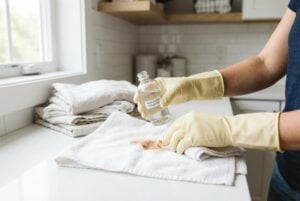
Professionals never pour hydrogen peroxide directly onto garments without testing. Hydrogen peroxide for clothes stain treatment is applied locally and rinsed thoroughly before laundering in the washing machine.
This controlled approach ensures hydrogen peroxide for stains improves results without compromising durability.
Hydrogen peroxide for blood stains
Hydrogen peroxide for blood stains is one of its most recognised uses. Blood reacts immediately, producing visible bubbling as oxygen breaks down proteins.
Professionals stress that hydrogen peroxide for blood stains must always be used with cold water. Heat permanently sets blood stains. Blotting is preferred over rubbing to protect fibres.
Although hydrogen peroxide for stains works extremely well here, repeated treatments are avoided to preserve fabric strength.
Hydrogen peroxide for carpet stains
Hydrogen peroxide for carpet stains is effective on organic spills, pet accidents and food residue. Cleaners always test first, as carpet dyes vary.
When using hydrogen peroxide for carpet stains, professionals apply minimal liquid to avoid soaking the backing. A small amount of hydrogen is sufficient. Blotting continues until the stain lifts, followed by rinsing with cold water.
This method is often chosen over harsher chemicals, especially in homes that prioritise natural cleaning products.
Hydrogen peroxide for sweat stains
Hydrogen peroxide for sweat stains is commonly used on white shirts, bedding and mattress covers. Sweat contains proteins and minerals that respond well to oxidation.
Professionals often combine hydrogen peroxide for sweat stains with baking soda, applying briefly before rinsing. This helps lift yellowing without aggressive scrubbing.
On colored clothes, alternatives such as cleaning with lemon or salt water for cleaning are often safer.
Hydrogen peroxide for mattress stains
Hydrogen peroxide for mattress stains must be used sparingly. Mattresses are sensitive to moisture, and over-wetting can cause odours or mould.
Cleaners apply a light mist, blot immediately and ensure thorough drying. Hydrogen peroxide for mattress stains is effective on sweat and organic marks but must never soak into foam layers.
Ventilation is essential after treatment.
Hydrogen peroxide for fabric stains
Hydrogen peroxide for fabric stains varies by textile. Cotton and linen tolerate it well. Wool and silk rarely do.
Professionals evaluate whether hydrogen peroxide for fabric stains is appropriate or whether alternatives such as how to use citric acid for cleaning are safer. The goal is always stain removal without reducing shelf life.
Does hydrogen peroxide get rid of stains?
Does hydrogen peroxide get rid of stains?
Yes, hydrogen peroxide gets rid of stains when used correctly. It is especially effective on organic and oxidisable stains. Results depend on freshness, fabric type and concentration.
Hydrogen peroxide for stains is not suitable for grease-based stains, which often require surfactants first.
What should you not clean with hydrogen peroxide?
What should you not clean with hydrogen peroxide?
Hydrogen peroxide should not be used on silk, wool, leather or dark colored clothes without expert testing. It can weaken fibres and cause irreversible colour loss.
It should also be avoided on sealed wood and natural stone, where citric acid for cleaning or cleaning with lemon are more appropriate.
Can you put hydrogen peroxide directly on fabric?
Can you put hydrogen peroxide directly on fabric?
Yes, but only after testing. Professionals apply hydrogen peroxide directly on fabric using a cloth, controlling the small amount of hydrogen used.
Pouring directly onto fabric increases the risk of bleaching and fibre damage.
How do you remove yellow stains with hydrogen peroxide?
How do you remove yellow stains with hydrogen peroxide?
Yellow stains are treated by applying hydrogen peroxide, often combined with baking soda, then rinsing with cold water. This is common for sweat stains on white fabrics.
Repeated treatments should be limited to protect fabric shelf life.
What percentage of hydrogen peroxide should you use for stain removal?
What percentage of hydrogen peroxide should you use for stain removal?
Professional cleaners use 3% hydrogen peroxide for stain removal. Stronger concentrations are unnecessary for domestic use and increase damage risk.
A standard bottle of hydrogen peroxide is sufficient for most stains.
Where can you buy hydrogen peroxide for stains?
Where can you buy hydrogen peroxide for stains?
Hydrogen peroxide for stains is available in pharmacies, supermarkets and online. Always check concentration and expiry date, as shelf life affects performance.
Fabric safety reference table (professional use)
Professionals rely on quick-reference guides when choosing hydrogen peroxide for stains. For example:
| Fabric type | Hydrogen peroxide use | Key precautions |
|---|---|---|
| White cotton | Yes | Ideal for whitening |
| Colored clothes | With caution | Always patch test |
| Carpet | Yes, spot only | Avoid over-wetting |
| Mattress | Yes, light mist | Dry thoroughly |
Hydrogen peroxide vs alternatives comparison
In professional cleaning, hydrogen peroxide for stains is one tool among many:
| Method | Best use | Limitations |
|---|---|---|
| Hydrogen peroxide for stains | Organic stains | Can bleach |
| Salt water for cleaning | Fresh stains | Mild effect |
| Citric acid for cleaning | Mineral residue | Not for proteins |
| Cleaning with lemon | Light discolouration | Limited strength |
FAQ: professional cleaner insights
Is hydrogen peroxide a versatile cleaner?
Yes. Hydrogen peroxide is a versatile cleaner when used on suitable materials.
Does hydrogen peroxide shorten shelf life?
Overuse can shorten fabric shelf life, which is why professionals limit applications.
Can hydrogen peroxide replace commercial products?
It is an effective stain remover, but not a universal solution.
Final professional advice
Hydrogen peroxide for stains is powerful, accessible and reliable when used correctly. Professionals respect its chemistry, control quantities and adapt methods to each surface. Test first, use cold water, and keep applications targeted — your fabrics will last longer, and your stains will not.