Résumer cet article avec :
 ChatGPT
 Mistral
 Claude
 Perplexity
 Grok
Grok
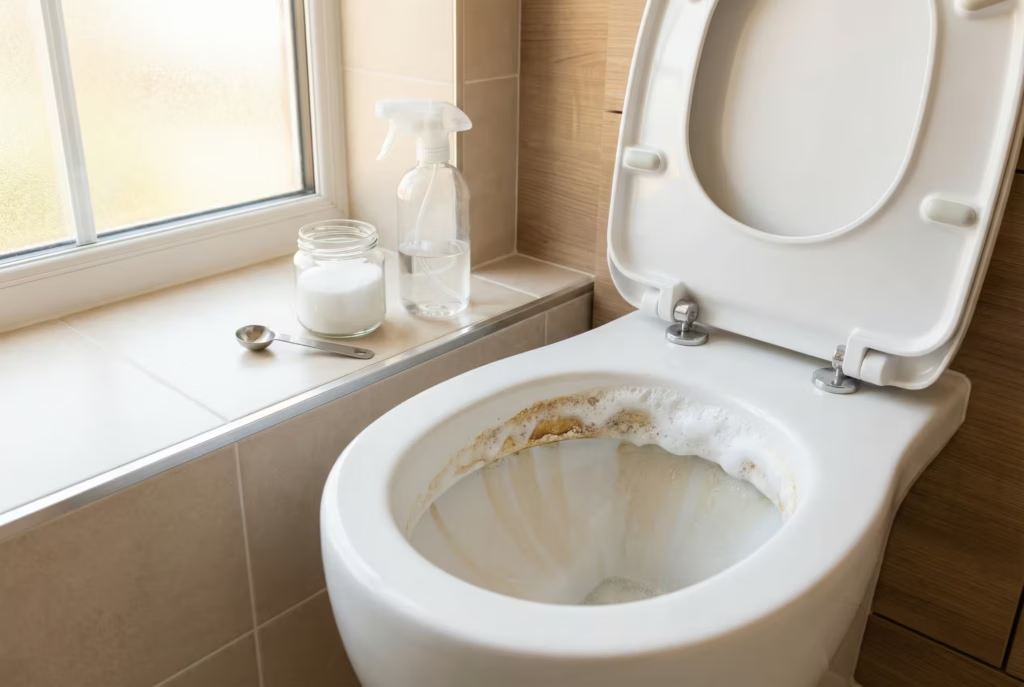
In many UK homes, toilet cleaning becomes difficult not because people are careless, but because hard water constantly leaves mineral deposits behind. These deposits settle inside the toilet bowl, particularly at the waterline and under the rim, gradually trapping dirt and forming stubborn stains. Over time, this leads to the common issue of a brown stained toilet bowl, which ordinary toilet cleaners and even bleach often fail to remove.
Cleaning with citric acid addresses this problem at its root. Rather than masking stains, citric acid dissolves limescale chemically, making it one of the most reliable solutions for long-term results. Used correctly, it fits naturally into regular cleaning routines and reduces the need for harsh scrubbing.
Remove toilet limescale
To remove toilet limescale, it helps to understand what limescale actually is. Each flush leaves traces of calcium and magnesium from hard water. These minerals crystallise as water evaporates, forming a hard layer that bonds to ceramic surfaces. This is why limescale is most visible at the waterline, under the rim and at the base of the bowl.
Professional cleaners approach limescale methodically. They focus on three critical zones in the toilet bowl — the waterline where evaporation concentrates minerals, the base where water stagnates, and the underside of the rim where deposits remain hidden. In each case, citric acid must remain in contact long enough to react with the minerals, which is why scrubbing too early often makes the job harder rather than easier.
Cleaning limescale in toilet bowl with citric acid
When cleaning limescale in toilet bowl, success depends more on chemistry and timing than force. Professionals usually lower the water level slightly so the citric acid can reach the entire stained area. Dissolving citric acid in warm water speeds up the reaction without risking damage to the porcelain.
To decide how strong the citric acid solution should be and how long it should stay in contact, cleaners mentally rely on a simple reference framework, which can be summarised in the table below:
| Type of buildup | Citric acid form | Contact time | Brushing approach |
|---|---|---|---|
| Light limescale | Diluted solution | 15–20 minutes | Light brushing |
| Moderate stains | Stronger solution | 30–45 minutes | Standard brushing |
| Heavy brown stains | Powder or paste | Around 60 minutes | Gentle, repeated brushing |
This table is not a checklist but a guide. It explains why patience matters and why aggressive scrubbing is rarely effective when dealing with hard water stains in the toilet.
Brown stained toilet bowl
A brown stained toilet bowl is almost always the result of layered limescale mixed with iron residue and organic matter. The stain often feels rough because minerals have bonded to the surface.
Citric acid works by penetrating this mineral layer rather than whitening the surface. As the acid reacts, the stain softens and loosens gradually. This controlled process is exactly what professionals recommend when dealing with brown stains in toilet bowl situations without scratching the ceramic or relying on abrasive tools.
Citric acid powder uses
Among the most practical citric acid powder uses, toilet descaling stands out because powder allows targeted application. Cleaners typically rely on citric acid powder for three specific tasks within the same job: tackling compacted limescale at the waterline where liquids slide off, loosening hard water stains under the rim where buildup stays hidden, and breaking down mixed stains where minerals have trapped organic residue.
Used this way, citric acid powder gives more control than ready-made cleaners and integrates easily into a structured cleaning routine.
Toilet cleaner for stains
As a toilet cleaner for stains, citric acid is best suited to mineral-based marks rather than greasy or organic dirt. It is particularly effective against hard water stains, rust-tinged deposits and compacted limescale that ordinary toilet cleaners leave behind.
This is why professional cleaners rarely rely on a single product. Citric acid handles mineral chemistry, while other cleaners are used alongside it to address hygiene, bacteria and general grime as part of a complete job.
Hard water stains in the toilet
Hard water stains in the toilet tend to worsen when people scrub repeatedly without dissolving the minerals first. Mechanical action polishes the surface of the deposit, making it denser and more resistant over time.
Citric acid breaks this cycle. Used periodically, it prevents stains from hardening permanently, making future cleaning quicker and supporting more efficient regular cleaning.
Natural toilet cleaner
Citric acid is often described as a natural toilet cleaner, but its effectiveness comes from chemistry rather than gentleness. Its acidity is strong enough to dissolve minerals while remaining safe for glazed ceramic when diluted correctly.
This balance makes citric acid a practical option for households wanting to reduce chlorine use without compromising on results.
Citric acid crystals
Citric acid crystals are particularly convenient for toilet cleaning because they dissolve fully and store safely when kept dry. Professionals prefer crystals for descaling because the concentration can be adjusted depending on how severe the buildup is.
For example, light maintenance requires only a mild solution, while heavy limescale benefits from a stronger mix and longer contact time. This flexibility is difficult to achieve with pre-mixed cleaners.
Baking soda toilet cleaning
Baking soda toilet cleaning is sometimes suggested as an alternative, but baking soda serves a different purpose. It is mildly alkaline and useful for deodorising and light organic residue, not for dissolving minerals.
This distinction matters. When limescale is the problem, citric acid is the correct tool; baking soda alone cannot remove hardened mineral deposits from the toilet bowl.
Will bleach get rid of brown stains in toilet
Will bleach get rid of brown stains in toilet? In most cases, no. Bleach may lighten the visible colour temporarily, but it does not remove limescale. In fact, repeated bleach use can harden mineral deposits further.
The difference becomes clear when comparing how bleach and citric acid work in practice:
| Product | What it acts on | Removes limescale | Result over time |
|---|---|---|---|
| Bleach | Organic matter | No | Temporary whitening |
| Citric acid | Mineral deposits | Yes | Progressive removal |
This is why professionals reserve bleach for hygiene steps and rely on citric acid for stain removal.
Cleaning a toilet with citric acid and vinegar
Cleaning a toilet with citric acid and vinegar is unnecessary. Both are acids, and combining them does not increase effectiveness. Citric acid alone is more stable, easier to dose and less pungent.
Using one acid consistently gives better control and reduces the risk of over-acidifying the surface.
Does citric acid damage toilet bowl
Does citric acid damage toilet bowl? When diluted and used correctly, it does not. Citric acid is safe for glazed ceramic and porcelain.
Problems only arise when high concentrations are left in contact for excessive periods or used on damaged surfaces where the glaze is already compromised.
How do you remove brown stains from a toilet bowl with citric acid?
Professionals follow a structured process. First, the water level is lowered to expose the stain. Citric acid powder or solution is applied directly and left to react before any brushing occurs. Only once the stain has softened is a toilet brush used, avoiding excessive force.
This method ensures stains lift chemically rather than mechanically and reflects best practice for how to get rid of brown stains in toilet bowl safely.
How do you clean a toilet with citric acid?
To clean the entire toilet with citric acid, a diluted citric acid solution is applied inside the bowl and under the rim. Allowing enough contact time is essential before light brushing and flushing.
This approach integrates naturally into broader guidance on how to clean toilets, especially in areas affected by hard water.
What should you not clean with citric acid?
Citric acid should not be used on marble, natural stone, aluminium or damaged enamel. These materials react poorly with acids and may etch or corrode.
Keeping citric acid limited to glazed ceramic surfaces ensures safety and effectiveness.
Is it better to clean a toilet with vinegar or citric acid?
Citric acid is generally the better choice. It is less pungent, more consistent in strength and easier to dose accurately. Vinegar varies in concentration and smell, making results less predictable.
For controlled, repeatable results, citric acid remains the professional preference.
How do you remove limescale from a toilet using citric acid?
This question highlights the importance of method. The acid must stay in contact with the limescale long enough to react. Lowering the water level, using warm water and delaying brushing are key steps.
This technique underpins professional advice on how to clean limescale from toilet surfaces efficiently.
How do you clean a toilet?
Knowing how to clean toilets properly involves more than the bowl. While citric acid handles mineral buildup, hygiene also depends on cleaning surrounding areas.
This includes knowing how to clean toilet seat , under toilet rim, and the toilet bowl brush , all of which prevent re-contamination and support the effectiveness of citric acid treatments.
FAQ
Does citric acid remove soap scum?
Yes. Soap scum often contains mineral residue, which citric acid dissolves effectively.
Can citric acid be used for regular cleaning?
Yes, when diluted. It works best as part of regular cleaning, not only as a rescue treatment.
Is citric acid safe with baking soda?
They should be used separately. Mixing acids and bases cancels effectiveness and offers no benefit.