Summarise this article with:
 ChatGPT
 Mistral
 Claude
 Perplexity
 Grok
Grok
A turmeric stain is one of the most stubborn household problems. The bright yellow pigment in turmeric binds quickly to fibres and porous surfaces, leaving behind visible turmeric stains that can look permanent. Whether from cooking curry or handling spices, knowing how to clean turmeric stain marks properly makes all the difference.
Turmeric contains natural dyes that react strongly with light and heat. That is why the correct approach — especially avoiding hot water too early — is essential.
Below is a practical, step-by-step guide covering clothes, counters, carpets, plastic, wood and more.
Curry stain remover vs turmeric stain remover
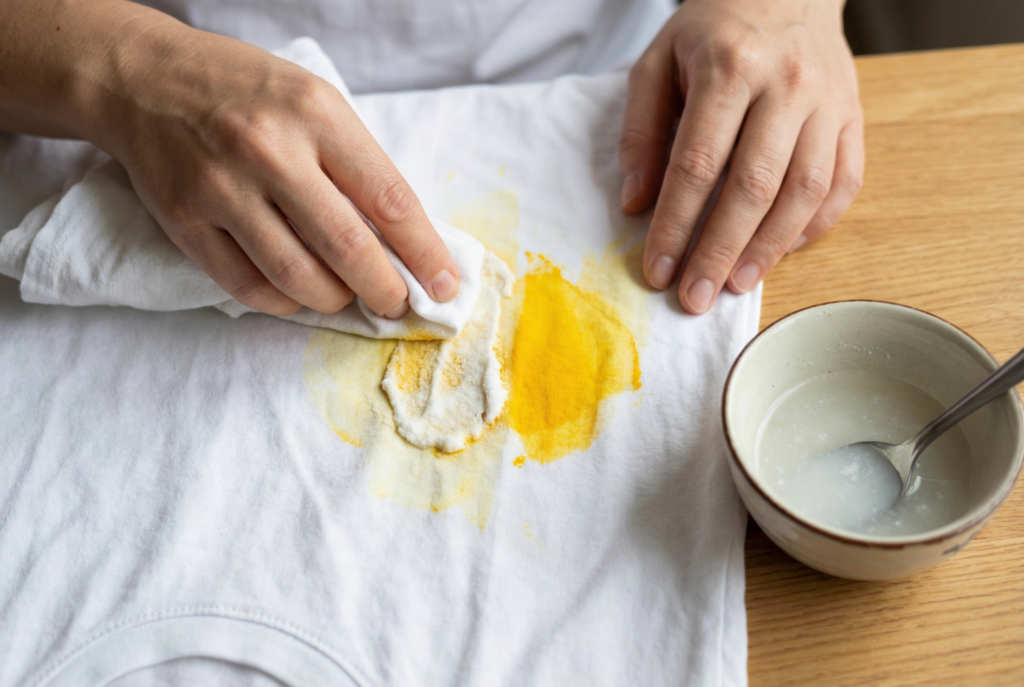
Many people search for a “curry stain remover”, but the real culprit is turmeric. A proper turmeric stain remover focuses on breaking down both pigment and oil.
First steps for any fresh turmeric stain:
- Blot gently (do not rub).
- Rinse from the reverse side with cold water.
- Apply washing-up liquid to break down grease.
- Repeat a few times if necessary.
Speed is critical. The longer turmeric sits, the harder it becomes to remove.
If the spill involves sauce or mixed food, similar principles used to clean curry stain situations apply — treat both oil and pigment components.
Remove turmeric stains from kitchen counter
To remove turmeric stains from kitchen counter, the method depends on the surface.
For laminate or sealed worktops:
- Wipe immediately with damp cloth.
- Apply mild detergent.
- Rinse and dry.
For stubborn yellow residue, a paste of baking soda and water can help lift surface colour.
For natural stone, avoid acidic cleaners. Use pH-neutral products only.
Cleaning turmeric stains from carpet
When cleaning turmeric stains from carpet, blot first. Do not rub — this spreads the pigment.
Mix:
- 1 teaspoon washing-up liquid
- 250 ml cold water
Blot repeatedly with a clean cloth.
If colour remains, apply diluted hydrogen peroxide (test first). Leave for a few minutes and blot again.
In severe cases, you may need a professional cleaner.
Does dry cleaning remove turmeric stains?
Does dry cleaning remove turmeric stains?
Sometimes — but not always. Dry cleaning solvents remove oils effectively, yet turmeric pigment may require additional treatment.
If the garment is delicate or labelled dry clean only, professional treatment is safer than home attempts.
Cleaning turmeric stains from plastic
Cleaning turmeric stains from plastic containers can be frustrating.
Turmeric seeps into porous plastic surfaces.
Effective method:
- Wash immediately.
- Apply baking soda paste.
- Leave in direct sunlight for several hours.
Sunlight naturally fades turmeric pigments over time. You may need to repeat this a few times.
Does sunlight remove turmeric stains?
Does sunlight remove turmeric stains?
Yes — in many cases. Turmeric pigment reacts to UV light and can fade significantly when exposed to direct sunlight.
After washing a stained item, air-dry outdoors. This is particularly helpful for white clothes.
However, sunlight alone will not remove heavy stains without prior washing.
Clean turmeric stain on skin
To clean turmeric stain on skin, use gentle methods.
- Wash with soap and warm water.
- Rub lightly with baking soda paste.
- Lemon juice may help lighten temporarily.
Turmeric stains on skin usually fade naturally within a few days.
Cleaning turmeric stains from wood
When cleaning turmeric stains from wood, act fast.
For sealed wood:
- Wipe immediately.
- Clean with mild detergent solution.
- Dry thoroughly.
For untreated wood, turmeric may penetrate deeply. Light sanding may be required if staining is severe.
Avoid excessive water — it can damage wood fibres.
Leather cleaning turmeric stains
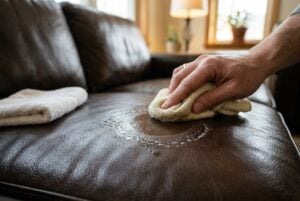
Leather cleaning turmeric stains requires caution.
Blot immediately. Use a damp cloth with mild soap.
Do not soak leather.
If the stain persists, consult a leather specialist. Turmeric can permanently discolour light leather.
Wash turmeric stain out of clothes
To wash turmeric stain out of clothes, follow this structured method:
- Rinse with cold water from the reverse side.
- Apply liquid detergent directly.
- Let sit for 10–15 minutes.
- Wash in the washing machine at recommended temperature.
For stubborn stains on white garments, diluted hydrogen peroxide may help. Avoid using bleach unless the fabric label allows it.
Never use hot water at the beginning — heat sets the pigment.
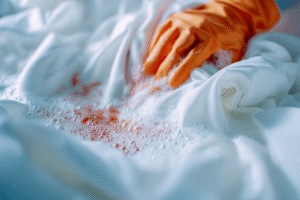
If the garment is white, similar strategies used to remove stain from white shirt fabric care can be effective for turmeric marks too.
How do you remove turmeric stains from clothes?
How do you remove turmeric stains from clothes?
Use cold water first, apply detergent, and wash promptly. For persistent yellowing, use oxygen-based stain remover.
If the stain has dried, soak in cold water before re-treating.
Does vinegar remove turmeric stains?
Does vinegar remove turmeric stains?
Vinegar can help lift light stains, but it is not always strong enough for deep pigment.
It may assist when combined with baking soda, but peroxide works better for whitening.
Can turmeric stains be removed by dry cleaning?
Yes, sometimes. However, inform the cleaner about the stain origin so they can apply specific treatment.
Does Vanish work on turmeric stains?
Oxygen-based products such as Vanish can help, especially on white clothes.
Follow product instructions carefully and test on coloured fabrics first.
How do you remove turmeric stains in general?
In general:
- Act quickly.
- Avoid heat.
- Use detergent first.
- Escalate to peroxide or oxygen bleach if needed.
- Use sunlight to help fade remaining colour.
Quick reference table
| Surface | First Action | Secondary Treatment | Avoid |
|---|---|---|---|
| White clothes | Cold rinse | Peroxide or oxygen bleach | Early hot water |
| Coloured clothes | Cold rinse | Detergent | Chlorine bleach |
| Plastic | Wash quickly | Baking soda + sunlight | Leaving overnight |
| Countertop | Wipe immediately | Mild detergent | Acid on stone |
| Carpet | Blot | Detergent solution | Scrubbing |
Practical tip for stubborn turmeric stains
A simple tip: repeat gentle treatments rather than scrubbing aggressively. Harsh friction damages fibres without fully removing pigment.
For other food-related discolouration, similar principles apply when learning how to clean red wine stain or dealing with tomato sauce stains. Immediate blotting and cold rinsing are universal best practices.
Turmeric may be vibrant and delicious, but its staining power is strong. Whether you are tackling a fresh splash on clothing or dried residue on plastic, the right approach can significantly improve results. With prompt action, correct products, and patience, even bright yellow turmeric stains can often be removed successfully.