ChatGPT
 Mistral
 Claude
 Perplexity
 Grok
Nobody wakes up excited to clean a bathroom. Between soap scum, limescale and a toilet that never seems to stay sparkling, it’s easy to let the job slide until your weekend disappears into it.
Good news: regular bathroom cleaning doesn’t have to be a marathon. This guide covers the right products, a simple step-by-step routine, the order a professional cleaner follows and quick tips to keep everything fresher for longer.
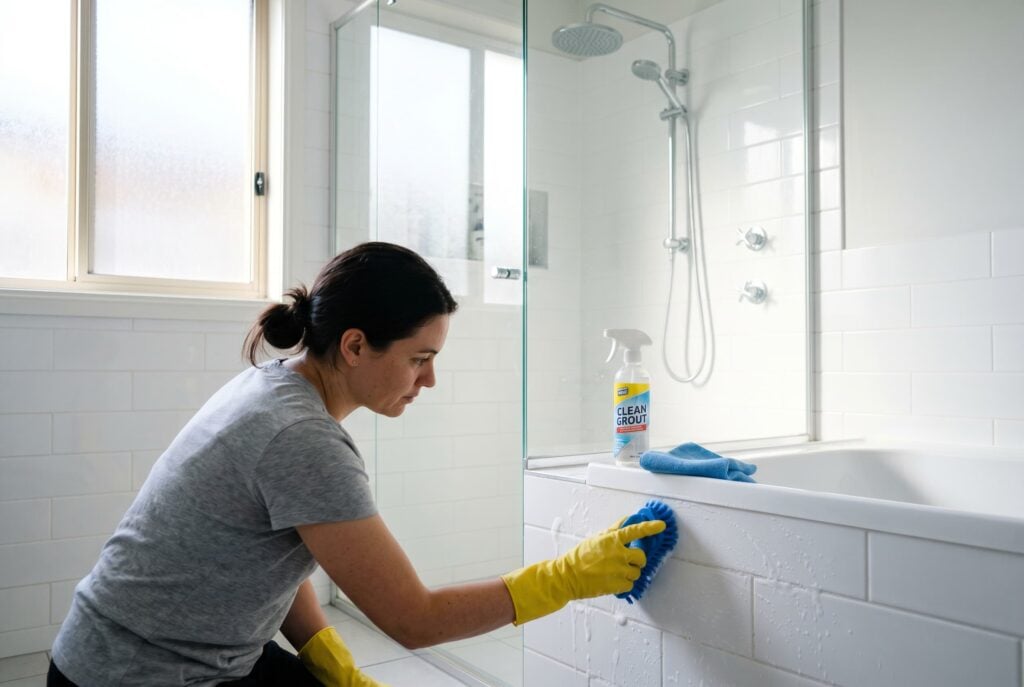
What’s the Best Bathroom Cleaner to Use in the UK?
You do not need harsh synthetic chemicals to tackle bathroom grime, limescale, or soap scum. Common kitchen cupboard staples and plant-based formulas offer effective, non-toxic alternatives that clean thoroughly while protecting indoor air quality and household surfaces.
Natural Everyday Cleaners and Limescale Removers
- White vinegar: Diluted with equal parts water in a spray bottle, white vinegar works as a natural disinfectant and glass cleaner. Its mild acidity dissolves soap scum on shower screens and breaks down limescale around taps and tiles. For regular surface wiping, adding a splash of vinegar to a bucket of warm water creates an all-round cleaning wash.
- Baking soda (bicarbonate of soda): An effective mild abrasive for lifting grime without scratching delicate surfaces. When mixed with just enough water or plant-based soap to form a smooth paste, it tackles dirty grout lines, plugholes, and stubborn marks in the bath or sink basin.
- Lemon juice or citric acid: Natural citric acid cuts through hard water marks and mineral deposits on chrome fixtures. Rubbing half a lemon directly over taps lifts dull film and leaves a fresh scent without artificial perfumes.
- Essential oils: Adding a few drops of tea tree oil introduces natural antifungal and antibacterial properties to homemade solutions, which helps slow down mould growth in damp areas. Peppermint, lavender, or citrus oils can also be added to natural sprays to keep the room smelling fresh.
Best Natural Methods by Surface
| Bathroom Area | Natural Solution | Method |
|---|---|---|
| Shower screen and mirrors | 50/50 white vinegar and water | Spray onto the glass, wipe with a microfibre cloth, and squeegee top to bottom for a streak-free finish. |
| Grout and tile joints | Baking soda and water paste | Apply the paste along grout lines, work it in with an old toothbrush, leave for 5 to 10 minutes, then rinse. |
| Limescale on taps | White vinegar or lemon juice | Apply directly to mineral build-up, let it dwell for 10 minutes to dissolve deposits, then wipe clean and buff dry. |
| Toilet bowl | Bicarbonate of soda and white vinegar | Sprinkle baking soda inside the bowl, add vinegar to produce a fizzing action, scrub under the rim with the toilet brush, leave for 10 to 15 minutes, and flush. |
When using natural remedies, keep baking soda and vinegar separate during storage. Mixing them together in a closed bottle cancels out their cleaning properties, so they work best when applied sequentially or combined directly on the stained surface to leverage the fizzing reaction.
How to Clean a Bathroom Step by Step, From Floor to Fixtures
Here’s the best way to clean a bathroom without redoing any surface twice: work top to bottom and clean dry areas before wet ones. That way, dust and debris fall onto surfaces you haven’t tackled yet, not onto ones you’ve just finished.
- Declutter first: clear bath mats, towels and bottles out of the way.
- Dust high surfaces: shelves, extractor fan grille and windowsills.
- Spray your cleaners: shower, sink, toilet and bath, then let them dwell.
- Scrub: shower, bath and sink while the product works.
- Clean the toilet: inside, seat and outer surfaces.
- Wipe mirrors and glass: for a streak-free shine.
- Mop the floor last: so nothing gets tracked back through.
Never mix products, especially bleach and toilet cleaner, and keep the window open or the fan on while you clean.
Pro Tip: while your cleaners dwell, go dust or declutter another zone. You’ll cut your cleaning time without lifting a finger extra.
How to Clean a Shower: Screen and Tiles
Showers cop the worst of it: soap scum, mould growth and limescale build-up, all in one small space. Tackle this zone early and let your cleaner dwell while you work elsewhere.
How to Clean Shower Screen Without Streaks
Streaky screens usually mean rushed drying, not dirty glass. Here’s the fix:
- Spray the screen with a glass cleaner or a white vinegar solution.
- Wipe with a microfibre cloth to lift soap scum.
- Squeegee from top to bottom in one motion.
- Dry the edges to stop water spots forming.
How to Clean Shower Tiles and Dirty Grout
- Spray your bathroom cleaner over the tiles to shift surface grime, then give the grout lines your full attention.
- Work a dedicated grout cleaner or baking soda paste directly into the joints using an old toothbrush, let it dwell for 5 to 10 minutes, and scrub gently before rinsing clean.
- Tackle stubborn mould spots with a specialist mould and mildew cleaner instead of bleach, ensuring the bathroom is well-ventilated and the surface dries completely afterwards.
- Keep in mind that extensive mould patches covering larger areas are best handled by a professional cleaning specialist.
- A speedy wipe down with a squeegee and drying off tiles after every shower will protect your hard work and stop damp creeping back.
How to Clean Taps, the Sink and Remove Bathtub Stains
How to Clean Taps and the Bathroom Sink
Spray taps and sink basins with a mild cleaner, then wipe down. Focus on spots and fingerprints around the handles, where grime builds up fastest. An old toothbrush works wonders around the base of the tap, where a cloth can’t reach. Buff everything dry with a clean cloth to bring back the shine and avoid new water spots.
How to Remove Bathtub Stains and Limescale
Yellowing and mineral deposits need a bit more dwell time. Mix white vinegar or baking soda into a paste, spread it over the stain, and leave it for 10 to 15 minutes. Rinse thoroughly with warm water and the marks should lift right off, no heavy scrubbing required.
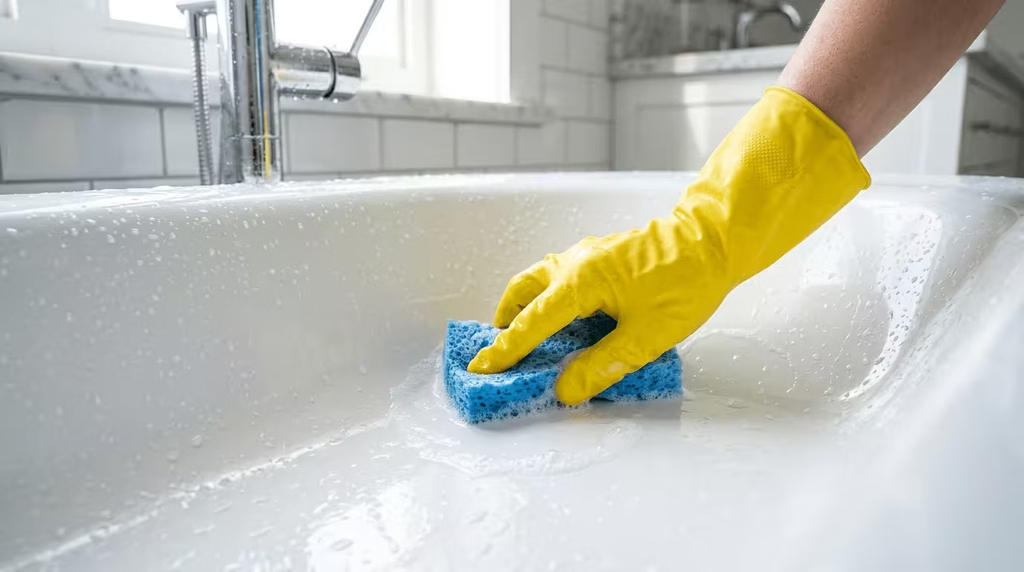
The Order a Pro Follows for a Bathroom Deep Clean (and How Long It Takes)
Professional cleaners don’t jump around the room. They work in a set order, top to bottom, dry to wet, so no surface gets re-dirtied by splashes from the next step. It also means every part of the bathroom gets covered, not just the obvious bits.
Here’s the order a Wecasa pro typically follows:
| Step | What the pro does | Time |
|---|---|---|
| 1 | Setup (products, gloves, ventilation) | 0-5 min |
| 2 | Dust high surfaces and shelves | 5-10 min |
| 3 | Shower screen and glass | 10-20 min |
| 4 | Disinfect toilet, sink, fixtures | 10-15 min |
| 5 | Bath and grout | 10-20 min |
| 6 | Polish taps and mirrors | 5-10 min |
| 7 | Bins, towels, final wipe | 5-10 min |
Bathroom Cleaning Tips for Easy Maintenance
A few small habits keep your bathroom looking after itself between deep cleans:
- Squeegee the shower screen straight after use to stop water spots and limescale before they set.
- Run the extractor fan during and after showers to cut moisture and keep mould at bay.
- Wipe down surfaces mid-week: taps, sink and mirrors take seconds and save you scrubbing later.
- Swap in fresh towels weekly; damp ones breed bacteria and odours fast.
For a fresh-smelling bathroom, crack a window or leave the fan running a bit longer, and empty the bin regularly. These little steps, alongside your weekly clean, mean far less effort next time round.
FAQ
What’s the best thing to clean a bathroom with?
A multipurpose spray handles most surfaces, while white vinegar cuts through limescale on taps and dirty grout without any harsh chemicals needed.
How do I make my bathroom smell nice all the time?
Ventilate daily, run the extractor fan after showers, empty the bin often and wash towels weekly. Fresh air and clean fabrics beat any air freshener.
What are common bathroom cleaning mistakes?
Skipping dwell time on cleaners, scrubbing wet surfaces before dry ones, and forgetting the extractor fan. These slip-ups mean more scrubbing next time round.
What is the 5-5-5 rule for cleaning?
It’s a quick clean method: 5 minutes decluttering, 5 minutes wiping surfaces, 5 minutes on the floor. Perfect for a daily routine when space and time are tight.
Sources :