ChatGPT
 Mistral
 Claude
 Perplexity
 Grok
What is the easiest way to clean a bathtub?
The simplest way to clean a tub is to prevent grime from setting in the first place. Quality bath makers like Kaldewei and Heritage recommend turning tub care into an effortless daily habit. A quick rinse after each bath stops soap scum from hardening, saving you from a big weekend scrub.
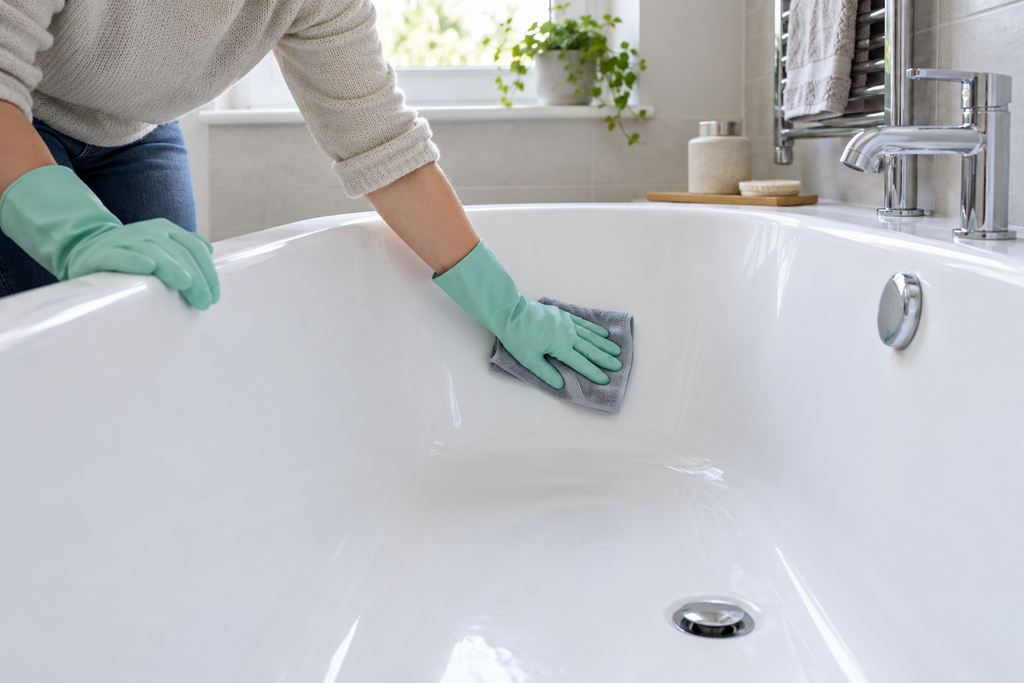
Here is the quick post-soak routine:
- Rinse down: While the water drains, use the shower head or warm tap water to rinse away floating bubbles, dirt and hair.
- Wipe quickly: Run a soft sponge or microfibre cloth around the waterline to catch remaining oils.
- Dry the surface: Give the sides and taps a quick buff with a dry towel. This is the top trick to stop chalky water marks, especially on darker finishes.
To keep everything on track, here is a handy cheat sheet:
| Task | How often | Roughly how long |
|---|---|---|
| Rinse, wipe and dry the tub | After each bath | 2 minutes |
| Wash the bath, taps and surrounding tiles | Once a week | 10 minutes |
| Clear loose hair from the plughole | Once a week | 2 minutes |
| Tackle limescale on taps and waterline | When it appears | 15 minutes (mostly waiting) |
| Flush whirlpool jets | Monthly or per manual | 30 minutes (mostly hands-off) |
Keep a dedicated soft cloth hanging near your taps so you can wipe the sides down without even stepping out of the bath mat.
Which type of bathtub do you have?
Before reaching for any cleaner, take a moment to identify your tub’s material. Acrylic, enamel and stone resin need different care, and using the wrong product can dull delicate surfaces.
| Bath type | How to tell | Fine to use | Best avoided |
|---|---|---|---|
| Acrylic | Warm and light, a fridge magnet slides off | Warm soapy water, non-abrasive cloths, washing-up liquid | Scouring pads, bleach, harsh solvents |
| Steel enamel | Cold and solid, a fridge magnet sticks firmly | Mild bathroom sprays, white vinegar diluted 1:1 | Wire wool, scourers, neat vinegar, chlorine |
| Cast iron | Very heavy, magnetic, classic freestanding design | Acid-free gentle cleaners, soft sponges | Scouring pads, wire brushes, letting acids sit |
| Stone resin | Solid stone feel, smooth matt or satin gloss | Warm soapy water, gentle all-round sprays | Heavy acids, abrasive cream cleaners |
When in doubt, check your manufacturer care guide first, as specific warranty advice always comes top.
What’s the best thing to clean your bath with?
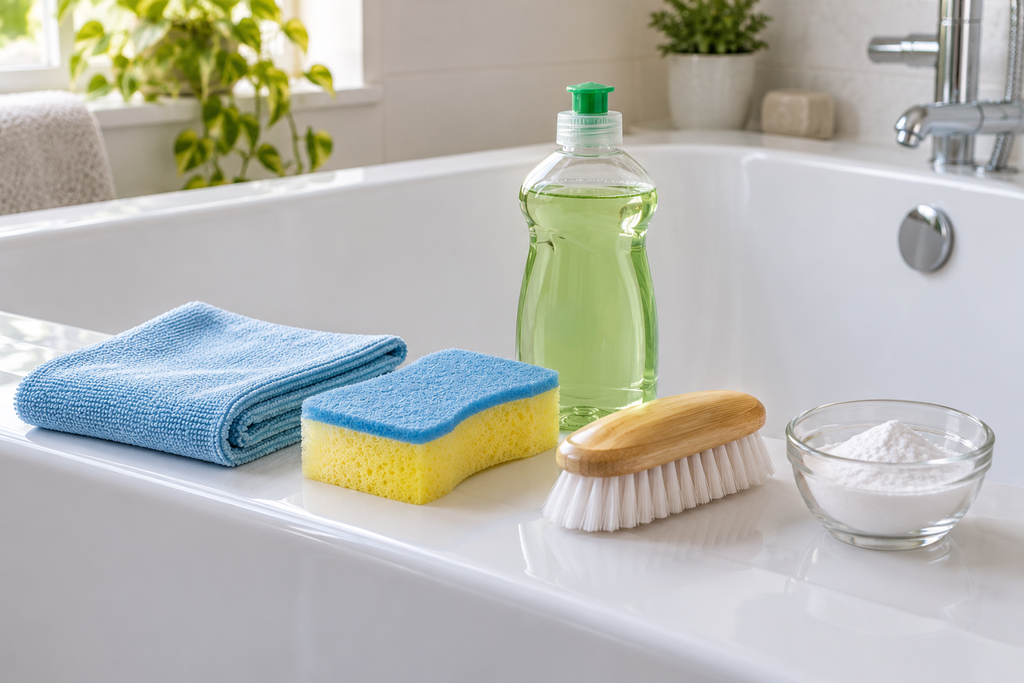
You do not need a basket packed with harsh chemicals to get a sparkling finish. The best method relies on simple, gentle tools:
- Washing-up liquid: Cuts straight through body oils, bath oils and daily soap scum.
- Soft microfibre cloths and a soft sponge: Clean delicate surfaces thoroughly without leaving fine scratches.
- Baking soda (bicarbonate of soda): A natural, mildly abrasive helper for lifting tide lines.
- White vinegar: Dissolves limescale quickly without damaging fixtures when properly diluted.
- Old soft-bristled toothbrush: Gets into awkward spaces, grout lines, tap bases and plughole crevices.
- Handheld squeegee: Sweeps water off tiles, walls and bath screens in seconds.
Leave steel wool, wire brushes and coarse scourers out of the bathroom: once a surface gets tiny scratches, grime clings onto it much faster.
The best homemade bathtub cleaner
Skip complicated recipes. You only need two gentle solutions for almost every job:
- Daily grime buster: A squirt of washing-up liquid in a basin of warm water.
- Limescale loosener: equal parts white vinegar and lukewarm water in a spray bottle. Never use neat vinegar, and check your bath’s care guide first.
Avoid mixing baking soda and vinegar together in a sealed bottle. While the bubbling looks fun, the alkaline baking soda neutralises the acidic vinegar, leaving you with simple salty water. For best results, use them step by step directly on the stain.
Can I use Cif on an acrylic bath?
Use caution with cream cleaners on acrylic: cream cleaners can lift stubborn marks, but their fine particles can dull acrylic if you rub too hard.. If your bath care guide permits it:
- Dab a tiny pea-sized drop onto a damp, soft cloth.
- Wipe gently in light circles without pressing down.
- Rinse immediately with hot water and dry thoroughly.
- Always test an out-of-sight corner first before doing the whole tub.
Avoid dry scouring powders completely, as they quickly strip away the shine.
Should you use a bathtub cleaning brush?
For the main body of the tub, always stick to a soft sponge or cloth. Coarse brushes easily scratch acrylic surfaces and wear down the protective gloss on enamel. Keep a soft-bristled brush handy strictly for tight spots: around the plughole, the overflow slit and the grout lines between surrounding wall tiles.
How to remove stains and limescale from a bath
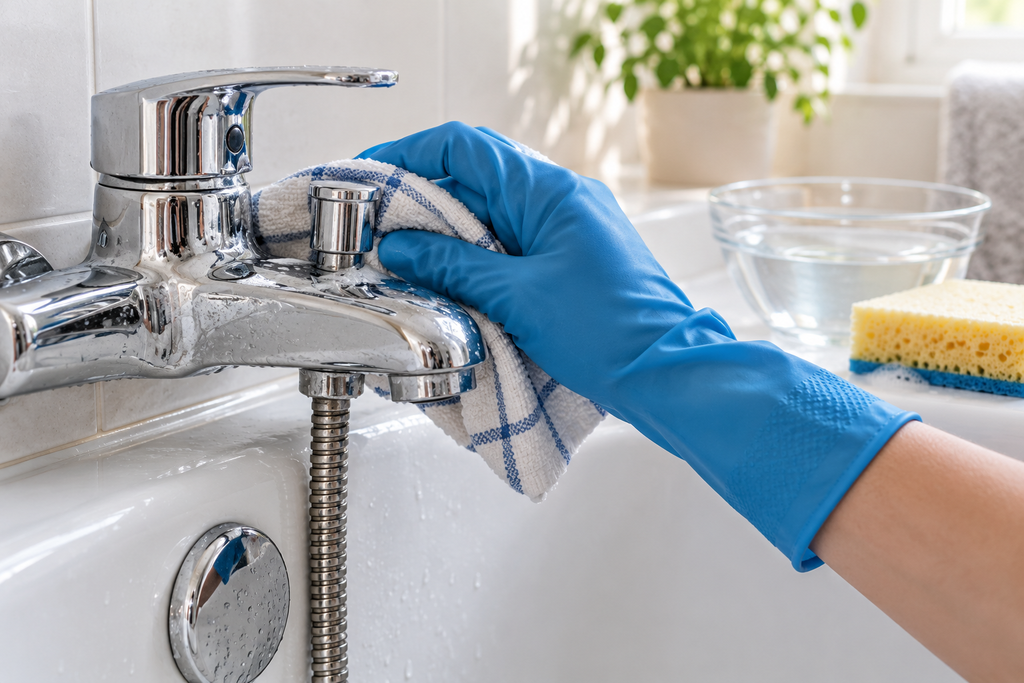
Chalky white marks along the waterline or at the base of taps are simply minerals left behind by hard water. In most parts of the UK, hard water is completely normal, so tackling it is all about letting natural acid do the heavy lifting for you.
Here is the hassle-free kitchen towel method:
- Mix your solution: Combine white vinegar and lukewarm water in equal parts inside a spray bottle.
- Apply directly: Spray over the chalky deposits. For taps or vertical walls where liquid runs off, soak a few sheets of kitchen roll in the vinegar mix and wrap them securely around the area.
- Let it sit (dwell time): Leave it alone for 10 to 15 minutes. The acid breaks down mineral bonds without any scrubbing needed.
- Wipe and rinse: Remove the paper, wipe the spot with a damp sponge, and rinse thoroughly with clean water.
- Dry off: Buff with a dry microfibre cloth to leave the metal shining.
For stubborn, thick crusts, simply repeat the steps instead of scrubbing harder. Keep neat, undiluted vinegar away from enamel surfaces, as Kaldewei advises against strong acids.
Bathtub stains won’t come out?
If a mark refuses to budge, identify what you are dealing with before trying stronger products:
- False rust specks: These look like rust but are usually iron and mineral deposits, often from a dripping tap. Wipe them off with a gentle cleaner (no soaking on cast iron) and fix the drip.
- Persistent streaks under taps: Constant rust-coloured tracks often come from a slow leak. Fix the dripping washer first, otherwise the stain will return within days.
- Dull or rough patches: If the surface feels rough to the touch, the glossy coating itself may be worn away. Cleaning products cannot restore missing enamel, so consider contacting a local bath resurfacing specialist.
Bathtub yellow stain removal
Yellowish patches build up gradually from bath oils, body lotions and limescale. To brighten the tub:
- Mix two tablespoons of baking soda with a splash of washing-up liquid into a thick paste.
- Smooth the paste over the yellow marks using a damp cloth.
- Leave it to rest for 10 minutes to draw out oils.
- Rub gently in circular motions with a soft sponge, then rinse thoroughly.
- Follow with a quick spritz of your 50/50 vinegar mix if limescale is also present, then dry.
How to clean an enamel bath (steel and cast iron)
Enamel is tough, but its glossy finish doesn’t like strong acids or anything abrasive.
Step-by-step care for enamel:
- Rinse the bath with warm water to clear loose dirt.
- Wash down using an acid-free liquid cleaner or washing-up liquid with a soft sponge. For cast iron, choose cleaners approved by the Vitreous Enamel Association (VEA).
- If tackling steel enamel, soak heavy marks for a few minutes; if cleaning cast iron, rinse immediately, as Heritage specifically advises never leaving cleansers to soak on cast iron.
- Rinse every trace of soap down the drain.
- Dry completely with a towel to prevent dull mineral haze.
Steer well clear of wire wool, coarse pads, bleach and laundry washing powders, which strip away enamel shine.
How to get a plastic bathtub white again
Acrylic plastic is warm and forgiving, but it marks easily under abrasion. The key is gentle, grease-cutting action:
- Rinse the bath with warm water.
- Spread a generous squirt of washing-up liquid across a damp microfibre cloth.
- Buff the entire interior using wide, circular strokes, paying extra attention to the waterline.
- Rinse cleanly with warm water.
- Dry the base and sides with a fresh cloth to restore the high-gloss shine.
If you encounter stubborn scum, apply a light baking soda paste with your fingertips and wipe away gently. Bath manufacturers warn that solvents such as nail varnish remover will damage acrylic, and advise against bleach and scouring pads.
How to clean a stone resin bath
Stone resin gives a modern, luxury feel and is naturally durable, but its finish still prefers mild care:
- Daily wash: Use warm water, a mild dish soap and non-abrasive cloths.
- Rinse after use: If you enjoy bath oils, colourful bath bombs or Epsom salts, rinse the tub the moment the water drains out to avoid pigment settling into the composite.
- Stay gentle: Avoid aggressive limescale removers. If you have real natural stone like marble or granite, skip all vinegar and acidic cleaners completely, as acid etches natural minerals.
Is leaving bleach in the bath overnight a good idea?
Leaving neat bleach in your bath overnight might sound like an easy shortcut, but manufacturer guidance says otherwise. Kaldewei advises against chlorine-based cleaners on its enamel baths, and Heritage asks owners not to let cleaners sit on the surface. Leaving bleach in overnight does both.
There is also a major health hazard. Bedfordshire Fire and Rescue Service warns that mixing bleach with toilet cleaner or ammonia-based sprays can produce dangerous gases. Open a window, and never mix products or use one straight after another.
How to clean a bath drain and plug hole
When water drains away slowly, hair and soap scum caught just beneath the plug mechanism are usually the cause. You can clear it in four quick steps:
- Remove the stopper: Unscrew or lift out the pop-up waste or plug.
- Clear trapped hair: Pull out hair caught around the crossbars using a pair of rubber gloves or an inexpensive plastic drain hair remover tool.
- Scrub the opening: Dip an old toothbrush into warm soapy water and clean away black grime from the overflow hole, the plug body and the chrome plughole rim.
- Flush through: Run the hot tap for a minute to flush away remaining soap deposits to wash away remaining soap deposits.
To prevent blockages in future, place an inexpensive silicone hair catcher over the plug hole to catch strands before they slide down.
How to clean a bath with jets
Whirlpool pipes hold water residues between baths, so give them a monthly freshen-up:
- Fill the tub with warm water until the water level sits roughly 5 cm above the highest jets.
- Add a dedicated whirlpool cleaner at the dose on the bottle and run the jets for the time your manual recommends.
- Switch the jets on and let them run for 10 to 15 minutes to flush interior pipes.
- Drain the bath completely to empty the dirty water.
- Refill with cold water past the jets, run the system for another 5 minutes to rinse, then drain and wipe dry.
How do you clean a tub that hasn’t been cleaned in years?
Reviving a heavily neglected tub takes a systematic routine rather than aggressive scrubbing:
- Clear the drain: Remove hair and debris so water flows freely away.
- Warm rinse: Run warm water over all surfaces to soften dried grime.
- Apply a soap wash: Wash down the tub walls with washing-up liquid and warm water using a soft sponge to remove top-layer oils.
- Target stubborn soap scum: Apply a paste of baking soda and a drop of dish soap directly to thick tide marks. Let it rest for 10 minutes, then work it gently with a non-scratch sponge.
- Treat hard water crusts: Lay vinegar-soaked kitchen towels over limescale patches for 15 minutes, then wipe clean.
- Detailed finish: Use a soft toothbrush on grout lines, sealant edges and tap bases.
- Final rinse and dry: Rinse the entire tub with clean water and dry thoroughly with an old towel.
If you are moving into a new property or the entire bathroom feels overwhelming, a professional deep clean can save you a good few hours.
Enjoy your bath, not the cleaning
A gleaming, inviting tub does not require hours of hard work or strong chemical fumes. With a 30-second post-bath rinse, the right soft cloths and a few gentle household staples, your bath will stay sparkling clean week in, week out: leaving you plenty of time to sit back and relax.