Summarise this article with:
 ChatGPT
 Mistral
 Claude
 Perplexity
 Grok
Grok
Oak furniture is one of the most popular choices in British homes — and for good reason. It’s durable, beautiful, and built to last for generations. But even the sturdiest oak dining table or sideboard needs a bit of regular attention to stay looking its best. Whether you’ve just invested in a brand-new piece or inherited a much-loved antique, knowing how to clean oak furniture properly makes all the difference.
In this guide, we’ll walk you through everything from everyday dusting to tackling stubborn stains, plus tips on waxing, oiling, and protecting your oak from common household hazards.
Understanding Different Oak Finishes
Before you reach for a cloth, it’s worth knowing what type of finish your oak furniture has. Using the wrong cleaning method for the wrong finish can do more harm than good — so a quick check is always the first step.
| Finish type | Appearance | Cleaning approach | Maintenance frequency |
|---|---|---|---|
| Oiled oak | Natural, matte look | Damp cloth + mild soap; re-oil periodically | Every 6–12 months |
| Waxed oak | Smooth, soft sheen | Dry dusting; occasional re-waxing | Every 6–9 months |
| Lacquered oak | Sealed, slightly glossy | Damp cloth; no additional treatment needed | As needed |
Oiled oak allows the grain to show through beautifully but absorbs moisture more easily. Waxed oak sits somewhere in between — protected on the surface but still vulnerable to water. Lacquered oak has a tougher barrier, though it can still scratch if treated roughly.
Not sure which finish you have? Try placing a drop of water on a hidden area. If it soaks in quickly, the wood is likely oiled. If it beads up, you’re probably looking at a wax or lacquer coating.
Everyday Cleaning for Oak Furniture
Routine cleaning is the single best thing you can do to keep your oak looking fresh. Fortunately, it doesn’t take much effort — just the right technique.
Dusting
Grab a soft, dry microfibre cloth and give your furniture a wipe at least once a week. Dust particles may seem harmless, but left sitting on the surface they act like fine sandpaper, gradually dulling the finish. Always wipe in the direction of the wood grain to lift dirt from the natural texture without leaving streaks.
Light Cleaning with a Damp Cloth
For a slightly deeper clean, dampen a cloth with warm water and wring it out thoroughly — it should feel barely moist, not wet. Wipe the surface gently, then immediately follow with a clean, dry cloth to prevent any moisture from settling into the wood.
This is also a good habit when you’re cleaning wooden floors — the same “minimal moisture” rule applies to all wood surfaces.
Mild Soap for Sticky Marks
When water alone won’t shift a mark, add a few drops of mild washing-up liquid to warm water. Dip your cloth, wring it well, and gently wipe the affected area. Finish by drying the surface straight away. Avoid scrubbing — it can damage the finish.
What to Avoid When Cleaning Oak Furniture
Using the wrong products on oak can strip protective coatings and leave lasting damage. Here’s what to steer clear of:
- Harsh chemical cleaners, bleach, and ammonia-based sprays — these strip protective finishes and can discolour the wood. If you’re unsure which household cleaning products are safe for wood, always check the label first.
- Silicone-based furniture polish — creates a shiny build-up that attracts dust and interferes with future refinishing.
- Abrasive sponges or scouring pads — will scratch the surface of the oak.
- Steam cleaners — heat and moisture penetrate the finish, causing warping or cracking.
Cleaning Oak Furniture with Vinegar
For built-up grime on your oak table or dresser, a diluted vinegar solution works surprisingly well. Mix one to two tablespoons of white vinegar with a litre of warm water. Dampen a cloth (never dripping), wipe the surface, then follow up with a clean water wipe and dry immediately.
This method is particularly effective for oak dining tables that accumulate cooking residue and greasy fingerprints. If you use white vinegar for cleaning around the rest of your home, you’ll appreciate how versatile it is — though always test on a hidden area of oak first.
A word of caution: vinegar is mildly acidic. Use it sparingly and never leave the solution sitting on the wood. For oiled finishes, apply a thin layer of oil afterwards to restore protection.
How to Remove Stains from Oak Furniture
Spills and marks are inevitable, especially on a well-loved dining table. Here’s how to deal with the most common culprits:
| Stain type | Cause | DIY solution | Prevention |
|---|---|---|---|
| White water rings | Condensation from cold glasses | Rub gently with equal parts white vinegar and olive oil | Use coasters and placemats |
| Heat marks | Hot mugs or dishes | Apply non-gel white toothpaste; rub along the grain | Always use trivets or heat mats |
| Grease and food | Cooking residue, spills | Sprinkle cornflour, leave several hours, brush off, then clean with vinegar solution | Wipe spills immediately |
| Ink marks | Pens, markers | Dab with a cloth dampened in mild soapy water; avoid alcohol unless manufacturer-approved | Keep pens away from surfaces |
| Scratches | Sharp objects, wear | Rub a walnut kernel along the scratch, or apply matching furniture wax | Use felt pads under ornaments |
For stubborn stains, you can try a paste of bicarbonate of soda and white toothpaste. Gently rub along the grain with a soft cloth, then wipe clean and dry. It’s a mild abrasive that lifts marks without damaging the wood.
How to Clean Old Oak Furniture
Older or antique oak furniture requires a gentler touch. Avoid aggressive modern chemicals — these can strip original finishes and reduce the piece’s value. Stick to dry dusting with a soft cloth and minimal moisture.
If your antique oak looks tired or faded, consider:
- A very light clean with mild soap and water — dry immediately
- A thin coat of beeswax to nourish and protect the wood
- Consulting a professional restorer for any deep scratches, structural damage, or full refinishing
The charm of antique oak lies in its patina and character. Keeping it clean doesn’t mean making it look brand new — it means preserving what makes it special.
How to Wax Oak Furniture
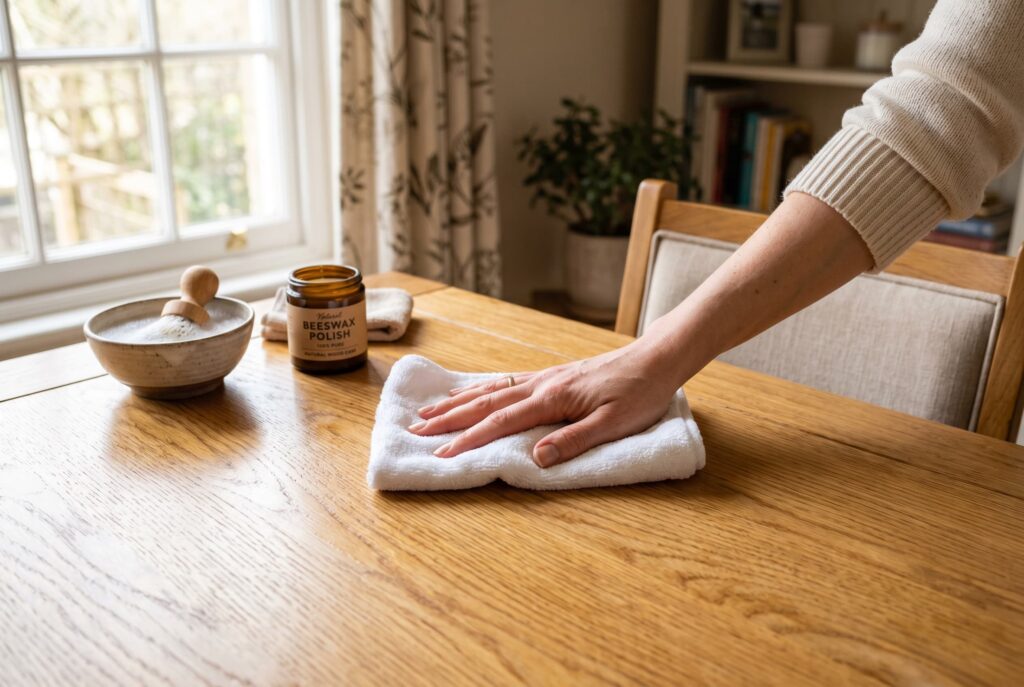
Waxing isn’t just about shine — it nourishes the wood, brings out the grain, and creates a protective barrier against minor scratches and moisture.
What you’ll need:
- Natural beeswax polish or hardwood-specific furniture wax (avoid silicone-based products)
- A soft lint-free cloth
- A separate clean cloth for buffing
Step by step:
- Dust the surface thoroughly first — any grit will scratch when you start rubbing
- Apply wax in thin layers using small circular motions, working with the grain
- Let it dry for 15–30 minutes until it looks hazy and matte
- Buff with a clean cloth using firm, even strokes until you get a soft, warm sheen
Don’t expect a mirror finish. Oak should look natural and warm, not glossy like plastic. For high-use surfaces like dining tables and coffee tables, wax every six to nine months. Pieces that see less daily contact can go longer between applications.
Best Wax Polish for Oak Furniture
When choosing a wax polish, look for products specifically formulated for hardwood. Natural beeswax is the gold standard — it conditions the wood, enhances the grain, and doesn’t leave a synthetic build-up.
- Beeswax polish — ideal for most oak furniture; natural, breathable, and easy to apply
- Clear furniture wax — good for maintaining lighter oak without altering the colour
- Danish oil — not a wax, but excellent for oiled oak; penetrates deeply and brings out golden tones
Always test any new product on a hidden area first. If you keep a selection of quality must-have cleaning supplies at home, adding a good furniture wax to your kit is well worth it.
How to Protect Oak Furniture from Daily Wear
Prevention is always easier than repair. A few simple habits will keep your oak looking beautiful for years:
- Use coasters and placemats — hot mugs, wet glasses, and dinner plates all leave marks on unprotected oak
- Avoid direct sunlight — prolonged UV exposure causes fading and can dry the wood out over time
- Keep furniture away from radiators — sudden temperature changes cause the wood to expand and contract, loosening joints
- Maintain indoor humidity between 40% and 60% — too dry and the wood cracks; too damp and it swells
- Use felt pads under lamps, vases, and ornaments to prevent scratches
These same principles apply whether you’re protecting an oak sideboard in the hallway or caring for a leather sofa in the living room — good habits protect your investment.
Seasonal Care Tips for Oak Furniture
Oak responds to changes in temperature and humidity, so adjusting your care routine with the seasons helps prevent problems before they start.
Winter: Central heating dries the air fast. Consider using a room humidifier and keep furniture at least 10–15 cm away from heat sources. This is also a good time to apply a fresh coat of wax.
Spring/Autumn: Give your furniture a thorough clean and check all joints and fixings for any looseness. Tighten anything that needs attention before it becomes a bigger issue.
Summer: Higher humidity can cause slight swelling. Ensure good ventilation, and adjust curtains or blinds to manage sun exposure — UV damage that builds gradually over months is much harder to reverse.
If you’re planning a seasonal refresh, you might also want to consider deep cleaning your home room by room at the same time.
Cleaning Oak Furniture Naturally
If you prefer to avoid commercial products altogether, natural cleaning methods work beautifully on oak:
- Warm water + mild soap — sufficient for most everyday cleaning
- White vinegar solution — cuts through grease and grime without harsh chemicals
- Olive oil + lemon juice — mix equal parts for a gentle polish that conditions and adds subtle shine
- Beeswax — a completely natural option for protecting and nourishing the wood
Natural methods are often gentler on oak finishes and better for the environment. For oak kitchen furniture, these approaches pair well with other eco-friendly kitchen cleaning hacks you might already use at home.
Is It Better to Oil or Wax Oak?
This is one of the most common questions about oak furniture care — and the answer depends on the look and feel you prefer.
| Oil | Wax | |
|---|---|---|
| Penetration | Soaks into the wood fibres | Sits on the surface |
| Look | Natural, matte finish | Soft, warm sheen |
| Protection | Good moisture resistance from within | Surface barrier against scratches and spills |
| Maintenance | Re-apply every 6–12 months | Re-apply every 6–9 months |
| Best for | Dining tables, heavily used surfaces | Display furniture, dressers, bookcases |
You can also combine both: oil the wood first to nourish it from within, then apply a thin layer of wax on top for extra surface protection. Just make sure the oil is fully dry before waxing.
FAQ
How do you bring oak furniture back to life?
Start by giving the piece a thorough clean with a mild soap solution. Once dry, apply a generous coat of furniture oil or beeswax, working it into the grain. For pieces that are very faded or worn, a light sand followed by re-oiling or re-staining can restore the wood’s original warmth and colour.
Can you use Pledge on oak furniture?
Pledge and similar silicone-based sprays are generally not recommended for oak. They create a shiny build-up over time that attracts dust and can interfere with future refinishing. A natural beeswax polish is a far better option for maintaining oak’s natural appearance.
How often should you polish oak furniture?
For high-use pieces like dining tables and coffee tables, wax or oil every six to nine months. Furniture that sees less daily contact — bookcases, sideboards, bedroom pieces — can go longer between treatments, perhaps once a year.
Can I use beeswax on oak furniture?
Absolutely. Beeswax is one of the best natural products for oak. It nourishes the wood, enhances the grain, and creates a breathable protective layer. Apply in thin coats along the grain and buff to a soft sheen.
Can I clean oak furniture with baby wipes?
Baby wipes often contain chemicals and fragrances that can damage oak finishes over time. A soft cloth dampened with warm water is a much safer choice for routine cleaning.
What’s the best oil to put on oak?
Danish oil is a popular choice — it penetrates deeply, enhances the golden tones of oak, and provides good surface protection. Tung oil and linseed oil are also suitable options. Always apply in thin layers with a lint-free cloth, following the grain.
Should I sand oak furniture before cleaning?
No. Sanding removes the protective finish and should only be done during a full refinishing project — never as part of routine cleaning. For everyday care, gentle wiping with a soft cloth is all you need.
Can you use WD-40 to polish wood?
While WD-40 can temporarily add shine, it’s not designed for wood furniture care and may leave an oily residue that attracts dust. Stick to proper furniture wax or oil for lasting results and genuine wood protection.