Summarise this article with:
 ChatGPT
 Mistral
 Claude
 Perplexity
 Grok
Grok
Wood furniture adds warmth and character to any home — but without the right care, it can quickly lose its lustre. Whether you’re dealing with everyday dust, stubborn stains, or years of built-up grime, knowing how to clean wood furniture properly makes all the difference between restoring its beauty and accidentally damaging the finish.
In this guide, we’ll walk you through the best methods for cleaning every type of wood furniture, from antique dressers to outdoor garden tables. You’ll discover which natural cleaning products work best, which ones to avoid, and how to keep your wooden pieces looking their best for years to come.
Why Does Wood Furniture Need Special Cleaning ?
Not all wood is the same, and different finishes require different approaches. A lacquered dining table, a waxed oak sideboard, and a raw pine shelf all react differently to moisture and cleaning products.
Wood is a porous material — meaning it absorbs liquids, expands with humidity, and can warp or crack if exposed to too much water. The wood finish (whether it’s varnish, wax, oil, or polyurethane) acts as a protective barrier. If you use the wrong cleaner, you risk stripping that barrier away and leaving the wood grain exposed and vulnerable.
That’s why a gentle approach is always best. Whether you’re cleaning a modern bookshelf or looking after antique wood furniture, starting with the mildest solution and working upwards will protect your pieces.
How to Clean Wood Furniture Naturally
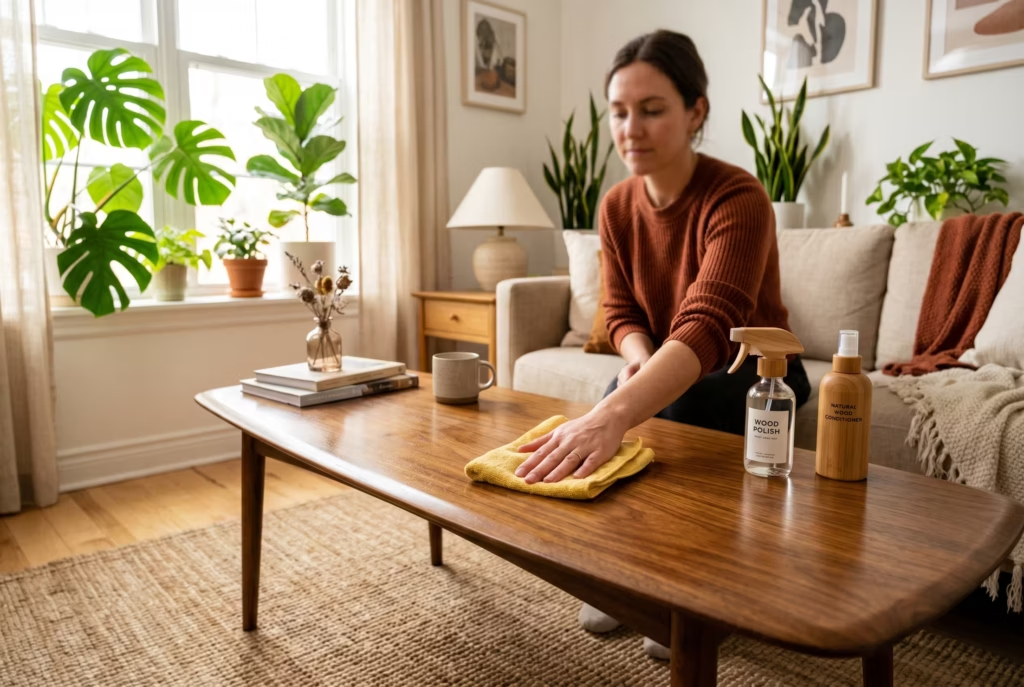
For most everyday cleaning, you won’t need anything fancy. Here’s a simple, natural method that works beautifully on finished wood surfaces:
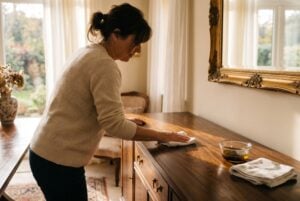
- Dust first. Use a dry microfibre cloth to remove loose dust, working along the wood grain to avoid pushing particles into the surface.
- Prepare your solution. Mix a few drops of mild dish soap into a bowl of warm water.
- Dampen your cloth. Dip a clean microfibre cloth into the soapy water, then wring it out thoroughly — it should be barely damp, not wet.
- Wipe gently. Clean the surface with light, even strokes, always following the direction of the wood grain.
- Dry immediately. Use a separate dry soft cloth to buff the surface completely dry. Never leave moisture sitting on wood.
This method is safe for most varnished, lacquered, and polyurethane-finished furniture. It’s the same gentle technique professionals use for routine maintenance.
How to Clean Wood Furniture with Vinegar
Vinegar is one of the most versatile household cleaners — but it needs to be used carefully on wood. A diluted vinegar solution can cut through grease and grime without damaging the wood finish, as long as you don’t overdo it.
The vinegar cleaning method:
- Mix 2 teaspoons of white vinegar into 250 ml of warm water
- Add a tiny drop of dish soap for extra cleaning power
- Dip a microfibre cloth into the solution and wring it out well
- Wipe the surface gently, following the wood grain
- Dry thoroughly with a soft cloth straight away
| Vinegar Solution Strength | Best For | Caution Level |
|---|---|---|
| 1 tsp vinegar per 250 ml water | Light dusting and fingerprints | Low — safe for most finishes |
| 2 tsp vinegar per 250 ml water | Greasy residue and mild stains | Medium — wipe and dry quickly |
| 1 tbsp vinegar per 250 ml water | Stubborn grime and build-up | Higher — test in a hidden spot first |
Important: Never use undiluted vinegar on wood furniture. The acidity can eat through wax and polish, leaving dull patches on the surface. Always test your vinegar solution on a small, hidden area first.
How to Clean Wood Furniture with Vinegar and Baking Soda
For more stubborn marks that won’t shift with a simple wipe-down, a baking soda paste can work wonders.
How to make and use the paste:
- Mix equal parts baking soda and water to form a thin, smooth paste
- Dip a clean soft cloth into the paste
- Gently rub the stained area in small circular motions
- Wipe away any residue with a damp microfibre cloth
- Dry the surface immediately and apply a thin layer of furniture polish
This method is particularly effective for sticky residue, watermarks, and light scuff marks. However, baking soda is mildly abrasive — so avoid pressing too hard, especially on delicate or antique surfaces.
Best Products to Clean Wood Furniture
Not sure what to reach for? Here’s a comparison of the most popular options:
| Product | Pros | Cons | Best For |
|---|---|---|---|
| Warm water + dish soap | Gentle, cheap, always available | Won’t remove deep stains | Everyday cleaning |
| White vinegar solution | Cuts grease, natural deodoriser | Can damage wax finishes if too strong | Greasy or grimy surfaces |
| Baking soda paste | Removes stubborn marks | Mildly abrasive | Stain removal |
| Olive oil + vinegar mix | Cleans and moisturises wood | Can leave residue if not buffed | Polishing and restoring |
| Commercial wood cleaner | Formulated for specific finishes | Can contain harsh chemicals | Specialist or heavy-duty cleaning |
| Mineral spirits | Dissolves old wax and grime | Strong smell, needs ventilation | Deep cleaning and restoration |
For most household tasks, warm water with a touch of dish soap is your safest bet. Save the specialist products for deeper cleaning sessions.
How to Remove Stains from Wood Furniture
Spills happen — especially on wooden dining tables, coffee tables, and side tables. The key is acting quickly: the faster you treat the stain, the easier it is to remove.
How to Remove Water Stains from Wood
White water rings (usually caused by cold glasses or hot mugs) are among the most common marks on wood furniture. Try these methods:
- Toothpaste method: Apply a small amount of non-gel white toothpaste to the stain. Rub gently with a soft cloth in the direction of the wood grain. Wipe clean and buff dry.
- Petroleum jelly method: Spread a thin layer of petroleum jelly over the water stain and leave it overnight. In the morning, wipe away with a microfibre cloth and polish.
- Mayonnaise trick: Apply a small dollop, leave for an hour, then wipe clean. The oils help lift moisture from the wood finish.
How to Remove Dark Stains from Wood
Darker stains — from ink, red wine, or prolonged water damage — require a bit more effort:
- Mix 1 tablespoon of baking soda with 1 teaspoon of water to create a thin paste
- Apply the paste to the stain and leave for 5–10 minutes
- Gently wipe away with a damp cloth
- If the stain persists, try dabbing with a cloth dampened with mineral spirits
- Dry and polish the area immediately
For very deep or old stains, you may need to lightly sand and refinish the surface — or call in a professional.
How to Clean Sticky Wood Furniture
Sticky wood furniture is usually the result of product build-up — layers of polish, spray, or wax that have accumulated over time and turned tacky.
Here’s how to fix it:
- Start with warm soapy water (dish soap and warm water). Dip a microfibre cloth, wring it out well, and wipe the sticky surface firmly.
- If the stickiness won’t shift, try a mild vinegar solution (2 teaspoons in 250 ml of warm water).
- For heavy wax or polish build-up, use mineral spirits on a soft cloth. Work in small sections, wiping in the direction of the wood grain.
- Once the residue is removed, dry the surface completely and apply a fresh, thin coat of furniture wax or polish.
Avoid layering polish on top of polish without cleaning in between — this is the main cause of that frustrating sticky feel.
How to Clean Old Wood Furniture
Older and vintage wooden furniture requires extra care. The wood finish may be thin, cracked, or partially worn away, which means it’s more vulnerable to moisture and chemicals.
When dealing with old or antique wood furniture, follow these golden rules:
- Always dust before wet-cleaning. Use a very soft, dry microfibre cloth or a feather duster.
- Use the mildest solution possible. A barely damp cloth with plain warm water is often enough.
- Never soak the wood. Old furniture absorbs water faster than modern pieces, which can cause warping and splitting.
- Avoid silicone-based polishes. They can leave a sticky film and are difficult to remove from antique finishes.
- Apply furniture wax sparingly. A thin layer of beeswax, buffed up with a soft cloth, will protect and nourish old wood beautifully.
If your piece has significant value, consider consulting a professional restorer before attempting deep cleaning.
How to Clean Mould off Wood Furniture
Mould and mildew on wood furniture typically appears in humid rooms — bathrooms, basements, or poorly ventilated bedrooms. If you spot black mould on your wooden pieces, it’s important to act quickly before it spreads further.
Step-by-step mould removal:
- Take the furniture outdoors or to a well-ventilated area
- Brush off loose mould spores with a soft brush (wear a mask)
- Mix equal parts white vinegar and warm water in a spray bottle
- Lightly spray the affected areas — don’t saturate the wood
- Wipe with a clean microfibre cloth, working along the wood grain
- Allow the surface to air-dry completely
- Once dry, apply a thin coat of furniture wax or polish to protect the surface
For stubborn mildew, you can add a few drops of tea tree oil to the vinegar solution — it’s a natural antifungal. Addressing the root cause (humidity, poor airflow) is essential to prevent mould from returning.
How to Clean Outdoor Wood Furniture
Garden and patio furniture faces harsher conditions: rain, UV exposure, bird droppings, and algae. Here’s how to bring outdoor wood furniture back to life:
- Brush off loose debris with a stiff-bristled brush
- Wash with soapy water. Use warm water with dish soap and scrub along the wood grain
- Rinse thoroughly with clean water from a garden hose
- Let it dry completely in the sun before applying any treatment
- Apply a wood protector or outdoor oil to seal the surface against the elements
| Outdoor Wood Type | Recommended Treatment | Frequency |
|---|---|---|
| Teak | Teak oil or UV protector | Every 6–12 months |
| Cedar | Sealant or wood stain | Annually |
| Pine (treated) | Outdoor wood oil | Every 6 months |
| Hardwood (e.g., acacia) | Hardwood oil | Every 6–12 months |
Avoid using a pressure washer on wooden furniture — the force can damage the wood grain and strip away protective coatings.
How to Clean Unfinished Wood Furniture
Raw or unfinished wood has no protective coating, which makes it especially sensitive to water and stains. If you have pine furniture or other raw wood pieces, keep these tips in mind:
- Dust regularly with a dry microfibre cloth — this should be your primary cleaning method
- Avoid water as much as possible. If you must dampen a cloth, wring it out until it’s nearly dry
- Never use vinegar or baking soda directly on unfinished wood — they can discolour the surface
- Blot spills immediately — don’t rub, as this pushes the liquid deeper into the pores
- Sand lightly with fine-grit sandpaper (220-grit) to remove surface stains, always working with the wood grain
Consider sealing unfinished wood with a natural oil (such as linseed or Danish oil) to provide a barrier against future stains and moisture.
How to Polish Wood Furniture Naturally
Once your wood furniture is clean and dry, polishing helps protect the surface and brings out its natural warmth. Here’s a simple DIY polish recipe:
Homemade wood polish:
- Mix 1 cup of olive oil with ¼ cup of white vinegar
- Apply a small amount to a soft cloth
- Rub into the wood along the grain using gentle, circular motions
- Buff with a clean, dry microfibre cloth until shiny
The vinegar cleans while the olive oil moisturises and protects the wood. This natural polish works particularly well on oak furniture and other hardwoods.
For a quick alternative, try rubbing black tea (cooled) onto the surface with a soft cloth — the tannic acid can help restore shine and even out the colour of darker woods.
How Often Should You Clean Wood Furniture?
Consistency is the secret to keeping wood furniture in great condition. Here’s a simple maintenance schedule:
- Daily: Wipe up any spills immediately with a dry cloth
- Weekly: Dust all wooden surfaces with a dry or slightly damp microfibre cloth
- Monthly: Clean with a mild soapy water solution, dry thoroughly, and inspect for any damage
- Every 3–6 months: Apply furniture polish or wax to maintain the protective layer
- Annually: Deep clean, check for mould or mildew, and reapply any protective coatings
If you keep on top of regular dusting, you’ll rarely need to do intensive cleaning sessions. Much like looking after wood floors, prevention is far easier than restoration.
What Should You Not Use to Clean Wood?
Knowing what to avoid is just as important as knowing what to use. Here are the products and practices that can damage your wood furniture:
- Undiluted vinegar or ammonia — too acidic; can strip finishes and dull the surface
- Bleach — far too harsh for any wood; can cause discolouration and weaken the wood finish
- All-purpose sprays — many contain silicone or chemicals that leave build-up on the surface
- Excessive water — saturating wood causes warping, swelling, and mould
- Abrasive sponges or steel wool — will scratch and damage the polish
- Furniture sprays with silicone — create a temporary shine but trap dirt underneath
When in doubt, stick to a soft cloth dampened with warm water. It’s the safest option for practically any wood surface.
Short on Time? Leave It to a Wecasa Pro!
Cleaning and maintaining all the wood furniture in your home can be time-consuming — especially when you’re also juggling wooden floors, kitchen surfaces, and everything else. If you’d rather spend your weekends enjoying your home instead of scrubbing it, Wecasa is here to help.
Our professional house cleaners come to your home at a time that suits you, equipped with all the know-how to care for every surface — including your precious wood furniture. Just a few clicks and your home is sparkling again. Book your cleaning session today and let us take care of the hard work!
FAQ
What is the best thing to clean wooden furniture with?
For everyday cleaning, the best thing to use is a soft microfibre cloth dampened with warm water and a few drops of mild dish soap. This gentle approach removes dust and grime without risking damage to the wood finish. For deeper cleans, a diluted vinegar solution works well on most finished wood surfaces.
Can you use vinegar to clean wood furniture?
Yes, but always dilute it first. Mix 2 teaspoons of white vinegar into 250 ml of warm water. Never apply undiluted vinegar directly to wood — the acidity can damage wax coatings and strip the protective finish. Always dry the surface immediately after cleaning.
What is the best natural cleaner for wood?
A mixture of warm water with a small amount of dish soap is the safest natural cleaner. For polishing, olive oil combined with a little white vinegar makes an excellent homemade wood polish that cleans, moisturises, and protects in one step.
How do professionals clean wood furniture?
Professionals typically start by dusting with a microfibre cloth, then clean with a mild soapy warm water solution. They always work in the direction of the wood grain and dry the surface immediately. For restoration work, they may use mineral spirits to remove old wax build-up before applying a fresh coat of polish.
What’s the best homemade wood cleaner?
Mix 1 cup of olive oil with ¼ cup of white vinegar. Apply to a soft cloth and rub into the wood along the grain. The vinegar cuts through dirt while the olive oil nourishes and protects the surface. Buff with a dry cloth for a natural, streak-free shine.
How do I remove candle wax from wood furniture?
Place a clean cloth over the wax, then press a warm (not hot) iron over it briefly. The heat melts the wax, which gets absorbed into the cloth. Repeat with a clean section of cloth until the wax is gone, then polish the area with a soft cloth to restore the shine.
How do I remove odours from wood furniture?
Sprinkle baking soda generously over the surface and leave it overnight. The baking soda absorbs trapped smells. In the morning, wipe away the powder with a dry microfibre cloth. For drawers or enclosed spaces, place an open box of baking soda inside for a few days.
Can I use white spirit to clean wood?
White spirit can be effective for removing stubborn grime or old polish, but it’s quite harsh. Only use it on well-finished, varnished surfaces — never on unfinished, waxed, or antique wood. Always work in a well-ventilated area and test on a hidden spot first.