Summarise this article with:
 ChatGPT
 Mistral
 Claude
 Perplexity
 Grok
Grok
Nothing beats the feeling of wrapping yourself in a gloriously soft, fluffy towel after a relaxing bath or invigorating shower. But what happens when your once-luxurious towels start feeling more like sandpaper than silk? Don’t panic – we’ve got your back (and your towels).
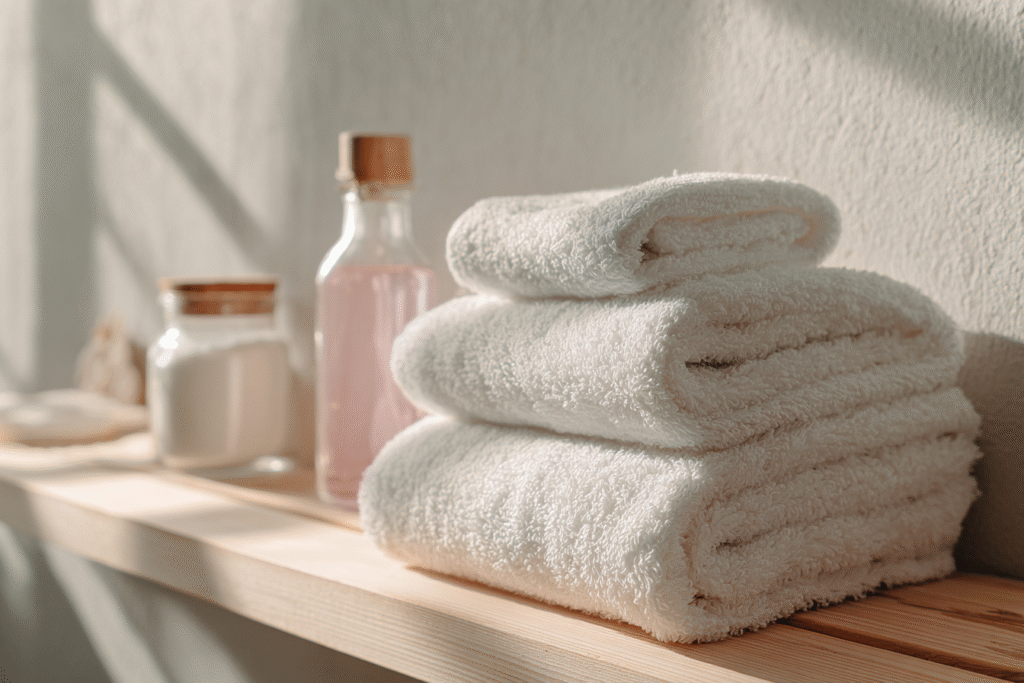
Why Do Towels Lose Their Softness?
Detergent and Fabric Softener Buildup
Too much detergent creates a film that clings to your cotton fibres, making towels feel stiff rather than fluffy. When you use more soap than needed, it doesn’t rinse away completely during the washing machine cycle.
Fabric softener contains silicone-based ingredients that coat towel fibres with a waxy layer. While this feels lovely at first, the build-up gradually reduces your towels’ ability to absorb water effectively.
| Buildup Type | Main Cause | Effect on Towels |
|---|---|---|
| Detergent residue | Using excessive amounts | Stiff, scratchy texture |
| Fabric softener coating | Regular softener use | Reduced absorbency |
| Combined buildup | Both products together | Musty odours and poor performance |
The best way to prevent this? Use less detergent than you think you need, and skip fabric softener on bath towels altogether. Your towels will thank you for it.
Hard Water Effects on Towel Fibres
Hard water contains high levels of calcium and magnesium that attach directly to your towel fibres. These minerals create a rough, scratchy texture that no amount of fabric softener can fix.
The mineral buildup process:
- Calcium deposits coat individual cotton loops
- Magnesium reduces fibre flexibility
- Coloured towels fade faster due to mineral interference
- Absorbency drops significantly over time
| Water Type | Mineral Content | Towel Impact |
|---|---|---|
| Soft water | Low minerals | Maintains fluffiness |
| Hard water | High calcium/magnesium | Stiff, rough texture |
White vinegar works brilliantly here – add half a cup to your rinse cycle every few washes. The acid dissolves mineral deposits naturally, restoring your towels’ original softness without harsh chemicals.
Improper Washing and Drying Methods
Ever wondered why your towels feel rough despite following the care label? Common mistakes during washing and drying can destroy even the fluffiest new towels.
Washing errors that make towels rough:
- Overloading your washing machine prevents proper care and thorough rinsing
- Using higher temperatures than necessary damages cotton fibres permanently
- Skipping the fresh air of a windy day in favour of constant tumble dryer use
| Method | Proper Technique | Common Mistake |
|---|---|---|
| Drying time | Remove while slightly damp | Over-drying until crispy |
| Heat setting | Medium heat or low | Maximum temperature |
| Load size | Half-full for movement | Cramming everything in |
Tennis ball tip: Pop a clean one in your tumble dryer with towels. The gentle bouncing action keeps fibres fluffy without harsh chemicals, giving you spa-worthy softness every time.
The Vinegar Method: Your Best Bet for Soft Towels
How to Wash Towels with White Vinegar
To wash your towels, start your vinegar treatment by loading 2-3 towels maximum into your washing machine – overcrowding prevents proper cleaning. Add your regular detergent as normal, then pour 250ml of white distilled vinegar into the fabric softener compartment.
The washing process:
- Set temperature to 60°C for white towels or 40°C for coloured ones
- Choose a normal cycle (avoid quick washes)
- Let the machine complete its full cycle including rinse
| Vinegar Amount | Load Size | Best For |
|---|---|---|
| 250ml | 2-3 towels | Regular freshening |
| Cup of baking soda + vinegar | Full load | Deep cleaning treatment |
| 125ml | Hand towel only | Spot treatment |
Top tips: Don’t worry about the vinegar smell – it disappears completely during drying. Use this method every 4-6 weeks rather than every wash to maintain your towels’ natural softness without overloading them with acid.
The Baking Soda Follow-Up Treatment
After your vinegar wash, baking soda completes the softening process by neutralising any remaining residue. Run a second wash cycle immediately, adding half a cup of baking soda directly into the drum with your damp towels.
Why this works so well:
- Baking soda dissolves soap buildup that vinegar missed
- The alkaline properties balance your towels’ pH levels
- Cotton fibres regain their natural bounce and absorbency
| Timing | Baking Soda Amount | Result |
|---|---|---|
| Immediately after vinegar | 125ml (½ cup) | Maximum softness |
| Within 2 hours | 125ml (½ cup) | Good results |
Set your machine to the same temperature as before and run a complete cycle. You’ll notice the difference straight away – your towels emerge feeling noticeably fluffier and ready for a proper dry.
Proper Washing Techniques for Fluffy Towels
Getting the Detergent Amount Right
Here’s the game-changer most people get wrong: less detergent equals softer towels. Using half the recommended amount prevents that sticky buildup which makes your towels feel like sandpaper.
Why less works better:
- Modern detergents are highly concentrated
- Excess soap clings to cotton fibres permanently
- Your machine’s rinse cycle can’t wash away thick residue
| Load Size | Standard Amount | For Soft Towels |
|---|---|---|
| 2-3 towels | 2 caps | 1 cap maximum |
| Full load | 3-4 caps | 1.5-2 caps |
| Hand towel only | 1 cap | Half cap |
Pro tip: Let your machine fill with water first, then add detergent to help it dissolve properly. This prevents concentrated soap from coating your towels before the wash even begins.
Stick to 30ml liquid detergent for a standard towel load – that’s roughly one tablespoon.
When to Use Fabric Conditioner (And When Not To)
Fabric conditioner divides opinion when it comes to towels, but the answer isn’t black and white. The key lies in understanding when it helps and when it harms your towels’ performance.
Skip fabric conditioner entirely if:
- Your towels need maximum absorbency (gym towels, kitchen towels)
- You wash towels weekly or more frequently
- You live in a hard water area where buildup happens faster
| Towel Type | Fabric Conditioner | Frequency |
|---|---|---|
| Bath towels | Occasional use only | Every 4th wash |
| Kitchen/gym towels | Never | Use vinegar instead |
| Guest towels | Light amount | Every 2nd wash |
Use sparingly when your towels feel genuinely rough after several washes without conditioner. One capful every month keeps fibres flexible without compromising their job of actually drying you properly.
Can You Tumble Dry Towels for Maximum Softness?
Best Tumble Dryer Settings and Techniques
Tumble drying transforms stiff towels into fluffy heaven – but only when you nail the settings. Use medium heat rather than high to prevent fibre damage that creates that scratchy feeling.
| Towel Weight | Heat Setting | Time Range |
|---|---|---|
| Hand towels | Low-medium | 30-40 minutes |
| Standard bath towels | Medium | 45-60 minutes |
| Thick bath sheets | Medium-high | 60-75 minutes |
Essential techniques that work:
- Add clean tennis balls or dryer balls to boost fluffiness
- Remove towels while slightly damp to prevent over-drying
- Never overload – towels need space to tumble freely
Smart move: Check your towels every 15 minutes during the first few cycles to find your machine’s sweet spot. Different dryers vary significantly, and this prevents that disappointing crunch factor.
Air Drying Methods That Keep Towels Soft
Think air drying means scratchy towels? Not when you follow the right approach. The secret lies in location and technique rather than avoiding the method entirely.
Outdoor drying wins every time when weather permits. Choose a breezy spot with indirect sunlight – harsh UV rays can stiffen fibres, but gentle airflow works wonders.
| Location | Best For | Key Benefit |
|---|---|---|
| Shaded garden line | All towel types | Natural softness |
| Heated towel rail | Quick indoor drying | Even heat distribution |
| Clothes horse near window | Small spaces | Good airflow |
Indoor alternatives work brilliantly with proper setup. Use a heated airer or towel rail to spread towels flat rather than folding them. Shake towels vigorously before hanging – this simple action prevents fibres from clumping together.
Final touch: Pop completely air-dried towels into your tumble dryer for 10 minutes on low heat. This hybrid approach gives you environmental benefits with that fluffy finish you crave.
Keeping Your Towels Soft: Prevention Tips
Prevention beats restoration every time when it comes to maintaining that first-day softness. Simple daily habits make all the difference between fluffy towels and scratchy disappointments.
Your prevention toolkit:
- Shake towels thoroughly after each use to prevent fibres from clumping
- Hang towels with proper spacing – cramped storage creates permanent creases
- Rotate your towel collection regularly to prevent overuse of favourite sets
- Store completely dry towels only in well-ventilated areas
| Prevention Task | Frequency | Why It Works |
|---|---|---|
| Deep clean with vinegar | Monthly | Removes mineral buildup |
| Check water softener | Every 3 months | Prevents hard water damage |
| Replace worn towels | Every 2 years | Maintains quality standards |
Smart storage wins: Keep towels folded loosely rather than pressed tight. Your linen cupboard shouldn’t feel like a compression chamber – towels need breathing room to maintain their natural bounce and absorbency.