Summarise this article with:
 ChatGPT
 Mistral
 Claude
 Perplexity
 Grok
Grok
Feeling a bit meh facing that chalky white buildup in your kettle? So are we. Nothing ruins your perfect morning cuppa quite like limescale turning your trusty kettle into a sluggish performer. But don’t worry – we’ve got your back with this handy guide to getting your kettle sparkling again. From natural methods using ingredients you’ve probably got lurking in your kitchen cupboards to professional descaling tricks, we’ll walk you through everything you need to know. Ready to give your kettle the TLC it deserves? Let’s dive in!
What is limescale and why does it form?
Limescale is that chalky, white residue you’ll spot inside your electric kettle after regular use. This hard deposit consists mainly of calcium carbonate that builds up when hard water containing dissolved minerals gets heated.
Here’s what causes limescale to form in your kettle:
- Mineral-rich water: Your tap water contains calcium and magnesium that dissolve naturally as rainwater passes through limestone and chalk
- Heat activation: When water reaches boiling point, these dissolved minerals separate and stick to your heating element and kettle walls
- Evaporation process: As steam escapes during boiling, mineral concentration increases, leaving behind more deposits
The problem gets worse when boiled water is left standing in your kettle. Those dissolved minerals transform into solid calcium carbonate, creating that stubborn white coating that affects your morning cup of tea.
Signs your kettle needs cleaning
Wondering if your kettle needs attention? These telltale signs will give you the answer:
Visible warning signs:
- White chalky deposits coating the inside walls
- Cloudy spots or powdery residue around the water line
- Dull appearance instead of the usual shine
Performance issues:
- Water takes longer than usual to reach boiling point
- Strange rumbling or popping noises during heating
- Hot beverage tastes off or has a metallic flavour
Hygiene concerns:
- Unpleasant odours coming from the kettle
- Stagnant water left standing develops an odd smell
The sooner you spot these signs, the easier your cleaning task becomes. Don’t wait until limescale turns your trusty kettle into a sluggish performer.
Natural descaling methods that work
Descale with vinegar and water
White vinegar offers the most budget-friendly solution to descale your kettle. This mild acidity works brilliantly to dissolve those stubborn mineral deposits without harsh chemicals.
What you’ll need:
- Equal parts white vinegar and water
- Soft cloth for wiping
- Measuring jug
Simple method:
- Fill your kettle with a 50/50 vinegar-water solution up to ¾ capacity
- Boil the mixture and let it sit for 30 minutes
- Pour out the solution and wipe interior with a soft cloth
- Rinse thoroughly and boil fresh water twice to eliminate any vinegar taste
This effective way removes most limescale on a regular basis. People living in hard water areas find this method particularly useful as part of their handy guide to kettle maintenance.
Descale kettle with lemon
Lemon juice brings a fresh, natural approach to kettle descaling that leaves your kitchen smelling delightful. The citric acid naturally present in lemons works just as effectively as commercial cleaners, making this an eco-friendly choice.
The lemon method:
- Squeeze juice from one fresh lemon (or use 2 tablespoons of bottled juice)
- Fill your kettle halfway with water and add the lemon juice
- Bring the mixture to boil, then let it sit for 30 minutes
- Empty the solution and rinse thoroughly with fresh water
Unlike vinegar, lemon won’t leave any unpleasant aftertaste in your next brew. The natural oils in lemon also help eliminate odours while breaking down mineral deposits. This gentle method works brilliantly for regular basis cleaning without harsh chemicals.
Use citric acid for stubborn buildup
When limescale refuses to budge, citric acid powder becomes your secret weapon. This powerhouse ingredient tackles even the most persistent mineral deposits without leaving any aftertaste behind.
Perfect for heavy buildup:
- Fill your kettle halfway with water and bring to boil
- Add 2 tablespoons of citric acid powder to the hot water
- Allow the solution to sit for 20-30 minutes
- Empty and rinse thoroughly with fresh water
Why citric acid wins: Unlike vinegar, there’s no need for multiple rinse cycles or additional boiling to eliminate lingering flavours. You can find citric acid at most chemists or online retailers. For kettles with severe limescale accumulation, this method delivers professional-strength results using a completely natural ingredient that’s safe around food preparation areas.
Alternative cleaning solutions
Descale kettle baking soda
Baking soda transforms into a gentle yet effective descaling champion that you probably already have tucked away in your kitchen cupboard. This natural cleaner tackles limescale without harsh chemicals while neutralising any lingering odours.
Two simple approaches:
Quick solution method:
- Mix 1 teaspoon of baking soda with 500ml water
- Pour into your kettle and bring to boil
- Let the mixture sit for 15-20 minutes
- Empty and rinse thoroughly with fresh water
Paste method for stubborn spots:
- Create a thick paste using 2 tablespoons of baking soda and minimal water
- Apply directly to problem areas using an old toothbrush
- Gently scrub the limescale deposits
- Rinse completely and boil fresh water once to ensure no residue remains
This cost-effective method works particularly well for light to moderate buildup. The alkaline properties of baking soda dissolve mineral deposits while being completely safe for food preparation areas.
Commercial descaler options
Ready-made descalers offer convenience when you need reliable results without measuring or mixing. These specially formulated products arrive ready to use and often prove more effective against heavy limescale accumulation.
Popular commercial choices:
- Descaler sachets – Drop-in pouches like Kilrock or Duzzit that dissolve directly in boiling water
- Liquid descalers – Concentrated solutions such as Ecozone or CalSolve that require dilution
- Descaling tablets – Effervescent options perfect for regular maintenance cycles
Most commercial descalers use citric acid or lactic acid as their active ingredient, making them food-safe while delivering professional-strength cleaning power. You’ll find these products at supermarkets, typically costing £2-5 per treatment.
Always follow manufacturer instructions and ensure thorough rinsing before your next brew. These solutions work particularly well if you’ve neglected descaling for months or live in extremely hard water areas.
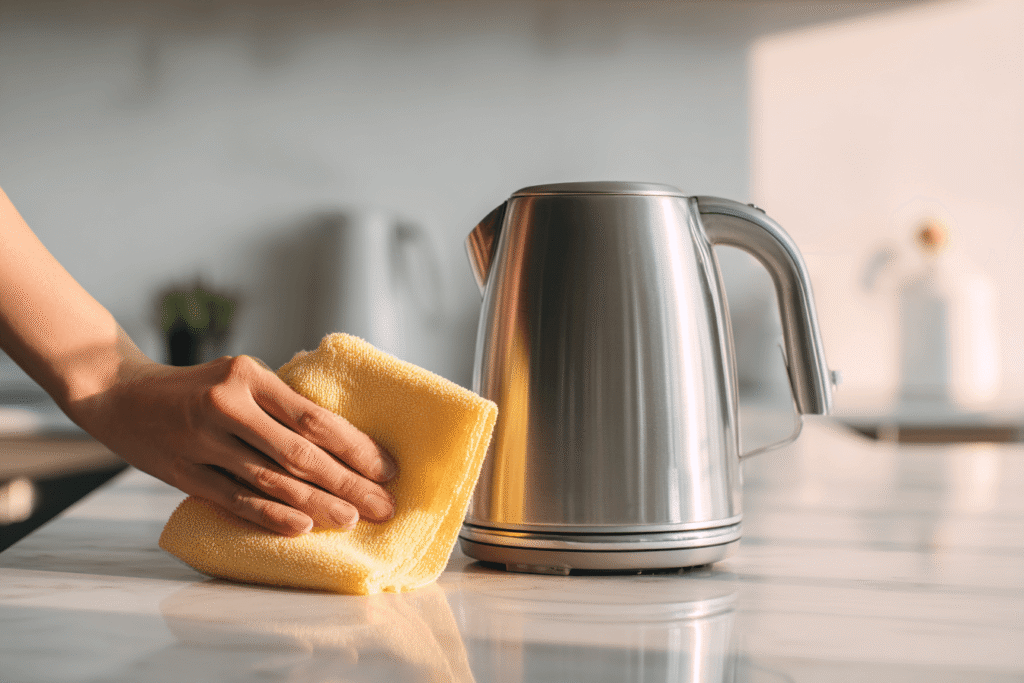
How to clean your kettle’s exterior safely
Your kettle’s exterior deserves just as much attention as the inside, especially if it sits near your hob where grease and splashes accumulate daily.
Safe cleaning essentials:
- Always unplug your kettle and let it cool completely before cleaning
- Never immerse the base or electrical components in water
- Use only soft cloths or non-abrasive sponges to avoid scratching
Simple cleaning method:
- Mix warm water with a few drops of washing-up liquid
- Dampen a soft cloth with the soapy solution
- Wipe down the exterior gently, avoiding any electrical connections
- For stubborn marks, create a paste using baking soda and water
- Rinse with a clean, damp cloth and dry thoroughly with a microfibre cloth
Pro tip: A tiny drop of olive oil on your final cloth creates a brilliant shine on stainless steel kettles without leaving streaks.
Preventing limescale buildup in your kettle
Daily maintenance tips
Simple daily habits make all the difference in keeping your kettle limescale-free and performing beautifully.
After each use:
- Empty any remaining water completely – standing water accelerates mineral buildup
- Give the interior a quick rinse with fresh water
- Leave the lid open to air dry thoroughly
- Wipe away water spots on the exterior with a soft cloth
Smart water choices:
- Use filtered water when possible to reduce mineral content
- Boil only what you need – excess evaporation leaves more deposits behind
Weekly quick check:
- Inspect for early white film formation around the heating element
- Address light buildup immediately with a gentle wipe using a damp cloth
These small daily actions prevent heavy limescale accumulation, saving you time and effort on deep cleaning sessions.
Water quality considerations
Understanding your local water helps you tackle limescale before it becomes a problem worth getting steamed up about.
| Water Type | Limescale Risk | Descaling Frequency |
|---|---|---|
| Soft (0-3 grains) | Low | Every 3-4 months |
| Moderately hard (3-7 grains) | Medium | Every 6-8 weeks |
| Hard (7-10 grains) | High | Monthly |
| Very hard (10+ grains) | Very high | Fortnightly |
Check your water company’s website to discover your area’s hardness level – most provide detailed maps showing mineral content across their supply zones.
Filtered water reduces mineral content by up to 80%, making it a brilliant investment for kettle longevity in hard water areas.
How often should you descale your kettle?
The magic number depends entirely on your water and usage habits – but we’ve got you sorted with a straightforward approach.
Your descaling schedule:
- Hard water areas: Every 4-6 weeks (that’s you, London and Birmingham folks)
- Soft water regions: Every 3-4 months (lucky Scotland and Wales residents)
- Heavy daily use: Monthly regardless of water type
- Occasional use: Every 6 months minimum
Quick reality check: If you’re boiling your kettle multiple times daily in a hard water area, monthly descaling becomes non-negotiable.
Watch for the warning signs rather than sticking rigidly to dates – visible white buildup, slower boiling times, or funny-tasting tea all signal it’s time for action.