Summarise this article with:
 ChatGPT
 Mistral
 Claude
 Perplexity
 Grok
Grok
You spend roughly a third of your life in bed — that’s around eight hours a night tangled up in your sheets, pillowcases and duvet covers. So it’s no surprise that your bedding accumulates a remarkable amount of sweat, dead skin cells, body oils and dust mites between washes. But how often should you actually be washing your sheets?
Whether you’re a weekly wash warrior or someone who stretches it a bit longer (no judgement), this guide breaks down exactly how often to wash sheets, pillows, duvets and everything else on your bed — plus what happens when you leave it too long.
How Often Should You Wash Your Sheets?
The short answer: once a week.
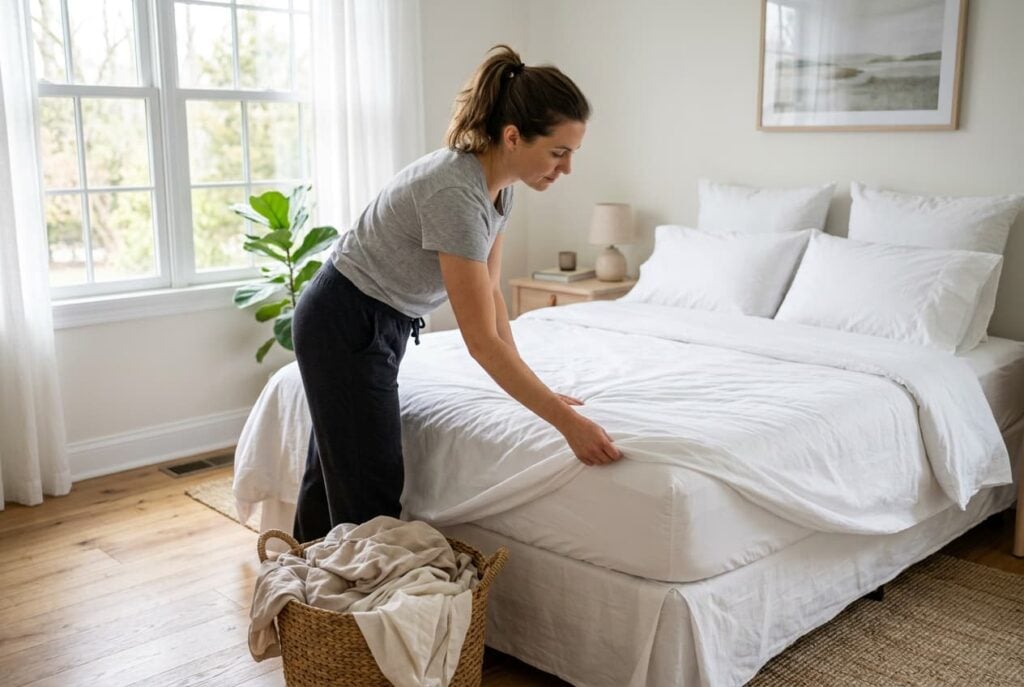
Most sleep experts and dermatologists recommend washing your bed sheets every seven days to remove the build-up of sweat, bacteria, dust mites and allergens that accumulate overnight. Every night, you shed hundreds of thousands of skin cells and excrete body oils — all of which settle deep into the fibres of your bedding.
If weekly washing feels like a tall order, a fortnightly wash is the absolute minimum to maintain decent hygiene. Going any longer than two weeks, and you’re essentially sleeping in a breeding ground for microscopic guests. If you’re new to building a proper laundry routine, learning how to do laundry efficiently can make the weekly change far less daunting.
| Bedding Item | Recommended Washing Frequency |
|---|---|
| Sheets & pillowcases | Every 1–2 weeks |
| Duvet cover | Every 1–2 weeks |
| Pillows (inner) | Every 3–6 months |
| Duvet (inner) | Every 3–6 months |
| Mattress protector | Every 2–3 months |
How Often Should You Change Your Bed Sheets Based on Your Lifestyle?
The weekly rule is a solid guideline, but your personal habits can shift things considerably. Here are the main factors that affect how often you need to change your sheets:
If you sweat a lot at night
Hot sleepers or anyone going through hormonal changes may find their sheets need changing every 3–4 days. The more sweat that soaks into your bedding, the faster bacteria and dust mites multiply. In summer, the best temperature for washing bedding may differ from winter too, so it’s worth adjusting your routine seasonally.
If you have allergies or sensitive skin
Anyone with asthma, eczema or a dust mite allergy should be washing their sheets at least once a week at 60°C. Allergy UK recommends investing in allergen barrier covers too. Pairing regular sheet changes with a thorough bedroom cleaning checklist can make a real difference to your symptoms.
If pets sleep on the bed
Pet hair, dirt and dander build up remarkably fast. If your furry friend shares your bed, you’ll want to wash your sheets once or twice a week to keep things fresh and prevent allergens from accumulating.
If you shower before bed
Good news for evening showerers: you may be able to stretch your sheets a touch longer, since most of the day’s dirt and sweat gets washed away before you hit the pillow. That said, you still shed skin cells and sweat during the night — so once a week remains the recommended baseline.
What Happens If You Don’t Wash Your Sheets Regularly?
Leaving your sheets unwashed for too long isn’t just unpleasant — it can genuinely affect your health. Here’s what’s lurking in bedding that goes too long between washes:
- Dust mites: These microscopic creatures feed on dead skin cells. Hundreds can live in just a single gram of dust on your duvet, and their droppings are a potent allergen.
- Bacteria: A study found that after just four weeks, a pillowcase harboured 39 times more bacteria than a pet bowl. Sheets had 5.4 times more bacteria than a toothbrush holder.
- Fungi: Species like aspergillus fumigatus have been detected in used pillows and can cause lung infections in vulnerable individuals.
- Body oils and sweat: These soak through to your duvet and mattress over time, creating the perfect environment for bacteria to thrive.
Dirty sheets can trigger allergies, worsen eczema, cause skin breakouts and even contribute to infections. If you’re prone to acne, unwashed pillowcases are a common culprit.
Signs Your Sheets Need Washing
Not sure when you last changed the bed? Watch for these tell-tale signs:
- They smell musty or stale — even faintly. Odours come from bacteria breaking down trapped sweat and oils.
- Your skin feels itchy or irritated — dust mites and allergens thrive in unwashed bedding.
- You notice visible stains — sweat marks, makeup residue or yellowing are clear indicators.
- The fabric feels rough or stiff — oil and dirt build-up strips sheets of their softness.
- Your sleep quality has dipped — fresh bedding genuinely helps you sleep better.
What Temperature to Wash Bed Sheets in Washing Machine
Temperature matters when it comes to killing bacteria and dust mites effectively. Here’s a quick guide:
| Fabric | Recommended Wash Temperature |
|---|---|
| Cotton sheets | 60°C |
| Polycotton blend | 40–60°C |
| Silk sheets | 30°C (mild detergent) |
| Linen sheets | 40°C |
For most standard cotton and polycotton bedding, 60°C is the sweet spot. This temperature is hot enough to kill bacteria and dust mites without damaging the fabric. Lower temperatures may leave some germs behind, so if you do wash at 40°C, consider using an antibacterial laundry additive for extra protection.
Always check the care label before washing — knowing how to sort laundry properly also helps prevent colour bleeding and fabric damage. Silk and delicate fabrics will need a gentler approach: stick to 30°C and a mild detergent to preserve the material.
How to Wash Bed Sheets Properly
Getting the best results from your weekly wash isn’t complicated, but there are a few tips that make a difference:
- Don’t overload the drum — sheets need space to move freely so water and detergent can circulate properly. One set of bedding per wash is ideal.
- Turn pillowcases inside out — this helps remove trapped skin cells and oils more effectively.
- Skip the fabric softener — it can coat fibres and reduce absorbency over time. White vinegar in the rinse cycle is a great natural alternative.
- Wash whites separately — to prevent greying. If your sheets are looking dull, whitening cotton sheets naturally with oxygen-based products or sunshine works brilliantly.
- Use the right amount of detergent — too much leaves residue; too little won’t clean effectively.
For a detailed step-by-step, our guide on how to wash bed sheets covers everything from water temperature to drying techniques.
How Often to Wash Duvet Covers, Pillows and Duvets
Sheets aren’t the only bedding that needs regular attention. Here’s a breakdown of everything else on your bed:
Duvet covers
Treat your duvet cover like your sheets — wash it every one to two weeks. It’s in direct contact with your skin and collects the same sweat, oils and skin cells.
Pillowcases
Pillowcases deserve extra attention, especially if you’re prone to breakouts. Washing them every 2–3 days is ideal for anyone with acne-prone or sensitive skin. At a minimum, change them weekly alongside your sheets.
Pillows (inner)
Your actual pillows should be washed every 3–6 months. Most feather, down and microfibre pillows are machine washable on a delicate cycle — just check the label first. For the full lowdown, our guide on how to wash pillows covers different pillow types and drying methods. Memory foam pillows shouldn’t go in the machine, but you can remove and wash the cover.
Duvets (inner)
Aim to wash your duvet once or twice a year. Synthetic duvets can usually go in the washing machine at 30–40°C on a gentle cycle. Feather and down duvets may need professional cleaning. Make sure your machine drum is big enough — if the duvet fills it completely, water and detergent won’t circulate properly.
Mattress protector
Every two to three months is a good rule. Your mattress protector catches a lot of the sweat and dirt that would otherwise soak into your mattress, so regular washing extends the life of both. And while you’re at it, our guide on how to clean a mattress can help you give the whole bed a thorough refresh.
Why Do Sheets Turn Yellow?
Yellow stains on sheets are one of the most common bedding frustrations, and they’re almost always caused by a combination of body oils, sweat and dead skin cells that build up over time. These substances react with the fabric and create stubborn yellowish marks, particularly on white bedding.
Other contributors include lotions and body creams applied before bed, as well as saliva (for side sleepers). The longer sheets go between washes, the deeper these stains set.
To prevent yellowing:
- Wash sheets weekly at 60°C
- Use an oxygen-based stain remover or try whitening with baking soda in your wash cycle
- Dry sheets in sunlight when possible — UV light naturally bleaches and disinfects
- Shower before bed to reduce the oils transferred to your bedding
Bed changing frequency
According to a YouGov poll, only around 35% of Brits wash their sheets once a week. A separate study of 2,000 UK adults found a clear generational divide: 45% of 25–34-year-olds change sheets weekly, compared with just 29% of over-65s.
Perhaps more alarmingly, one in five Brits admitted to leaving their bed linen unwashed for up to two months. And 45% of single men reported only changing their sheets once every three to four months.
The most common reasons? Many people simply don’t believe sheets need washing more often, while others cite it as too much of a chore. If laundry day feels overwhelming, it helps to keep things simple — and if you’ve just bought new bedding, check whether you should wash new bedding before use to start fresh from day one.
How to Keep Bedding Clean Between Washes and Right Temperature
You can extend the freshness of your sheets between washes with a few simple habits:
- Shower or bathe before bed — washing off the day’s dirt and sweat before you get under the covers makes a huge difference.
- Air your bed each morning — pull back the duvet and let moisture evaporate for at least 30 minutes before making the bed.
- Remove makeup thoroughly — leftover makeup transfers onto pillowcases and can stain fabric.
- Avoid eating in bed — crumbs attract dust mites and bacteria.
- Keep pets off unmade bedding — pet hair and dander settle into exposed sheets quickly.
- Wear breathable pyjamas — cotton sleepwear helps regulate body temperature and reduces the amount of sweat that soaks into your sheets.
Can Dirty Sheets Cause Acne?
Yes. Pillowcases that aren’t washed regularly can harbour bacteria, dead skin cells and oils that clog pores and trigger breakouts — particularly if you’re already acne-prone. Dermatologists recommend changing pillowcases every 2–3 days if acne is a concern, and always washing at a high enough temperature to kill bacteria.
Switching to silk or satin pillowcases may also help, as these fabrics absorb less oil than cotton. But even premium pillowcases need regular washing to prevent build-up.
How to Dry Bedding Properly
Washing is only half the battle. Drying your bedding thoroughly is essential to prevent mould and bacteria from developing. If you’re wondering whether it’s safe to put everything in the tumble dryer, our guide on tumble drying bed sheets has the answers.
| Drying Method | Best For | Tips |
|---|---|---|
| Outdoor line drying | All bedding types | UV light kills bacteria; best option in warm weather |
| Tumble dryer (low heat) | Sheets, synthetic duvets | Check care label; add dryer balls for fluffiness |
| Indoor airing | When outdoor drying isn’t possible | Use a well-ventilated room; avoid wardrobes |
Never put damp bedding back on the bed. Trapped moisture creates the perfect environment for mould growth, unpleasant odours and bacterial build-up. If you do spot any issues, knowing how to remove blood stains from bed sheets or other stubborn marks promptly can save your sheets from permanent damage.
How Often to Wash Bed Sheets in Winter
You might assume that because you sweat less in winter, your sheets don’t need washing as often. While it’s true that cooler temperatures mean less perspiration, you still shed skin cells, body oils and allergens every night. Central heating can also dry the air, causing more skin to flake off.
The recommendation stays the same: once a week, or every two weeks at the absolute most. In winter, you may also want to wash at 60°C to kill any dust mites that thrive in warm indoor environments — especially under thick duvets.
When to Call in a Professional
Sometimes a fresh set of sheets isn’t enough. If your mattress has stubborn stains, persistent odours or visible mould, it might be time for a professional clean. Wecasa’s professional house cleaners can tackle deep-set dirt across your whole home — bedrooms included — so you can enjoy a genuinely fresh sleeping environment.
A regular or one-off clean from a trusted professional can make a world of difference, especially when combined with your own weekly sheet-washing routine.
FAQ
Is once a month enough to wash sheets?
No. Once a month is too long between washes. Experts recommend washing your sheets once a week, or every two weeks at the very most. After that, the build-up of sweat, bacteria, dust mites and dead skin cells becomes significant enough to affect your hygiene, skin health and sleep quality.
How long is too long to not wash sheets?
Anything beyond two weeks is pushing it. After 14 days without washing, your sheets will have accumulated enough dead skin cells to feed a thriving dust mite population, along with a noticeable build-up of bacteria and body oils. For optimal hygiene, stick to a weekly washing schedule.
Should you wash sheets at 40 or 60?
60°C is recommended for most cotton and polycotton sheets. This temperature effectively kills bacteria and dust mites. Washing at 40°C may not eliminate all germs, so if you need to use a lower temperature (for delicate fabrics, for example), consider adding an antibacterial laundry product. Always check the care label first.
How often should you wash pillowcases?
Ideally, every 2–3 days if you have sensitive or acne-prone skin. At a minimum, pillowcases should be changed weekly alongside your sheets. They accumulate oils, sweat and bacteria from your face and hair faster than any other piece of bedding.
How often should a single person wash their sheets?
The same weekly recommendation applies regardless of whether you share your bed or sleep alone. You still shed skin cells, produce sweat and generate body oils every single night. The only difference is that you won’t have a second person’s contribution — but one person is more than enough to make weekly washing worthwhile.
What happens if you don’t wash your sheets regularly?
Unwashed sheets become a breeding ground for dust mites, bacteria and fungi. Over time, this can trigger allergies, worsen skin conditions like eczema and acne, cause respiratory irritation, and simply make your bed an unpleasant place to sleep. The longer you leave it, the harder stains and odours become to remove.