Résumer cet article avec :
 ChatGPT
 Mistral
 Claude
 Perplexity
 Grok
Grok
Cleaning with lemon is one of the oldest tricks in the book, and for good reason. Lemons are naturally acidic, antibacterial and deodorising, which gives them real cleaning power without relying on harsh chemicals. In busy lives, when cleaning routines need to be efficient and safe, lemon juice becomes a reliable solution for tackling stains, grease, limescale and lingering smells across the home.
Used correctly, lemons help you deep clean key appliances, freshen the air and restore surfaces to a free shine. Used incorrectly, however, lemon juice can damage delicate materials or make stains worse. As professional cleaners, we see both sides. This guide shows you exactly how to clean with lemon safely, effectively and without guesswork.
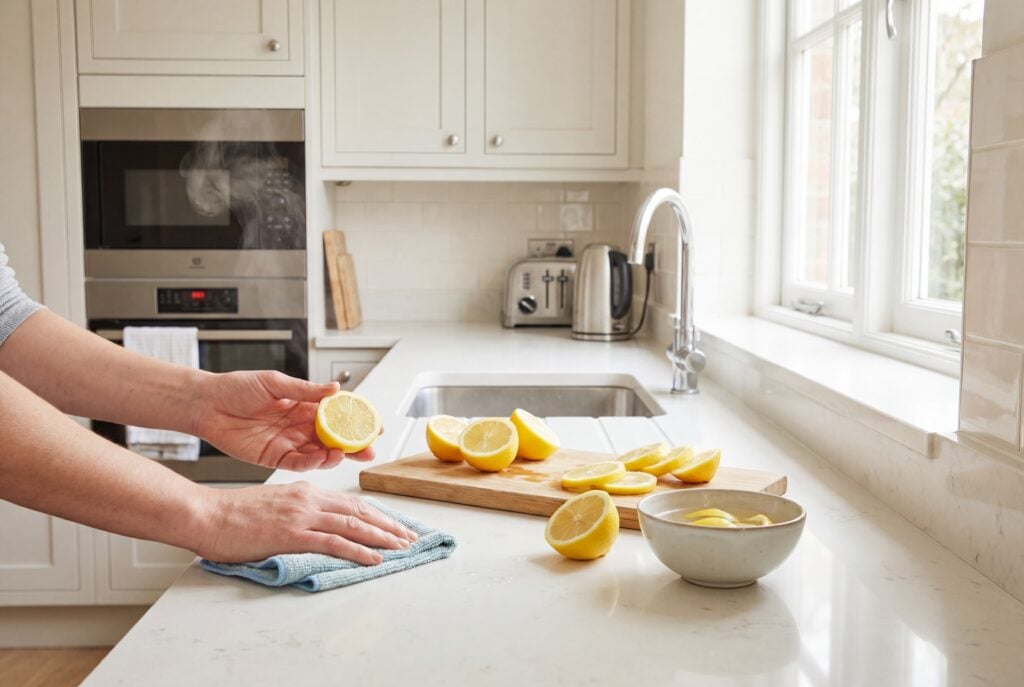
Why lemons are good for cleaning
Lemons contain citric acid, which breaks down mineral deposits, grease and soap residue. This is why lemon juice works so well on kettles, ovens and microwaves, and why it adds extra cleaning power when paired with baking soda.
From a practical point of view, lemons also:
- Cut through grease without leaving residue
- Neutralise odours instead of masking them
- Leave surfaces smelling fresh without artificial fragrance
- Reduce reliance on harsh chemicals in your cleaning routine
For households with chaotic lives and busy lives, cleaning with lemon offers a simple, accessible solution that fits into everyday life without extra products or complicated steps.
Clean microwave with lemon
Cleaning a microwave with lemon is one of the fastest wins in the kitchen. Steam does most of the work, while lemon juice loosens dried-on food and neutralises smells.
Start by slicing a lemon in half and placing both halves in a microwave-safe bowl with lemon water. Heat on full power for a few minutes until the liquid boils and steam coats the interior. Let it sit for a few minutes before opening the door. The steam softens stains, making them easy to wipe away with a microfiber cloth or paper towel.
This method works because steam lifts food particles, while lemon juice adds extra cleaning power and leaves a fresh scent. Repeat this process every few weeks to keep your microwave easy clean and odour-free.
Oven cleaning with lemon
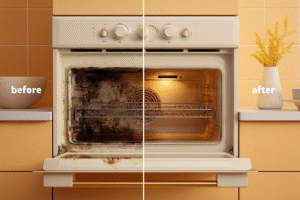
Oven cleaning with lemon is ideal for light to moderate grease build-up. It will not replace a professional deep clean for heavily carbonised ovens, but it is excellent for maintenance.
Fill an ovenproof dish with lemon water made from lemon juice and hot water. Place it in a warm oven for around 20–30 minutes. As the lemon water heats, steam loosens grease and baked-on food. Once the oven cools slightly, wipe surfaces with a damp microfiber cloth.
For extra cleaning power, dip the cloth into a paste made from baking soda and lemon juice and gently work on stubborn spots. This combination lifts grease while avoiding harsh chemicals that can linger inside ovens.
Baking soda lemon juice cleaning: when to combine them
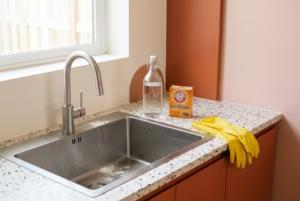
Baking soda lemon juice cleaning works because it combines abrasion with acidity. Baking soda scrubs without scratching, while lemon juice dissolves grease and mineral deposits.
This method is especially effective on:
- Stains on ceramic or enamel
- Sink bowls and drains
- Oven trays and racks
- Hard water stains
Mix baking soda with lemon juice to form a paste. Apply it to the surface, leave it for a few minutes, then scrub gently. Rinse thoroughly to avoid residue. This solution is best used for targeted areas rather than whole-room cleaning.
Lemon uses around the home
Lemon uses go far beyond the kitchen. In a well-balanced cleaning routine, lemons support both maintenance and deep clean tasks.
You can use lemon in half to:
- Rub onto taps to remove water marks
- Freshen chopping boards
- Neutralise bin odours
- Polish stainless steel when followed by a dry microfiber cloth
Using lemon in half also helps control dosage. You avoid over-saturating surfaces with lemon juice, which matters for delicate finishes.
Cleaning washing machine with lemon and baking soda
Cleaning the washing machine with lemon and baking soda helps tackle detergent residue, limescale and odours that build up over time. This is especially useful in hard water areas.
Add lemon juice directly into the drum, sprinkle baking soda inside, then run an empty hot cycle. The lemon juice breaks down mineral deposits while baking soda deodorises and lifts grime. This should be done occasionally as part of a deep clean, not every week.
This method improves freshness and supports the machine’s lifespan without relying on aggressive descaling solutions.
Cleaning with lemon and vinegar: should you mix them?
Cleaning with lemon and vinegar is often misunderstood. While both are acidic, mixing them does not double effectiveness. In practice, it simply creates a milder acid.
Use lemon and vinegar separately:
- Lemon juice for grease, odours and light limescale
- Vinegar for heavy limescale and mould
Alternating between the two gives better results and avoids unnecessary chemical reactions. Never mix either with bleach.
Cleaning with lemon essential oil
Cleaning with lemon essential oil is useful when you want fragrance without acidity. Unlike lemon juice, lemon essential oil does not descale or dissolve stains. It works best as an additive.
Add a few drops to a spray bottle filled with warm water and dish soap for wiping surfaces. This creates a pleasant scent and mild antibacterial effect but should not replace lemon juice for stains or kettle cleaning.
Cleaning kettle with lemon
Cleaning kettle with lemon is one of the most effective natural descaling methods. Limescale responds well to citric acid, and lemon juice is gentle enough for regular use.
To descale the kettle, fill it with water and add lemon juice or lemon slices. Boil the kettle, switch it off, and let it sit for a few minutes. Pour out the solution, rinse thoroughly, then boil fresh water once more to remove any residue.
| Kettle size | Lemon solution | Waiting time |
|---|---|---|
| Small kettle | 500 ml water + lemon juice | Few minutes |
| Large kettle | Full kettle + lemon in half slices | 10 minutes |
This keeps the kettle clean, efficient and free from unpleasant tastes.
How can you clean your house with lemons?
Cleaning your house with lemons works best when you target the right tasks. Lemons are ideal for kitchens, utility areas and appliances where grease, stains and smells build up.
Use lemons strategically rather than everywhere. Focus on high-contact zones like sinks, bins, microwaves and kettles. Combine lemon juice with baking soda for stains, and lemon water for steam-based cleaning. This approach keeps your home fresh without damaging surfaces.
How do you use lemon to make your house smell good?
Lemon naturally neutralises odours rather than masking them. Simmer lemon slices in water on the hob, or wipe surfaces with diluted lemon juice. Adding lemon essential oil to cleaning solutions also helps maintain a clean scent.
Avoid overuse. Too much lemon juice can leave sticky residue, especially on floors or sealed surfaces. A light, regular application works best.
What should you not clean with lemon juice?
Despite its versatility, lemon juice is not suitable for everything. Avoid using it on:
- Natural stone such as marble or granite
- Untreated wood
- Delicate finishes or waxed surfaces
The acidity can etch or dull these materials. Always test a small area first and rely on the user manual when cleaning appliances or specialist surfaces.
What does cleaning chicken with lemon do?
Cleaning chicken with lemon does not make raw poultry safer. Lemon juice does not kill harmful bacteria. This practice can spread contamination around the kitchen.
From a professional cleaning perspective, raw chicken should never be washed. Instead, focus on cleaning surfaces, sinks and utensils afterwards using hot water and proper cleaning solutions.
Why are lemons good for cleaning?
Lemons are good for cleaning because they combine acidity, antibacterial properties and deodorising action in one natural ingredient. Lemon juice dissolves grease and mineral build-up, while the scent leaves spaces smelling fresh.
When used correctly, lemons reduce reliance on harsh chemicals, support safer cleaning routines and deliver visible results, especially when paired with baking soda or steam.
Building lemon into your cleaning routine
Lemon should complement, not replace, a balanced cleaning routine. Use it for maintenance and targeted tasks rather than as a universal solution.
A simple routine might include:
- Weekly microwave steam clean with lemon water
- Monthly kettle descaling with lemon juice
- Occasional washing machine deep clean with lemon and baking soda
This keeps appliances efficient and reduces the need for aggressive products.
Common mistakes when cleaning with lemon
Overusing lemon juice is the most common issue. Too much acidity can dull surfaces or leave residue. Another mistake is using lemon on incompatible materials or skipping rinsing steps.
Always wipe surfaces dry with a microfiber cloth or paper towel to prevent streaks and residue. Controlled use delivers the best results.
FAQs – Cleaning with lemons
How can you clean your house with lemons?
+Lemons are particularly effective in kitchens and on appliances. Lemon water can be used for steam cleaning microwaves, lemon juice helps lift light stains and limescale, and a cut lemon works well for spot treatments on taps and sinks. Always rinse surfaces afterwards to avoid sticky residue.
How do you use lemon to make your house smell good?
+Simmer lemon slices in a pan of water to release a fresh, clean scent, or add a few drops of lemon essential oil to a spray bottle filled with water. This naturally freshens rooms without relying on artificial fragrances.
What should you not clean with lemon juice?
+Avoid using lemon juice on natural stone, untreated wood, waxed surfaces and delicate finishes. Its acidity can etch, dull or permanently damage these materials if used repeatedly or left in contact for too long.
What does cleaning chicken with lemon do?
+Cleaning raw chicken with lemon does not make it safe to eat. Lemon juice does not kill harmful bacteria such as salmonella and washing poultry can actually spread bacteria around the kitchen. Raw chicken should not be washed before cooking.
Why are lemons good for cleaning?
+Lemons contain natural acids that help break down grease and limescale, combined with deodorising properties that neutralise odours. This makes them a useful option for light, everyday cleaning without relying on harsh chemicals.