Summarise this article with:
 ChatGPT
 Mistral
 Claude
 Perplexity
 Grok
Grok
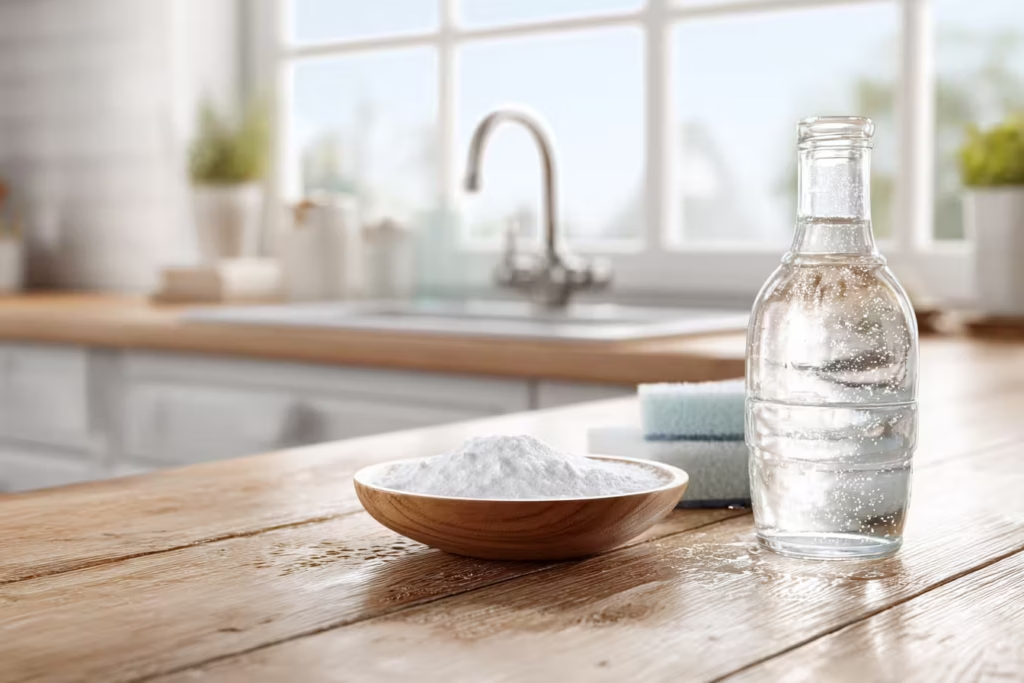
Baking soda, also known as bicarbonate of soda, is one of the most versatile and affordable natural cleaners you can find. Found in most kitchen cupboards, this gentle white powder tackles dirt, removes stains, and odours with surprising ease.
It’s safe for the whole family, including pets, and ideal for eco-conscious households. Whether you’re deep-cleaning your bathroom or freshening up your fridge, baking soda is a must-have staple.
Let’s dive into how to use it effectively—room by room.
Why Use Baking Soda for Cleaning?
Baking soda is a natural mineral compound—sodium bicarbonate—with mild abrasive, deodorising, and antibacterial properties. It’s completely non-toxic, making it perfect for homes with kids, pets, or sensitivities.
Unlike many commercial products, it doesn’t leave behind harmful fumes or residues. Plus, it’s incredibly budget-friendly. One box goes a long way in keeping your home fresh and sparkling.
Best of all? It’s a low-waste alternative to harsh chemical sprays and plastic bottles.
Bicarbonate of Soda Uses for Cleaning
This versatile powder works wonders across numerous household surfaces and items. From kitchen appliances to bathroom fixtures, baking soda handles an impressive range of cleaning challenges.
Kitchen applications:
- Countertops and worksurfaces (marble, granite, laminate)
- Stainless steel sinks and taps
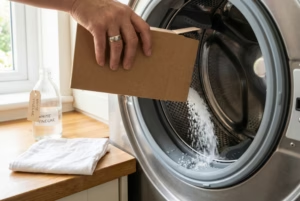
- Washing machine drum and rubber seals
- Microwave interiors and cooker hoods
- Burnt pans and baking trays
Bathroom essentials:
- Toilet bowls (sprinkle and scrub with a toilet brush)
- Shower screens and bath tubs
- Grout lines between tiles
- Mirrors and glass surfaces
Around the home:
- Carpet stains and fabric upholstery
- Shoes (deodorising and whitening)
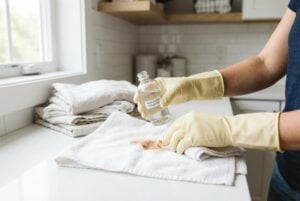
- Whitening clothes with baking soda
- Garbage bins and recycling containers
- Walls with crayon marks or scuff marks
The powder’s chemical properties make it particularly effective on greasy residues, soap scum, and mineral deposits that regular detergents struggle with.
Easy Ways to Use Baking Soda at Home
1. All-Purpose Scrub
Create a simple paste by mixing three parts baking soda with one part water until you achieve a thick, spreadable consistency. This mixture transforms into a powerful cleaning agent that tackles stubborn grime on multiple surfaces.
Apply the paste directly onto dirty surfaces like sinks, stovetops, or bathroom tiles using a damp sponge. Allow it to sit for several minutes before scrubbing gently in circular motions. The natural abrasiveness breaks down built-up residue without scratching delicate finishes.
For tougher jobs, sprinkle dry baking soda onto your cleaning cloth first, then work the area with gentle pressure. Rinse thoroughly with warm water afterwards to remove any white residue. This method proves particularly effective on soap scum and limescale in bathrooms.
2. Natural Carpet Freshener
Transform your carpets with this simple two-ingredient solution that neutralises odours rather than masking them. Baking soda’s alkaline properties absorb unpleasant smells deep within carpet fibres, while essential oils provide a lasting, natural fragrance.
Essential ingredients:
- 1 cup baking soda (bicarb)
- 10-15 drops essential oil of choice
Popular oil choices include lavender for relaxation, lemon for freshness, or tea tree for antibacterial benefits. Mix thoroughly in a glass jar, ensuring even distribution throughout the powder.
Sprinkle generously across dry carpet surfaces, working the mixture into fibres with a soft brush. Leave for 30 minutes minimum – longer for stubborn odours. The process requires no elbow grease, just patience as the baking soda works its magic.
Vacuum thoroughly afterwards, ensuring complete removal. This method refreshes high-traffic areas and eliminates pet odours naturally, making it an excellent chemical-free alternative to commercial carpet fresheners.
3. Oven Cleaner
Baking soda tackles burnt-on grease and stubborn oven grime without harsh chemicals or overwhelming fumes. Cleaning oven with baking soda requires minimal effort but delivers impressive results through the natural cleaning power of alkaline substances.
What you’ll need:
- ½ cup baking soda
- 3-4 tablespoons hot water
- White vinegar (for finishing)
- Rubber gloves
Remove oven racks first and mix baking soda with hot water until you achieve a yogurt-like consistency. Spread this mixture across oven walls, floor, and door interior using gloves, avoiding heating elements completely.
Leave the paste overnight or for a couple of hours minimum to break down tough stains. The alkaline properties work continuously, loosening even the most stubborn residue. Wipe away with damp cloths, then spray remaining areas with vinegar to eliminate any white film.
This natural approach proves particularly effective for regular maintenance cleaning between professional services.
4. Drain Refresher
Slow-draining sinks often respond well to baking soda and vinegar, a natural method that helps loosen everyday build-up without stressing pipework. When combined, the fizzing reaction targets soap scum, light grease, food residue and surface-level hair accumulation. The bubbling action creates temporary pressure inside the pipe, helping to dislodge debris clinging to the drain walls rather than forcing it further down.
This explains why many people ask does vinegar and baking soda remove hair block — it can improve slow drainage caused by minor build-up, but it will not dissolve dense or compacted hair clogs.
Pour half a cup of baking soda directly down the drain opening. Follow immediately with an equal amount of baking soda worth of white vinegar – the vigorous fizzing action begins instantly.
| Step | Timing | Action |
|---|---|---|
| 1 | 0 minutes | Pour baking soda down drain |
| 2 | Immediately | Add vinegar, cover with wet towel |
| 3 | 15 minutes | Let mixture work |
| 4 | Final step | Flush with boiling water |
Cover the drain with a wet towel to contain the reaction and maximise contact with stubborn deposits. After fifteen minutes, pour boiling water down to wash away loosened debris and restore proper flow.
This weekly maintenance prevents major blockages from forming.
5. Fridge Deodoriser
Unpleasant fridge odours vanish when you harness baking soda’s natural neutralising power. Unlike air fresheners that simply mask smells, bicarbonate of soda actually absorbs and eliminates odour molecules at their source.
Placement options for maximum effectiveness:
- Open shallow dish on middle shelf for consistent airflow
- Small jar with perforated lid to prevent spills
- Sprinkle directly onto plate for stubborn smells
Position your chosen container away from fresh produce to avoid contamination. The key lies in maximising surface area – spread baking soda thinly rather than piling it high for faster odour absorption.
| Method | Duration | Best For |
|---|---|---|
| Open dish | 2-3 days | Quick freshening |
| Sealed container | 30 days | Long-term maintenance |
Replace monthly or when the powder becomes clumpy. Never use deodorising baking soda for cooking afterwards – keep separate supplies for each purpose to maintain food safety standards.
Pairing Baking Soda with Other Natural Ingredients
For even better results, try combining baking soda with:
| Ingredient | Benefit |
|---|---|
| White vinegar | Reacts with baking soda for fizzing action (great for drains and grout) |
| Lemon juice | Adds antibacterial power and a fresh scent |
| Castile soap | Gentle cleaning without chemicals |
| Essential oils | Natural fragrance and antimicrobial boost |
These combos help you create powerful DIY cleaners that are just as effective as shop-bought sprays.
Is Baking Soda Safe on All Surfaces?
Mostly, yes! Baking soda is gentle and non-toxic, but it can be slightly abrasive. Avoid using it on:
- Polished wood
- High-gloss surfaces
- Delicate aluminium or gold fixtures
When in doubt, always test a small area first. And steer clear of using it with bleach—it doesn’t improve cleaning and may cause harmful reactions.
Is baking soda the same as bicarbonate of soda?
Wondering if the baking soda is the same as bicarbonate of soda ? Absolutely – they’re identical products with different regional names. This common confusion stems from geographical preferences rather than any actual difference in the substance itself.
The chemical formula remains NaHCO3 regardless of what you call it. Americans typically say “baking soda” while British, Australian, and New Zealand consumers use “bicarbonate of soda” or simply “bicarb.”
| Region | Common Name |
|---|---|
| United States | Baking soda |
| United Kingdom | Bicarbonate of soda |
| Australia/New Zealand | Bicarb soda |
Whether your recipe calls for baking soda or bicarbonate of soda, you’re looking for the same white powder on supermarket shelves. The cleaning properties, effectiveness, and safety considerations discussed throughout this guide apply equally to both terms.
Baking Soda in the UK
Baking soda is easy to find in supermarkets, chemists, or online. Look for:
- Supermarket own-brands (Tesco, Sainsbury’s, Lidl)
- Bicarbonate of Soda by Dri-Pak (widely stocked and ideal for cleaning)
- Large eco-friendly refill packs online at stores like Big Green Smile or Peace With The Wild
Opt for food-grade or household-grade baking soda—both work for cleaning, but food-grade is purer if you’re using it in fridges or around food.
Final Thoughts: A Natural Essential That Works
Baking soda is the ultimate fuss-free cleaner. It’s natural, affordable, and truly multi-purpose. From freshening up fabrics to tackling tough grime, this humble powder earns its place in every eco-friendly home.
Best of all? It helps cut down your reliance on plastic and harsh chemicals. And that’s a win for your health—and the planet.
Baking Soda Cleaning FAQs
How do you make a baking soda paste for cleaning?
+Mix three parts baking soda with one part water until you get a thick paste. For stronger cleaning power, replace the water with dish soap using the same ratio. The paste should be spreadable but not runny so it sticks well to surfaces.
Is baking soda or vinegar better for cleaning?
+Both are effective when used separately. Baking soda works best as a gentle abrasive and deodoriser, while vinegar excels at removing limescale and mineral deposits. Avoid mixing them together, as this neutralises their effectiveness.
What surfaces should I avoid cleaning with baking soda?
+Avoid natural stone like marble, granite, and quartz, as well as glass, aluminium, finished wood, painted surfaces, gold-plated items, and delicate materials. Baking soda can scratch, dull, or damage protective coatings.
How long should baking soda be left on surfaces?
+Contact time depends on the task: carpets and upholstery (15–30 minutes), ovens (12–24 hours), grout (10–20 minutes), general stains (at least 10 minutes), drains (5–10 minutes with hot water), and mattresses (5–10 minutes before vacuuming).
What is baking soda called in the UK?
+In the UK, baking soda is sold as bicarbonate of soda. You may also see it labelled as bicarb or sodium bicarbonate. Popular brands include Dr. Oetker and Dri-Pak.
Want a Sparkling Home Without the Effort?
Let Wecasa’s expert cleaners handle it for you. We can use natural, eco-friendly products on request—just mention it when booking.
Book with Wecasa