Résumer cet article avec :
 ChatGPT
 Mistral
 Claude
 Perplexity
 Grok
Grok
Distilled malt vinegar is a common pantry item in UK kitchens — cheap, acidic and often overlooked as a household cleaning product. Many people reach for white vinegar or specialised cleaning vinegar, but a lot of people ask whether distilled malt vinegar can be just as effective. Understanding how different vinegars compare, what they can safely clean, and what limitations they have is essential for achieving sparkling surfaces without risky DIY mistakes.
In this guide you’ll learn what distilled malt vinegar is, how it compares to white vinegar for cleaning, where it shines as a cleaning agent, and — critically — where its acidity can be problematic.
What is distilled vinegar?
Distilled vinegar is an acidic liquid created through fermentation of ethanol. The alcohol is oxidised into acetic acid, which gives vinegar its tart smell and cleaning power. For cleaning purposes, the strength of the acidity — measured as acetic acid percentage — determines how much cleaning power the vinegar has.
Distilled malt vinegar is made by fermenting malted barley and then diluting the result. It’s widely used in food, especially with fish and chips. The acetic acid content in malt vinegar is usually similar to other food-grade vinegars (around 4–6%), but it’s not labelled as cleaning vinegar because it’s intended for consumption rather than cleaning.
White vinegar and distilled white vinegar — what’s the difference?
| Type of Vinegar | Typical Acetic Acid | Common Use | Cleaning Suitability |
|---|---|---|---|
| White vinegar | ~5% | Culinary & multipurpose | Good |
| Distilled white vinegar | ~5% | Culinary & cleaning | Good |
| Cleaning vinegar | ~6–10% | Household cleaning | Strong |
| Distilled malt vinegar | ~4–6% | Culinary | Fair |
In practice:
- Both white vinegar and distilled white vinegar have similar acidity and can be used interchangeably in many cleaning tasks.
- Cleaning vinegar often has higher acidity and more cleaning power.
- Distilled malt vinegar has the lowest cleaning power of these, but it can still be useful in many cleaning scenarios.
White distilled vinegar vs white vinegar
When comparing white distilled vinegar vs white vinegar, the main difference is often labelling. In the UK, many “white vinegar” bottles are already distilled, meaning the product has been purified for consistent acetic acid content.
From a cleaning perspective, both are safe to use on most light surfaces, glass, tile, and stainless steel. Their low cost and non-toxic nature make them popular eco-friendly alternatives to chemical detergents.
By contrast, distilled malt vinegar is made from malted barley, which gives it a darker colour and a slightly stronger smell — and that’s where some limitations come in.
Can you use brown vinegar for cleaning?
Many people wonder: Can you use brown vinegar for cleaning? The short answer is yes, but with caution.
Brown vinegar — which includes distilled malt vinegar — still contains acetic acid, which dissolves mineral deposits, grease and mild residues. However, unlike pure white vinegar, the colour can potentially stain porous surfaces, especially natural stone, cement grout, and some laminate flooring. So while brown vinegar can be used, it’s not always the best choice.
Vinegar solution for cleaning — how to mix and use
To use distilled malt vinegar for cleaning, it’s important to dilute it properly depending on the task.
Here’s a simple guide:
General cleaning solution
✔ Mix 1 part vinegar + 1 part water
✔ Suitable for countertops, sinks, tiles, glass
Grease cutting solution
✔ Mix 2 parts vinegar + 1 part water
✔ Add a few drops of dish soap for heavy grease
Drain cleaning solution
✔ Pour a cup of vinegar + half a cup of baking soda into the drain
✔ Rinse with hot water after fizzing stops
These dilutions work because the acetic acid reacts with alkaline soils, dissolving mineral deposits and breaking down grease. Even though distilled malt vinegar has slightly less acetic acid than specialised cleaning vinegar, these ratios still deliver effective results for most household cleaning tasks.
Can you use distilled malt vinegar for cleaning?
Yes — you can use distilled malt vinegar for cleaning, but understanding its strengths and limitations is key.
Effective uses
- Cutting through light grease on stovetops or kitchen tiles
- Descaling kettles or coffee machines (when diluted)
- Cleaning glass and mirrors
- Removing mild mineral deposits in bathrooms
Situations where malt vinegar is less ideal
- Natural stone surfaces (e.g., granite, marble) — the acidity can etch the surface
- Wood and varnished furniture — prolonged contact may damage the finish
- Porous grout — risk of staining because of the darker colour
So while distilled malt vinegar does have some cleaning power, it doesn’t always match the versatility of white distilled vinegar or cleaning vinegar when it comes to delicate surfaces.
What can distilled malt vinegar be used for?
Below are common cleaning scenarios where malt vinegar excels — and where it doesn’t.
Descaling kettles and coffee makers
Distilled malt vinegar works well when descaling appliances because its acetic acid breaks down mineral deposits left by hard water.
How to use:
- Fill the kettle or carafe with a 1:1 water-vinegar mix
- Boil (for kettles) or run a brew cycle (for coffee makers)
- Rinse thoroughly afterwards
Cleaning sinks and drains
The acetic acid in malt vinegar helps clear build-up when paired with baking soda — the fizzy reaction loosens grime.
Tip: For stubborn clog build-up, add hot water after the fizzing finishes.
Kitchen and bathroom surfaces
A diluted vinegar solution can lift grease and soap scum effectively. However, ALWAYS test on a small inconspicuous area first, especially on tiles with porous grout.
Glass and stainless steel
Distilled malt vinegar removes fingerprints and smudges from mirrors and stainless steel — though the smell can linger longer than with white vinegar.
Equal parts vinegar — how to apply
For most household cleaning tasks, an equal parts vinegar solution is sufficient. This ratio maintains enough acidity to dissolve light soil without being overly strong.
When applying:
- Use a spray bottle to mist the surface
- Wipe immediately with a microfibre cloth
- Rinse where possible with clean water
Few caveats when cleaning with malt vinegar
Vinegar offers natural cleaning benefits, but there are a few caveats to remember:
Harsh chemical smell
Unlike neutral-smelling cleaners, vinegar — especially malt vinegar — can have a stronger smell. Good ventilation helps reduce lingering odours.
Not suitable for all surfaces
Avoid using vinegar (of any type) on:
- Marble and granite
- Waxed or polished wood
- Some laminate and natural stone – the acid may damage seals or finishes
When in doubt, always test on a hidden area first.
Natural stone and vinegar
One of the biggest risks with vinegar cleaning — including distilled malt vinegar — is damage to natural stone surfaces. The acetic acid can etch the stone, dulling its finish and leaving lasting marks.
For stone surfaces like granite or marble:
✔ Use pH-neutral stone cleaner
✔ Avoid vinegar entirely
Because vinegar reacts with calcium and other minerals, it can degrade the sealant and surface of the stone.
Apple cider vinegar vs distilled malt vinegar
Many DIY cleaners ask about alternatives like apple cider vinegar for cleaning. Apple cider vinegar contains acetic acid similar to malt vinegar, but also organic pigments and residues from the fermentation of apples. This can increase the risk of staining light surfaces.
In contrast, distilled malt vinegar is lighter in colour than apple cider vinegar and still safer for cleaning — though still not as ideal as white vinegar.
Baking soda + vinegar: does it work?
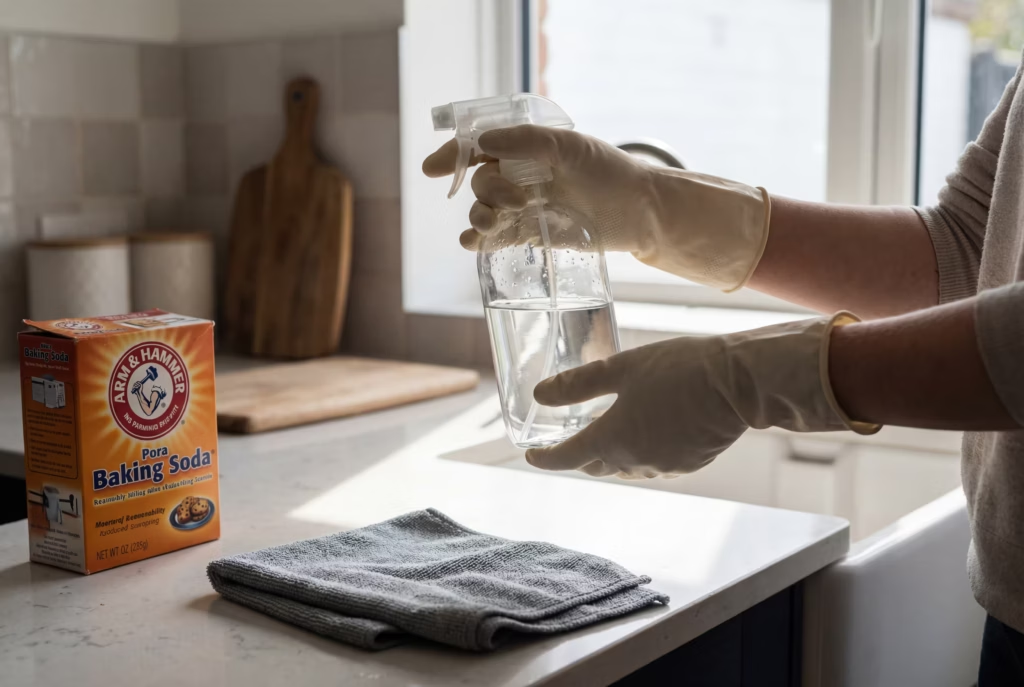
Pairing baking soda with vinegar can boost cleaning power, especially in drains and grout lines. Baking soda is alkaline, and when it reacts with acetic acid in vinegar it produces a fizzy reaction that loosens soil.
Use this combo:
- For blocked drains
- To remove soap scum
- On stubborn mineral deposits
But remember: this reaction is temporary — once the fizzing stops, the cleaning effect diminishes.
FAQ
Is distilled white vinegar the same as vinegar?
People often ask if distilled white vinegar is the same as white vinegar. The short answer is : yes. In most cases, distilled white vinegar is the standard form of vinegar used for both culinary and cleaning purposes. It contains acetic acid diluted with water and is effective for general household cleaning.
Can you use distilled malt vinegar for cleaning?
Yes — distilled malt vinegar can be used for cleaning many hard surfaces, glass, and appliances. However, its darker colour, stronger smell and lower acid concentration mean it is not always the best choice for every cleaning task.
Can you use distilled white malt vinegar for cleaning marble or stone?
No. Acidic vinegar — including distilled malt vinegar — can etch and dull natural stone and marble surfaces. Always choose a pH-neutral cleaner for those materials.
What can distilled malt vinegar be used for?
Distilled malt vinegar is effective at descaling kettles, cutting light grease, cleaning glass and unclogging drains with baking soda. It is less suitable for delicate or porous surfaces.