Résumer cet article avec :
 ChatGPT
 Mistral
 Claude
 Perplexity
 Grok
Grok
If a thick wall of ice has crept across your freezer shelves, it’s time to act. Knowing how to defrost a fridge freezer properly is one of the simplest ways to reclaim storage space, lower your energy bills and keep your appliance running like new. The good news? You don’t need any special kit or brute force — just a bit of patience, some hot water and a few towels. This guide walks you through the safest method step by step, plus the quickest tricks, how often to do it, and the mistakes to avoid.
Why you should defrost your fridge freezer
When warm air sneaks in and condenses, it freezes into a layer of frost. Over time that ice build-up acts like an insulator, forcing the motor to work harder to stay cold. The result is higher energy use, less efficiency and a shorter lifespan for your appliance. A heavy layer of ice also eats into your storage and makes the drawers difficult to open. Defrosting reverses all of this — it’s a small chore with a big payoff for both your wallet and your food.
What you’ll need to defrost a fridge freezer
Before you start, gather a few basics. None of these are expensive, and most are already in your kitchen:
- A cool box or cooler bag (ideally ice-filled) to keep frozen food cold
- Plenty of old towels and a washing-up bowl to catch melting water
- A bowl of hot (not boiling) water
- A sponge and a cloth for wiping down
- A plastic spatula or wooden scraper for loosening stubborn ice
Tips to defrost a fridge freezer step by step
The safest way to defrost a fridge freezer uses gentle steam from hot water — no scraping, no risk of damage. Follow these seven steps:
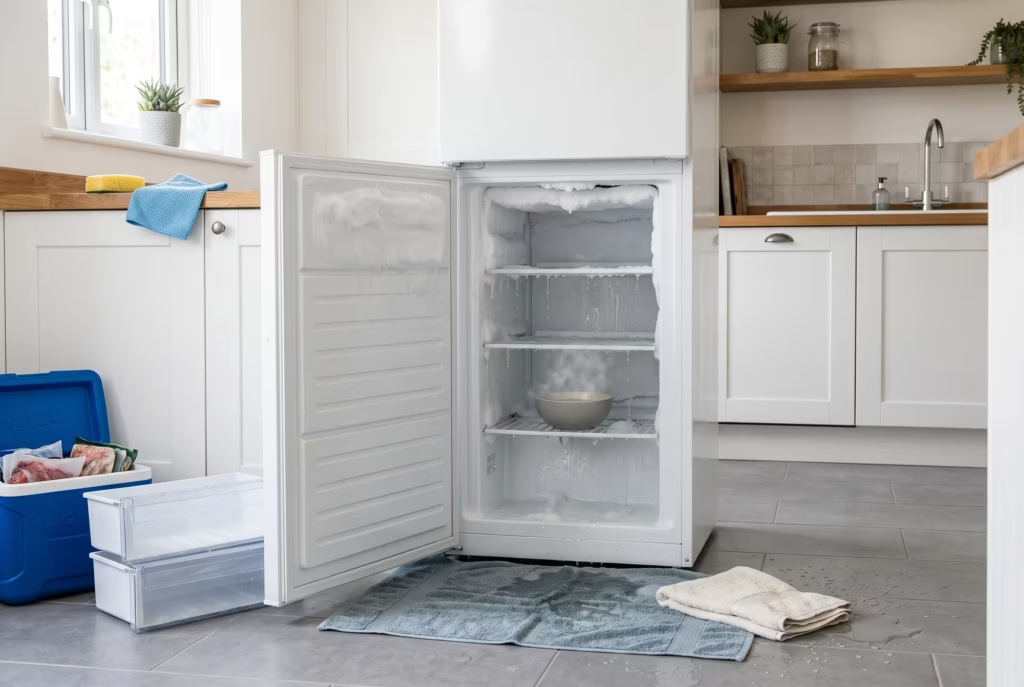
- Empty the appliance. Move frozen food into a cool box, packing items tightly together so they stay frozen for longer. Remove fridge items into a cold bag too.
- Switch off and unplug. Turn the appliance off at the wall and pull the plug. Never attempt to defrost with the power on.
- Take out the drawers and shelves. Lift them out gently — don’t force them, as cold plastic cracks easily — and set them aside to wash separately.
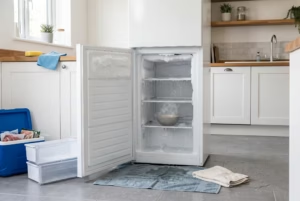
- Lay down towels. Place old towels along the bottom of the fridge freezer and on the floor in front of it to soak up the melting ice.
- Add a bowl of hot water. Pop a shallow bowl of hot water on the bottom shelf and close the door. The steam softens the ice in about 1–2 hours. Refresh the water once it cools.
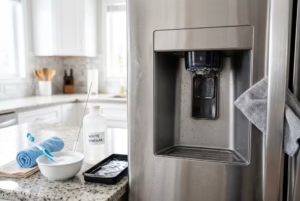
- Wipe clean and dry. Once all the ice has melted, wipe the interior with a sponge and a little washing-up liquid or diluted white vinegar, then dry every surface thoroughly. This is the perfect moment to deep clean your freezer and clean your refrigerator properly while it’s empty.
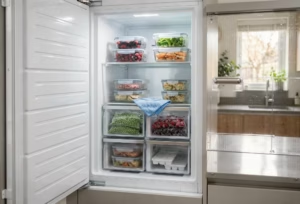
- Restart and restock. Plug it back in, let it return to temperature for about an hour, then replace the drawers and your food.
Tip: Make sure each drawer slots back fully so the door seals tightly — a drawer sticking out keeps the door ajar and lets frost build straight back up.
What is the quickest way to defrost a fridge freezer?
Short on time? You can speed up a light defrost. After you’ve switched off and emptied the appliance, place a bowl of hot water inside and set a fan nearby to circulate warmer room air into the compartment. As chunks loosen, ease them away with a plastic spatula — never a knife. With thin frost, this hot water trick can clear the ice in as little as 10 to 15 minutes. Avoid using a hairdryer: water and electricity don’t mix, and blasting hot air can damage internal fridge freezer elements.
How long does it take to defrost a fridge freezer?
It depends entirely on the ice. A thin layer might melt in around 2 hours, while a glacier-like build-up can take anywhere from 6 to 12 hours — or up to a full 24 hours with the doors open and no help. Using hot water or a fan is the best way to keep things at the shorter end of that range.
How often should you defrost a fridge freezer?
As a rule, defrost your fridge freezer at least once or twice a year, or whenever the frost layer reaches around 6–7 mm (about a quarter of an inch). Sticking to this keeps the appliance efficient and your food easy to reach. If you find yourself defrosting far more often, your door seal may be worn — a quick check can save a lot of repeat effort.
Frost-free vs manual defrost: what’s the difference?
| Feature | Manual defrost | Frost-free fridge freezer |
|---|---|---|
| How it works | You melt and wipe the ice yourself | Circulating dry air stops ice forming |
| Effort | Once or twice a year | None — fully automatic |
| Energy impact | Rises as ice builds | Stays consistent |
| Best for | Budget and built-in models | Hands-off, low-maintenance households |
If defrosting feels like a chore you’d rather skip, a frost-free model is well worth considering — though even frost-free fridge freezer benefits from an occasional empty and wipe-down.
Can you defrost the fridge freezer without turning off the fridge?
It’s technically possible on some combi models, but it isn’t advisable. Leaving the appliance running with the door open wastes a lot of electricity and can burn out the motor — which is exactly why your fridge freezer beeps when the door stays open. For safety and efficiency, always switch the whole unit off. While everything is out, it’s also a smart time to get rid of any lingering smells in your fridge before you restock.
Common defrosting mistakes to avoid
A few simple don’ts will protect your appliance and your food:
- Don’t use salt to melt the ice — it can corrode the seals, linings and freezer elements.
- Don’t chip with metal tools. Knives and screwdrivers easily puncture the interior and cause permanent damage.
- Don’t refreeze fully thawed food, especially meat — when in doubt, throw it out.
- Don’t skip drying. Leftover moisture freezes instantly, so fresh frost forms the moment you switch back on.
FAQ
Do you leave the door open when defrosting a freezer?
Yes. Once the appliance is unplugged, prop the door(s) open so warm air can circulate and the ice melts faster. Lay towels down first to catch the runoff.
How do I fix my fridge freezer from freezing up at the bottom?
A recurring ice build-up at the base usually points to a blocked drainage hole or a worn door seal. Fully defrost the fridge freezer, clear and flush the drain channel, and check the seal closes tightly — replace it if a banknote slips out easily when shut.
What happens if I don’t defrost my fridge freezer?
Ice keeps building on the walls, so the appliance works harder to stay cold. That means higher energy bills, faster food spoilage, less storage and, eventually, a shorter lifespan for the unit.
How do I stop my fridge freezer icing up so quickly?
Keep warm air out and cold air in: check the door seals are clean and closing tightly, don’t leave the door open, and keep the fridge freezer reasonably full. Wiping crumbs from the seals also helps.
How do you defrost a Bosch fridge freezer?
The method is the same as any manual model — switch off at the mains, remove the drawers, lay down towels and let the ice melt with a bowl of hot water. Always check your Bosch manual first, as some models are frost-free and never need manual defrosting.
Can I use a bowl of hot water to speed up defrosting?
Absolutely. It’s one of the safest tricks. Unplug first, lay towels to catch drips, then place a bowl of hot (not boiling) water on a shelf to create gentle steam. Swap it out as it cools.
Is defrosting the fridge freezer with a hairdryer a good idea?
Using a hairdryer is risky as the concentrated heat can warp plastic linings or damage internal cooling elements, and the combination of melting water and electricity poses a serious risk of electrocution. It’s much safer to stick to the hot water bowl trick or a nearby fan to keep things moving without any “shocking” surprises in your fridge freezer.