Summarise this article with:
 ChatGPT
 Mistral
 Claude
 Perplexity
 Grok
Grok
Pine furniture brings a warm, natural charm to any room — from dining tables to chests of drawers, it’s one of the most popular wood choices in British homes. But pine is a softwood, which means it picks up dust, stains and grime faster than harder timbers. The good news? With the right cleaning routine, your pine pieces can look beautiful for decades.
Here’s everything you need to know about keeping your pine furniture spotless, whether it’s waxed, varnished or completely untreated.
What Can I Clean Pine Furniture With?
The answer depends on the finish. Most pine furniture in the UK comes with either a wax or varnish coating, and each responds differently to cleaning products.
For everyday cleaning, all you need is:
- A soft, lint-free cloth or microfibre duster
- Warm water with a few drops of mild washing-up liquid
- A dry cloth for immediate buffing
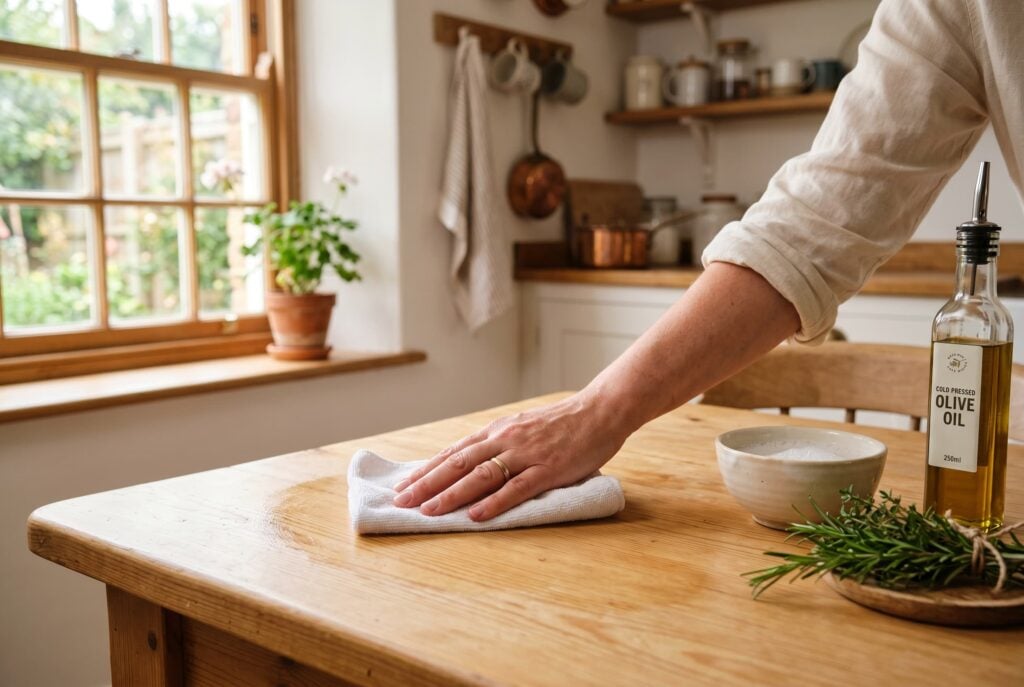
For a natural deep clean, mix three parts olive oil with one part white vinegar — it’s surprisingly effective at lifting grime while hydrating the wood. Linseed oil diluted in warm water works well too, especially on bare pine.
Avoid bleach-based sprays, antibacterial wipes, and anything abrasive. Products like Dettol or Flash can strip the finish and leave permanent damage on the surface.
| Cleaning Product | Safe for Pine? | Best For |
|---|---|---|
| Mild washing-up liquid + water | ✅ Yes | Everyday cleaning on all finishes |
| Olive oil + white vinegar (3:1) | ✅ Yes | Deep cleaning unfinished pine |
| Furniture wax polish (e.g. Briwax) | ✅ Yes | Maintaining waxed pine |
| Bleach-based sprays (Flash, Dettol) | ❌ No | Damages varnish and wax finishes |
| Abrasive scouring pads | ❌ No | Scratches the wood grain |
How to Clean Waxed Pine Furniture
Waxed pine has a protective layer that makes day-to-day care fairly straightforward, but moisture is still the enemy.
Start by dusting the surface with a soft, dry cloth — always move with the grain to avoid fine scratches. If there’s built-up grime, dampen your cloth in warm soapy water and wring it out thoroughly. Wipe the surface down and immediately follow with a dry cloth. Never leave water sitting on waxed pine, as it can seep through the finish and cause the wood to warp over time.
To keep that warm lustre, reapply a clear furniture wax every three to six months. Apply the wax with a lint-free cloth, working in the direction of the grain, then buff to a soft sheen. This simple routine protects the wood and keeps your pine furniture looking its best.
How to Clean Varnished Pine Furniture
Varnished pine is a little more resilient than waxed finishes, but it still needs gentle treatment. The varnish acts as a barrier against moisture and bacteria, so avoid using products that could compromise it.
For general cleaning, a damp cloth with plain warm water is all you need. Wipe down the surface, dry it thoroughly, and you’re done. If sticky marks appear, a tiny amount of washing-up liquid in the water will cut through them.
Never use antibacterial or bleach-based cleaners on varnished surfaces — they can react with the finish and cause discolouration. If you’re also caring for wood floors in your home, the same principle applies: mild and moisture-free wins the race.
How to Clean Unfinished Pine Furniture
Untreated pine requires a slightly different approach. Without a protective wax or varnish layer, the wood is much more porous, and standard soap-and-water solutions can strip its natural oils.
Instead, opt for an oil-based cleaning method. Drizzle a small amount of your olive oil and vinegar mixture onto a lint-free cloth and rub it gently into the wood, following the direction of the grain. Wipe away any excess with a dry cloth and let the pine air dry naturally.
This method works beautifully on antique wood furniture too, where preserving the original character matters most.
How to Clean a Pine Table
Pine tables get the worst of it — spills, heat marks from mugs, sticky fingers, candle wax. Prevention is your strongest tool here. Keep coasters, placemats and table runners to hand, and always deal with spills immediately. Liquid left sitting on pine can work its way through the finish and cause long-term damage.
For routine cleaning, dust the surface daily with a soft cloth. Once a week, give it a wipe down with a barely damp cloth and mild soap, drying straight away. Don’t forget the legs and underside — dust builds up there too, dulling the surface over time and eventually causing fine scratches.
How to Remove Stains from Pine Furniture
Different stains need different approaches. The finish and age of your pine will influence what’s safe to use.
Light Water Marks and Surface Stains
This one sounds unlikely, but a small dab of white toothpaste (not gel) rubbed gently along the grain with a soft cloth can lift light water marks without stripping the wax finish. Wipe away the residue with a clean cloth and buff lightly.
For sticky marks, a Magic Eraser can work wonders — just test it on a hidden area first. If you prefer natural cleaning products, a 50/50 solution of white vinegar and water sprayed onto a cloth is effective on most surface stains.
Dark or Deep Stains
If a stain has penetrated past the finish and into the wood itself, you’ll need to sand back the affected area using fine-grit sandpaper. In many cases, the sanding alone removes the mark. If the discolouration persists on the bare wood, apply a wood bleach formulated for pine — these are available from most UK hardware stores.
Once clean, refinish the surface with oil or wax to restore protection.
| Stain Type | Recommended Method | Finish Safe? |
|---|---|---|
| Light water marks | White toothpaste, buff with cloth | ✅ Wax & varnish |
| Sticky residue | Magic Eraser or warm soapy water | ✅ All finishes |
| Surface grime | Olive oil + vinegar mix | ✅ Unfinished pine |
| Deep dark stains | Sand back + wood bleach | ⚠️ Requires refinishing |
Restoring Pine Furniture
Bringing old pine furniture back to life doesn’t require professional tools — just patience and the right products. If you want to learn the broader principles, our guide on how to clean wood furniture covers the essentials.
How to Clean Pine Furniture Before Waxing
Before applying any wax, the surface needs to be completely clean. Wash the pine down with warm water and a small amount of washing-up liquid, then dry it thoroughly. For heavily soiled or old furniture, sugar soap is excellent at cutting through decades of built-up grime without damaging the wood.
Once dry, apply your chosen wax — Briwax is a popular choice in the UK and comes in various shades. Dip fine wire wool into the wax and work it into the pine, following the grain. When you’ve covered the surface, buff with a dry cloth until it grips, then polishes up smooth. This technique cleans, treats and protects the wood all in one go.
Best Wax and Oil for Pine Furniture
Choosing the right product depends on the look you want:
- Clear wax polish (Briwax, Mylands) — maintains the natural pine colour and adds a soft sheen
- Coloured wax — enhances or adjusts the tone of your pine
- Linseed oil — penetrates deep into bare wood, ideal for unfinished pine
- Tung oil — provides a harder, more durable finish with a slight gloss
Whichever product you choose, apply it every three to six months to maintain the finish and protect the surface from everyday wear. If you enjoy working with natural cleaning products throughout your home, linseed oil is a brilliant eco-friendly choice.
Pine Furniture Care Tips to Prevent Damage
A little prevention goes a long way with pine. Follow these simple rules:
- Dust weekly with a soft cloth, always moving with the grain
- Use coasters and placemats to prevent heat rings and water stains
- Keep pine away from radiators and direct sunlight — extreme heat causes cracking, and UV rays darken the wood unevenly
- Wipe spills immediately — speed matters more than the cleaning product you use
- Reapply wax or oil every 3–6 months to maintain the protective finish
Pine is a softwood, so it’s more susceptible to scratches and dents than oak furniture. Handle it with care, and never drag heavy objects across the surface.
FAQ
What’s the best thing to clean pine furniture?
A soft cloth dampened with warm water and a small amount of washing-up liquid is the safest option for most finishes. For untreated pine, a mix of three parts olive oil to one part white vinegar cleans and nourishes the wood without stripping its natural oils.
How do you get the orange colour out of pine?
Pine naturally yellows and deepens in colour over time, especially with sunlight exposure. To reduce the orange tone, you can sand the surface back to bare wood and apply a lighter wax or a specialised wood bleach for pine. Limiting direct sunlight will slow future discolouration.
How to bring pine furniture back to life?
Start by cleaning the surface with warm soapy water or sugar soap for heavily soiled pieces. Once dry, apply a quality furniture wax using fine wire wool, working with the grain. Buff with a dry cloth for a smooth, restored finish that protects the wood.
Can you use white spirit on pine furniture?
White spirit can be used cautiously to remove stubborn wax build-up or sticky residue from pine. Apply a small amount to a cloth and test on a hidden area first. It’s effective but can strip finishes, so always reapply wax or oil afterwards to restore protection.
How to clean Mexican pine furniture?
Mexican pine (Corona pine) follows the same care routine as standard pine. Dust regularly, clean with mild soapy water, and maintain the finish with furniture wax. Mexican pine often has a deeper, honeyed tone, so choose a matching coloured wax if you want to enhance its warmth.
How to clean sticky pine furniture?
Sticky residue on pine is usually caused by old wax build-up or spills. Wipe the area with a cloth dampened in warm water and washing-up liquid. For stubborn stickiness, a Magic Eraser or a solution of equal parts white vinegar and water works well. Always dry the surface immediately afterwards.