Summarise this article with:
 ChatGPT
 Mistral
 Claude
 Perplexity
 Grok
Grok
Antique wood furniture brings warmth, character and history into any home — but keeping it looking its best requires a gentle touch. Whether you’ve inherited a Victorian chest of drawers or picked up a vintage oak table at a car boot sale, knowing how to clean antique wood furniture properly is essential to preserve its beauty and value. The good news? Most pieces just need a simple, careful clean — no expensive products or specialist skills required.
Why Cleaning Antique Wood Furniture Requires Special Care and Wax Polish
Unlike modern furniture coated with polyurethane, antique wooden pieces often have delicate finishes such as shellac, French polish, wax or oil. Harsh chemicals, excess moisture and abrasive cloths can strip away decades of patina in seconds. Patina — that warm, deep glow that develops over the years — is what gives antique furniture its character and, crucially, its value. Destroying it is both irreversible and costly.
Before you pick up a cloth, it’s worth remembering that cleaning antique wood furniture is more about restraint than effort. The same principles apply when looking after wood floors in period homes — less really is more.
How to Identify the Finish on Your Antique Furniture
Before cleaning, you need to know what you’re dealing with. Different finishes react differently to products.
| Finish Type | How to Identify It | Cleaning Approach |
|---|---|---|
| Shellac / French polish | Dab denatured alcohol on a hidden spot — if it dissolves, it’s shellac | Avoid all alcohol-based products; use only mild soap and water |
| Wax | Surface feels slightly soft or tacky; no sheen when rubbed | Clean with a soft cloth, then re-wax with beeswax |
| Oil (linseed / tung) | Matte finish that absorbs water slowly | Wipe with a barely damp cloth; re-oil occasionally |
| Varnish / lacquer | Hard, glossy surface that water beads on | Safe for diluted mild soap; buff dry immediately |
Always test any cleaning method on an inconspicuous area first — the underside of a drawer or the back of a leg is ideal.
Step-by-Step: How to Clean Old Wood Furniture Naturally
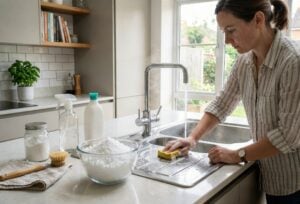
For routine cleaning, you rarely need anything more than what’s already in your cupboard. Here’s the safest method to clean antique wood furniture at home:
- Dust thoroughly — Use a very soft, dry cloth or microfibre rag to remove surface dust. Work along the grain to avoid micro-scratches.
- Prepare a mild solution — Mix a tiny drop of washing-up liquid into warm water. The cloth should be barely damp when wrung out.
- Wipe gently along the grain — Clean small sections at a time, never allowing moisture to sit on the wood surface.
- Dry immediately — Follow with a completely dry soft cloth to remove any remaining moisture.
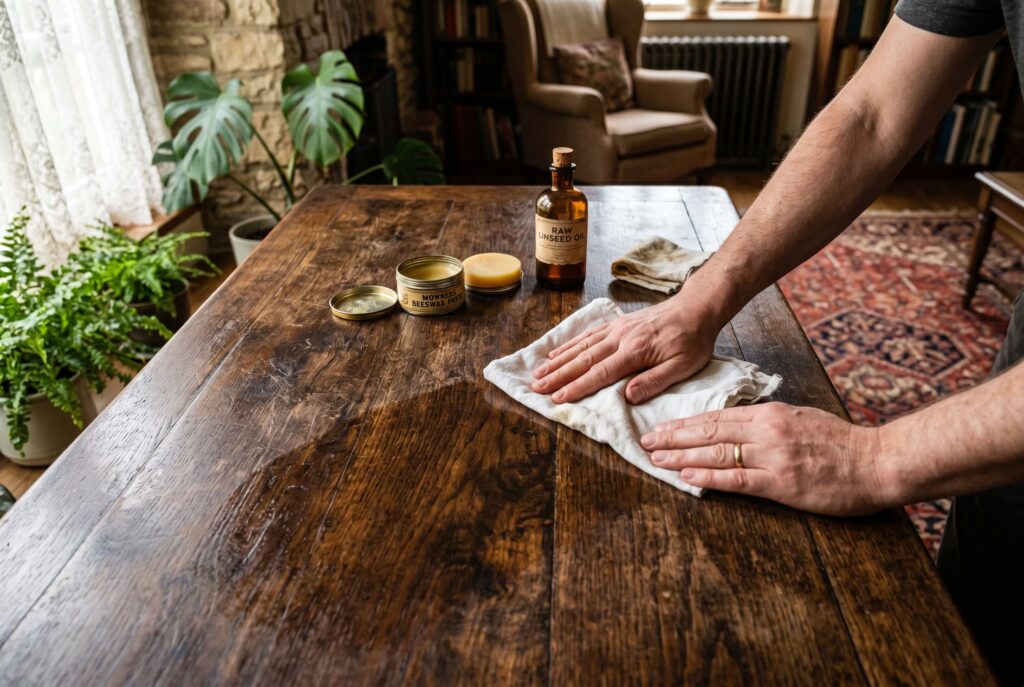
- Apply a protective wax — Once dry, buff on a thin layer of beeswax polish to nourish the wood and restore its sheen.
This approach works for most antique wooden surfaces and avoids the damage caused by aggressive shop-bought sprays. If you prefer natural cleaning products, this method ticks every box.
How to Clean Grime Off Antique Wood Furniture
For heavily soiled pieces with years of built-up grime, a standard wipe-down won’t be enough. Professionals often use a mixture of 4 parts white spirit to 1 part linseed oil applied with a soft cloth along the grain. This combination lifts old wax and dirt without stripping the underlying finish.
For carved or detailed sections, 0000-grade steel wool dipped in the cleaning solution can reach into grooves — but use extremely light pressure. The goal is to dissolve the grime, not to sand the surface.
Once the old wax and dirt have been removed, allow the wood to dry completely before applying a fresh coat of furniture wax polish.
Best Polish for Antique Wood Furniture
Choosing the right polish makes all the difference. Avoid aerosol sprays, which can leave a sticky film and cause long-term damage. Instead, opt for a traditional paste wax:
| Product | Best For | Key Feature |
|---|---|---|
| Beeswax paste | General maintenance on all finishes | Nourishes the grain; natural and gentle |
| Liberon Black Bison | Well-finished oak, mahogany, walnut | Available in tinted shades to match wood colour |
| Briwax Original | Quick restoration of tired furniture | Fast-drying; builds a high-gloss sheen |
| Renaissance Wax | Museum-grade conservation | Acid-free; used by conservators worldwide |
Apply polish sparingly with a soft cloth, allow it to dry for 20–30 minutes, then buff vigorously with a clean cotton rag. You’ll see the antique surface come alive.
How to Clean Antique Wood Furniture With Vinegar
You’ll find plenty of advice online suggesting a 1:1 mix of white vinegar and olive oil as a cleaning solution. While this works on some surfaces, it carries risks — vinegar is acidic and can leave white marks on delicate finishes such as shellac or French polish.
If you choose to use vinegar, always dilute it well and test on a hidden area first. For lighter woods, some restorers prefer brewed green tea as a gentler alternative — the mild tannins clean the surface without altering the wood’s natural colour.
How to Clean Mould Off Antique Furniture
Mould and mildew thrive on wooden furniture stored in damp or humid rooms. If you spot white, grey or black patches, act quickly before the spores spread deeper into the grain.
- Mix equal parts distilled white vinegar and linseed oil in a bowl
- Wearing gloves and an air mask, dip a soft cloth into the mixture
- Rub gently along the grain to lift the mould
- Wipe clean with a dry cloth and allow the piece to air-dry fully
Once the mould is removed, address the root cause — move the furniture away from damp walls and improve ventilation. This is the same principle behind tackling mould with white vinegar on any household surface.
What Not to Do to Antique Furniture
Avoiding common mistakes is just as important as knowing the right techniques. Here’s what to steer clear of:
- Never use bleach, antibacterial sprays or alcohol-based cleaners — they dissolve traditional finishes
- Avoid bicarbonate of soda — it’s reactive and can leave stubborn white marks
- Don’t sand or use abrasive pads — even fine sandpaper destroys patina permanently
- Never soak the wood — excess moisture causes swelling, warping and black water rings
If you’re ever unsure, the safest option is always the least invasive one: a dry soft cloth and a light coat of beeswax.
Antique Wood Furniture Restoration Without Stripping
Full restoration doesn’t have to mean stripping back to bare wood. In fact, professionals estimate that 90% of antique furniture restoration is simply cleaning and reviving — not refinishing.
After a thorough clean, a tinted wax polish can work wonders. A medium-brown or medium-oak shade fills in scratches, evens out worn areas and instantly adds depth to the colour. Two buffed coats can transform a neglected piece into something that looks freshly restored — with the patina beautifully intact.
For deeper damage such as water rings, loose joints or significant chips, it’s worth consulting a qualified restorer rather than risking further harm with DIY attempts.
FAQ
How to bring antique wood back to life?
Start with a gentle clean using a barely damp cloth, then apply a high-quality beeswax or paste wax polish. Two or three buffed coats are often enough to bring warmth, depth and shine back to tired-looking antique wood without any invasive restoration.
Can you use vinegar to clean antique wood?
You can, but with caution. Vinegar is acidic and may damage finishes like shellac or French polish. Always dilute it with water, test on a hidden area first, and never leave it sitting on the wood surface. For delicate antiques, a mild soap-and-water solution is safer.
How do I get the cloudy finish on my antique furniture to shine?
A cloudy finish is usually caused by old wax build-up or moisture trapped in the polish. Apply a thin layer of fresh beeswax, leave it to dry for 20–30 minutes, then buff vigorously with an open-weave cotton cloth. This restores the protective sheen without stripping the original finish.
How old does furniture have to be to be considered antique?
Generally, a piece must be at least 100 years old to qualify as a genuine antique. Items between roughly 20 and 100 years old are typically described as “vintage”. The distinction matters because true antiques often have more delicate finishes that require gentler cleaning methods.
What is the difference between patina and dirt on wood furniture?
Patina is the natural, desirable darkening and mellowing of wood that develops over many decades. It adds warmth, character and value to antique furniture. Dirt, on the other hand, is surface-level grime that dulls the finish. Gentle cleaning removes dirt while preserving the patina underneath.
What is the best product to clean antique wood furniture?
For most antique wood, a natural beeswax paste polish is the safest and most effective option. For deeper cleaning, Vulpex Soap — a pH-neutral, non-corrosive cleaner used by museums and professional conservators — is an excellent choice that cleans without damaging even the most delicate surfaces.