Summarise this article with:
 ChatGPT
 Mistral
 Claude
 Perplexity
 Grok
Grok
Whether it’s a nosebleed in the middle of the night, a scraped knee, or your monthly period, blood on bed sheets is one of those things that happens to everyone sooner or later. The good news? It’s absolutely possible to get your sheets looking spotless again — as long as you act the right way. In this guide, we’ll walk you through every method for removing blood stains from bed sheets, from fresh spills to dried-in marks, using simple household items you probably already own.
Why Is Removing Blood Stains So Difficult ?
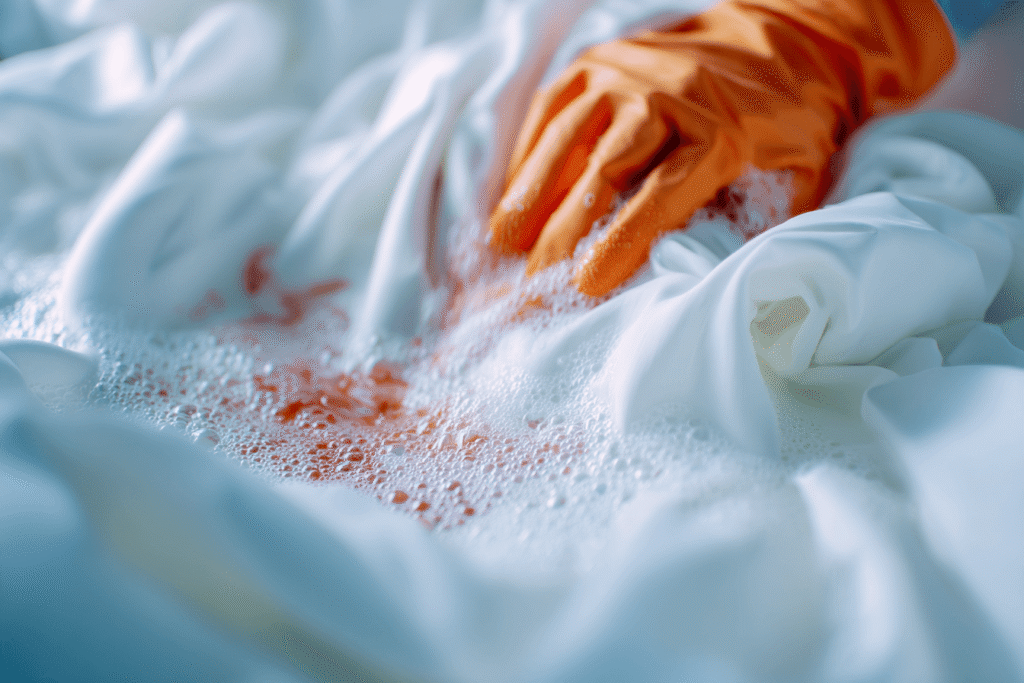
Blood is a protein-based stain, which makes it trickier than your average food or drink spill. When blood dries, the protein binds to the fabric fibres, creating a bond that becomes increasingly stubborn over time. That’s exactly why hot water is your worst enemy here — heat essentially “cooks” the protein into the fabric, setting the stain permanently. The golden rule is always to use cold water when treating blood stains on bed linen or any other fabric.
How to Remove Fresh Blood Stains from Bed Sheets
If you catch the stain while it’s still wet, you’re already in a strong position. Fresh blood is much easier to remove than dried blood, so speed matters.
Step-by-step method:
- Blot the excess blood with a clean cloth — never rub, as this pushes the stain deeper into the fabric.
- Rinse the stained area under cold water from the reverse side of the fabric to push the blood out.
- Apply a small amount of bar soap or liquid laundry detergent directly to the stain and gently work it in.
- Soak the sheet in cold water for 15–30 minutes.
- Machine wash on a cold cycle as you normally would.
For particularly stubborn fresh marks, the same method works brilliantly when you need to get blood out of clothes or other garments too.
How Do I Get Dried Blood Out of a Sheet?
Dried blood stains require a bit more patience, but they’re far from permanent. The key is to break down the protein bond before washing.
- Soak the stained area in cold water for several hours (or overnight if the stain is old).
- Apply hydrogen peroxide (3%) directly to the dried blood stain and let it bubble for 10–15 minutes.
- Blot with a cold, damp cloth, then rinse thoroughly.
- Repeat if necessary before putting the sheet through a cold machine wash.
If you’re dealing with dried blood on your mattress as well, the approach is slightly different — our guide on how to clean a mattress covers the best methods for that surface.
Does Dried Blood Stain Permanently?
No — dried blood does not stain permanently in most cases. While it’s true that older stains are harder to shift, they can almost always be lifted with the right treatment. The main reasons people fail to remove dried blood stains are:
- Using hot water instead of cold water
- Putting stained sheets in the tumble dryer before the stain is fully gone (heat sets the stain)
- Not allowing enough soaking time
As long as you avoid these mistakes and air dry your sheets until you’re certain the mark has disappeared, even old stains can be rescued.
Best Household Remedies for Blood Stains on Bed Sheets
You don’t need expensive commercial products to tackle blood stains. Here are the most effective household solutions:
| Method | Best For | How to Use |
|---|---|---|
| Hydrogen peroxide | White/light sheets, dried blood | Apply directly, let fizz for 10–15 mins, rinse with cold water |
| Baking soda paste | All fabric types | Mix 2 parts baking soda + 1 part cold water, apply for 30–60 mins |
| White vinegar | Fresh stains, coloured sheets | Soak a cloth in white vinegar, dab onto stain, leave 15 mins |
| Salt paste | Fresh blood stains | Mix salt + cold water into paste, apply for 10–20 mins |
| Enzyme cleaner | Stubborn/old stains | Apply enzyme-based stain remover, soak for 30 mins |
Can Vinegar Remove Old Blood Stains?
Yes, white vinegar can help remove old blood stains, although it works best as part of a two-step process. Pour undiluted white vinegar onto the stain and let it soak for 15–30 minutes. Then blot with a clean cloth and rinse with cold water. For tougher dried blood marks, follow up with a baking soda paste or hydrogen peroxide treatment for better results. Vinegar alone may not fully lift a very old stain, but it’s an excellent first step — especially on coloured bed linen where hydrogen peroxide could cause fading.
Does Bicarbonate of Soda Remove Blood Stains?
Absolutely. Baking soda (bicarbonate of soda) is one of the gentlest yet most effective options for blood stain removal. Mix two parts baking soda with one part cold water to create a thick paste. Spread it over the stain, leave it for 30–60 minutes, then rinse with cold water. The mild abrasive action of baking soda helps lift the protein from the fabric without damaging it. It’s safe to use on both white and coloured sheets.
What Do Hospitals Use to Get Blood Out of Sheets?
Hospitals typically use enzyme-based cleaners — also known as enzymatic laundry detergents — which are specifically designed to break down protein-based stains like blood. These enzyme cleaners target the haemoglobin in blood at a molecular level, making them highly effective even on old stains. You can find enzyme cleaner products at most UK supermarkets (brands like Vanish Oxi Action or Bio-D contain enzymes). For everyday use at home, an enzyme-based laundry detergent in your cold machine wash is one of the most reliable solutions.
Can Bleach Remove Blood Stains ?
Yes, bleach can be a powerful ally for white sheets, but proceed with caution as chlorine bleach can sometimes turn protein stains yellow. To avoid this, mix four tablespoons of bleach with 60ml of cold water and soak the affected area for 30 to 45 minutes before rinsing thoroughly. For coloured linens, always opt for an oxygen-based, colour-safe bleach to lift the mark without stripping away the vibrant dye. Whatever you choose, ensure the bleach is fully rinsed out and the stain is gone before air drying, as heat will make any residue permanent.
Can Toothpaste Remove Blood Stains?
Toothpaste can work in a pinch — particularly white, non-gel toothpaste. Apply a small amount to the stain, let it dry, then rinse with cold water. However, it’s not the most effective method compared to hydrogen peroxide or an enzyme cleaner, and it may leave residue on darker fabric. Use it as a last resort if you don’t have other options to hand.
How to Get Rid of Blood Spots on Bedding: A Quick-Reference Guide
| Stain Type | Recommended Method | Soaking Time | Wash Temperature |
|---|---|---|---|
| Fresh blood (< 1 hour) | Cold water rinse + bar soap | 15–30 minutes | Cold cycle |
| Semi-dried blood (1–12 hours) | Hydrogen peroxide or baking soda paste | 30–60 minutes | Cold cycle |
| Dried blood (12+ hours) | Overnight cold water soak + enzyme cleaner | 4–12 hours | Cold cycle |
| Old/set-in stains | Hydrogen peroxide + enzyme cleaner (repeat) | Multiple treatments | Cold cycle |
Always air dry your sheets after washing until you’ve confirmed the stain is completely gone. The heat from a tumble dryer will permanently set any remaining blood.
Tips for Treating Blood Stains on White vs Coloured Sheets
Not every method suits every fabric colour. Here’s what to keep in mind:
- White sheets: Hydrogen peroxide is your best friend — it lifts stains effectively and won’t cause discolouration. You can also use a mild bleach solution for particularly stubborn marks.
- Coloured sheets: Stick to white vinegar, baking soda, or enzyme-based cleaners. Always do a spot test on a hidden area of the fabric first to avoid fading.
- Delicate bed linen (silk, satin): Use cold water and a very gentle laundry detergent only. Avoid scrubbing — blot instead, and soak for longer.
If you’re unsure about the right wash settings for your particular sheets, our guide on washing bed sheets in a machine breaks everything down by fabric type.
Cleaning Blood Stains on Sheets and Mattress
Prevention isn’t always possible, but a few simple habits can help:
- Use a mattress protector — it creates a barrier between your sheets and mattress, making cleanup much easier.
- Keep a small spray bottle of cold water and stain remover on your bedside table if you’re prone to nosebleeds.
- Wash your sheets regularly — knowing how often you should wash your bed sheets helps maintain fabric quality and keeps stains from settling in.
Don’t forget to check your pillows too — blood can easily transfer from sheets to pillowcases and beyond.
When to Call in Professional Help
If you’ve tried multiple methods and the stain simply won’t budge, a professional cleaning service can save your favourite bed linen. Professional cleaners have access to industrial-strength enzyme cleaners and specialised techniques that go beyond what’s available at home. Sometimes it’s just not worth the hassle of repeating treatments when a pro can handle it in one go.
Quick recap: Always use cold water, never hot. Blot, don’t rub. Soak before washing. Air dry until you’re sure the stain is gone. With the right approach, even the most stubborn blood stain doesn’t stand a chance against your freshly laundered sheets. 🩸✨