Summarise this article with:
 ChatGPT
 Mistral
 Claude
 Perplexity
 Grok
Grok
Keeping clothes clean is one thing — properly disinfecting them is another. Bacteria, odours and invisible residues can remain even after a standard wash, especially at low temperatures. That is where a homemade laundry disinfectant becomes useful.
Using the right combination of ingredients can help eliminate bacteria, tackle tough stains, and maintain your fabrics without relying on every harsh chemical found in commercial products. The key is understanding what works — and what does not — when it comes to disinfecting laundry safely.
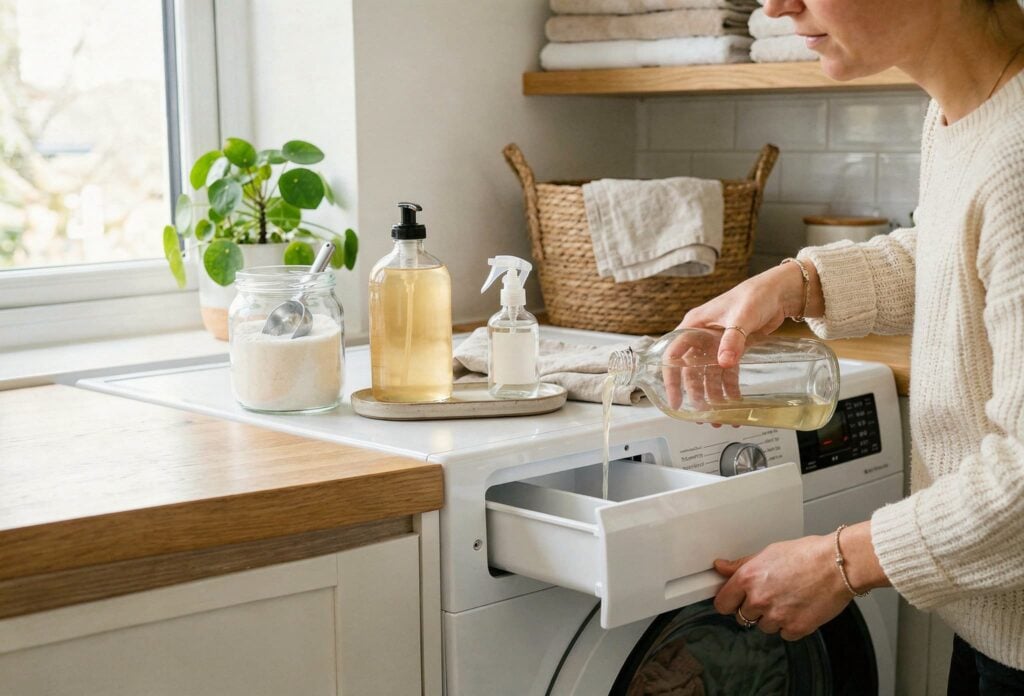
Natural detergent
A natural detergent forms the base of any homemade disinfecting routine. Unlike conventional formulas, it avoids unnecessary additives while still cleaning effectively.
Most natural detergent options rely on simple ingredients such as soap flakes, acetic acid (from vinegar), or plant-based surfactants. These work by lifting dirt and reducing bacterial presence without overwhelming fabrics.
When paired with disinfecting agents like hydrogen peroxide or heat, a natural detergent becomes a reliable option for everyday laundry — especially for sensitive skin.
Bio detergent
A bio detergent contains enzymes that break down organic matter such as sweat, grease and food residues. While it is not strictly a disinfectant, it supports hygiene by removing the substances bacteria feed on.
In a homemade context, enzyme-based solutions are harder to replicate, but combining a bio detergent with heat and proper drying can significantly improve results.
Use a bio detergent when dealing with heavily soiled laundry or a large load of laundry, particularly items exposed to bodily fluids.
Washing liquid clothes
Using the right washing liquid clothes formula matters when disinfecting. Liquid solutions dissolve quickly and distribute evenly, ensuring better contact with fabrics.
A homemade liquid laundry detergent can be made by dissolving soap flakes in warm water and adding a small amount of acetic acid. This creates a balanced solution that works well in most washing machines.
When disinfecting, ensure your washing liquid clothes solution is combined with either heat or an additional sanitising agent.
Sodium percarbonate
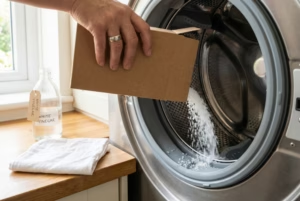
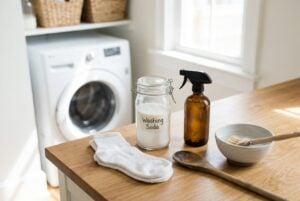
Sodium percarbonate is one of the most effective ingredients for a homemade laundry disinfectant. It releases oxygen when dissolved in water, helping to kill bacteria and lift stains.
It is particularly useful for:
- Whitening fabrics
- Removing odours
- Treating tough stains
Because it activates at higher temperatures, it works best in warm to hot washes within washing machines.
Non toxic laundry detergent
A non toxic laundry detergent avoids synthetic fragrances, dyes and aggressive agents. This is especially important for households looking to reduce exposure to harsh chemical residues.
When creating a homemade disinfectant, combining a non toxic laundry detergent with hydrogen peroxide offers a balanced approach — effective yet gentle.
This method is ideal for baby clothes or anyone with skin sensitivities.
Eco detergent
An eco detergent focuses on environmental impact while maintaining cleaning performance. It often overlaps with homemade solutions, especially when using biodegradable ingredients.
For a practical eco detergent approach:
- Use minimal ingredients
- Avoid unnecessary additives
- Optimise temperature settings in your washing machines
This reduces both chemical exposure and energy use.
Eco friendly laundry products
Switching to eco friendly laundry products does not mean compromising on hygiene. In fact, many natural ingredients outperform traditional solutions when used correctly.
Combining eco friendly laundry products like soap flakes, acetic acid, and sodium percarbonate creates a powerful yet responsible disinfecting system.
This approach works across a wide range of fabrics and washing conditions.
Laundry sanitisers
Commercial laundry sanitisers are designed to kill bacteria at lower temperatures. However, you can replicate similar effects at home with the right combination of heat and ingredients.
A homemade disinfectant can act as a substitute for laundry sanitisers when:
- The wash temperature is high enough
- Oxygen-based agents are used
- Drying is thorough
This reduces reliance on synthetic products without sacrificing cleanliness.
Bio vs non-bio washing liquid
Choosing between bio non bio washing liquid depends on your needs.
| Type | Strength | Best use | Consideration |
|---|---|---|---|
| Bio | Strong stain removal | Heavy soils | May irritate skin |
| Non-bio | Gentle cleaning | Sensitive fabrics | Less effective on stains |
For disinfecting, both can work — but pairing them with heat or hydrogen peroxide is essential.
Eco washing powder
An eco washing powder often includes oxygen-based agents like sodium percarbonate, making it particularly effective for disinfection.
It is well-suited for larger loads and offers consistent results across different fabric types.
Use an eco washing powder when dealing with bulky items or when you need stronger action against tough stains.
How to make a homemade laundry disinfectant
Creating your own disinfectant is straightforward when you use the right methods.
Basic homemade disinfectant recipe
Mix the following:
- 500 ml water
- 2 tablespoons of acetic acid (white vinegar)
- 1 tablespoon of hydrogen peroxide
This combination creates a mild but effective disinfecting solution.
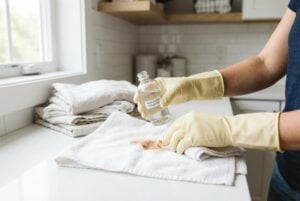
Apply it directly to laundry or add it to the rinse cycle in your washing machines.
Apply it directly to laundry or add it to the rinse cycle in your washing machines. When building habits around how to do laundry, adding this step helps improve hygiene without complicating your routine.
If you already rely on homemade laundry detergent , this disinfectant works as a natural extension to boost performance.
Comparison of disinfecting ingredients
| Ingredient | Function | Best for | Limitations |
|---|---|---|---|
| Acetic acid | Breaks down residue | Odours, light bacteria | Not a full disinfectant |
| Hydrogen peroxide | Kills bacteria | Whites, sanitising | Can fade colours |
| Sodium percarbonate | Oxygen bleach | Stains, whitening | Needs heat |
| Natural detergent | Cleans dirt | Daily washing | Not disinfecting alone |
Does vinegar kill bacteria in laundry?
Vinegar contains acetic acid, which helps reduce bacteria and neutralise odours. However, it is not a complete disinfectant on its own.
For better results, combine vinegar with heat or other agents like hydrogen peroxide.
How do you make homemade laundry disinfectant?
A simple combination of water, acetic acid, and hydrogen peroxide creates an effective solution. This mixture works well across a wide range of laundry types and complements most washing machines.
How to naturally sanitise a laundry machine?
Run an empty cycle at high temperature using sodium percarbonate or vinegar. This removes residue and prevents bacterial build-up inside your washing machines.
Maintaining your appliance is just as important as treating your clothes.
What kills bacteria when washing clothes?
Three main factors:
- Heat
- Oxygen-based agents like sodium percarbonate
- Proper drying
Together, these create an environment where bacteria cannot survive.
How can you disinfect laundry naturally?
Use a combination of:
- A non toxic laundry detergent
- Hydrogen peroxide or oxygen bleach
- High temperatures
This approach avoids unnecessary harsh chemical exposure while remaining effective.
How do you disinfect clothes in the washing machine?
Add your disinfecting agent directly into the drum or detergent drawer. Ensure the load of laundry is not overloaded, allowing proper circulation.
For consistent results, combine this with a structured routine such as sorting laundry , which helps prevent cross-contamination.
How do you disinfect clothes without washing them?
For items that cannot be washed:
- Use steam
- Air dry in sunlight
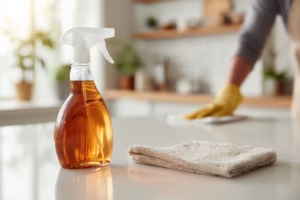
- Apply a light disinfecting spray
These methods reduce bacteria across a wide range of fabrics without damaging them.
Final thoughts: building an effective cleaning routine
A homemade laundry disinfectant is not about replacing every product — it is about using the right methods at the right time.
By combining:
- A natural detergent
- Oxygen-based agents like sodium percarbonate
- Smart temperature use
You can maintain hygiene, protect fabrics, and reduce reliance on unnecessary chemicals.