Summarise this article with:
 ChatGPT
 Mistral
 Claude
 Perplexity
 Grok
Grok
Grout has one job: seal the gaps between each tile. Yet in kitchens and bathrooms, it quickly becomes the most visibly dirty part of the room. Moisture, soap scum, grease, and trapped dirt settle deep inside every grout line, turning bright joints into dull, stained strips.
A well-formulated homemade grout cleaner can effectively lift grime, brighten light colored grout, and remove stubborn stains — provided you use the right method, respect contact time, and understand the type of tile you are working with.
Let us break down the most effective DIY techniques, when to use each solution, and how to protect your grout long term.
Homemade Tile Grout Cleaner
A proper tile grout cleaner homemade formula must target two things:
- Embedded dirt
- Surface residue such as soap scum
The most accessible DIY grout cleaner uses baking soda and white vinegar, but technique matters.
Baking soda paste method
- 3 tablespoons baking soda
- Enough warm water to form a thick paste
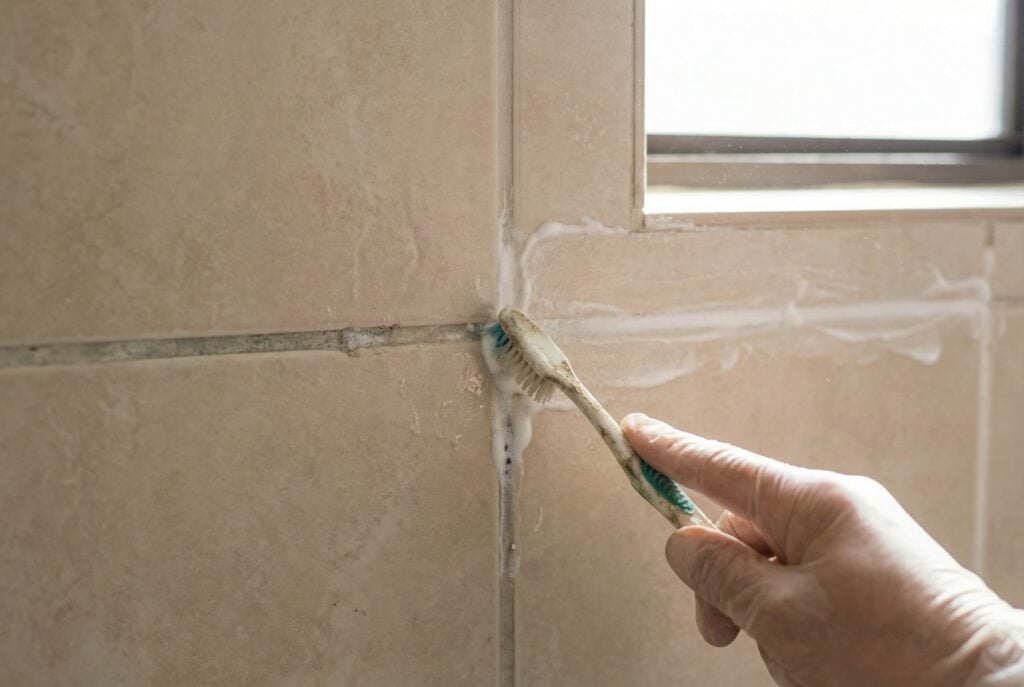
Apply the paste directly along each grout line. Let the mixture sit for 10–15 minutes. Scrub using an old toothbrush and wipe with a damp cloth.
This natural grout cleaner is particularly effective for maintenance cleaning on floor tiles and splashbacks.
If grime remains, you may need a stronger option such as hydrogen peroxide.
How to Clean Grout Off Tiles
When cleaning grout off tiles, avoid spreading residue onto the tile surface.
Work in a small area at a time. Apply your grout cleaner, let the mixture sit, scrub, then wipe immediately with a damp cloth to remove loosened debris.
Leaving slurry on tiles can cause haze.
For sealed ceramic tiles, vinegar-based methods can help remove residue. For natural stone, avoid vinegar entirely.
How to Clean Grout
To properly clean grout, you need both chemical action and light scrubbing — often referred to as a bit of “elbow grease”.
There is no completely scrub-free miracle. However, controlled contact time reduces effort.
General best way to clean grout:
- Apply paste or solution.
- Allow 10–15 minutes.
- Scrub with an old toothbrush.
- Rinse with clean warm water.
- Dry thoroughly.
Drying prevents moisture from settling back into porous grout.
How to Clean Grout in Shower
To clean grout in shower areas, focus on mould and limescale.
Shower environments create perfect conditions for mildew. Vinegar can help, but hydrogen peroxide often works better for mould on shower walls.
Hydrogen peroxide method
- 1 part hydrogen peroxide
- 1 part warm water
Spray using a spray bottle, allow to sit for 15 minutes, scrub gently.
Hydrogen peroxide penetrates porous grout and brightens dirty grout without strong fumes like bleach.
Avoid mixing peroxide with vinegar. Always use separately.
How to Clean Bathroom Grout
Cleaning bathroom grout requires regular maintenance.
If neglected, grime becomes embedded and requires stronger action.
For weekly upkeep, a light natural grout cleaner prevents heavy buildup.
Households already using homemade cleaning products for bathroom maintenance often find that adapting those vinegar-based sprays to grout lines works well for routine wiping.
Best Way to Clean Grout
The best way to clean grout depends on the type of stain.
| Stain Type | Recommended Solution | Contact Time | Notes |
|---|---|---|---|
| Light dirt | Baking soda paste | 10 mins | Gentle scrub |
| Mould | Hydrogen peroxide | 15 mins | Ventilate room |
| Grease | Vinegar + soap | 10 mins | Avoid stone |
| Heavy staining | Peroxide + baking soda paste | 20 mins | Spot test first |
The correct method ensures the grout cleaner works without damaging the tile.
How to Clean Grout on Floor Tiles
When cleaning grout on floor tiles, you will often face ground-in dirt.
Vacuum first. Removing loose dirt prevents turning debris into muddy residue.
Apply your chosen solution in sections. Let the mixture sit before scrubbing.
After rinsing, dry the area. Standing water can re-soil grout quickly.
For high-traffic kitchens, combine routine scrubbing with periodic steam cleaning.
Best Bathtub Grout Cleaner
A bathtub grout cleaner must tackle soap buildup and moisture stains.
A vinegar spray works for light scale. For darker mould, hydrogen peroxide or diluted bleach (used cautiously) may be required.
Never mix bleach with vinegar.
If you prefer to avoid strong chemicals, consider peroxide-based cleaning and ensure proper ventilation.
Cleaning Grout with Baking Soda
Cleaning grout with baking soda is effective for light staining and odours.
Baking soda acts as a mild abrasive and deodoriser.
Apply paste along the grout line, scrub gently, rinse.
For more power, combine baking soda with hydrogen peroxide to create a thicker paste.
Cleaning Grout with Baking Soda and Vinegar
Cleaning grout baking soda and vinegar creates a fizzing reaction that helps loosen debris.
However, once the bubbling stops, the reaction is neutralised. Cleaning then depends on scrubbing.
Apply baking soda paste first, then spray vinegar lightly. Let it react for a few minutes before scrubbing.
This is useful for floor tiles but less effective for deep mould.
Easiest Way to Clean Grout without Scrubbing
The easiest way to clean grout without scrubbing is extended contact time.
Hydrogen peroxide sprayed onto grout and left for 30 minutes can reduce scrubbing effort significantly.
Steam cleaners can also loosen grime with minimal abrasion.
However, completely scrub-free cleaning is unrealistic for heavily stained grout.
Recipe for Homemade Grout Cleaner
A balanced recipe for homemade grout cleaner for moderate staining:
- ½ cup baking soda
- ¼ cup hydrogen peroxide
- 1 teaspoon dish soap
Mix into a thick paste. Apply to grout lines. Let the mixture sit for 15–20 minutes. Scrub and rinse.
Store unused mixture in a sealed container for short periods only.
Homemade Grout Cleaner with Bleach
A homemade grout cleaner with bleach should be used cautiously.
Bleach can brighten grout but does not remove underlying dirt.
If used:
- Dilute properly.
- Wear gloves.
- Ventilate area.
- Never mix with vinegar or peroxide.
Bleach may weaken grout over time if used frequently.
Homemade Grout Cleaner with Vinegar
A homemade grout cleaner with vinegar works best on mineral buildup.
Mix equal parts vinegar and warm water in a spray bottle. Spray, let sit, scrub.
Avoid using vinegar on marble or natural stone tiles.
Homemade Grout Cleaner with Hydrogen Peroxide
A homemade grout cleaner with hydrogen peroxide is often the most effective DIY option for whitening.
Peroxide penetrates porous grout and helps break down organic stains.
Use equal parts peroxide and baking soda for best whitening effect on light colored grout.
Homemade Grout Cleaner without Baking Soda
If you need a homemade grout cleaner without baking soda, use hydrogen peroxide alone or diluted vinegar.
This may be preferable for sensitive surfaces.
Homemade Grout Cleaner Spray
A homemade grout cleaner spray works well for maintenance cleaning.
Mix:
- 1 cup warm water
- 1 cup vinegar
Store in a labelled spray bottle away from direct sunlight.
Natural Grout Cleaner Homemade
A natural grout cleaner homemade approach avoids strong harsh chemicals.
Baking soda, vinegar, and peroxide provide effective options without heavy fumes.
For households committed to broader natural cleaning products , grout cleaning can integrate easily into that routine.
Best Homemade Grout Cleaner for Mould
The best homemade grout cleaner for mould is hydrogen peroxide-based.
Spray directly on affected grout. Allow to sit 20 minutes. Scrub lightly.
Repeat if needed.
Homemade Ceramic Tile and Grout Cleaner
A homemade ceramic tile and grout cleaner can combine vinegar for tiles and baking soda paste for grout.
Treat tile and grout separately for best results.
Homemade Grout Cleaner for Travertine
Travertine is sensitive to acid.
Avoid vinegar completely.
Use mild soap and warm water only.
Homemade Heavy Duty Tile and Grout Cleaner
For heavy staining, combine:
- Baking soda
- Hydrogen peroxide
- Small amount of dish soap
Allow extended dwell time before scrubbing.
Homemade Kitchen Grout Cleaner
A homemade kitchen grout cleaner must address grease.
Add dish soap to peroxide paste for better degreasing action.
If you are already using a homemade cleaning spray for counters, avoid spraying vinegar directly onto grout repeatedly — targeted treatment works better.
FAQ
Does vinegar and baking soda clean grout?
Yes, but mainly by loosening debris. After the fizzing stops, scrubbing is required to remove dirt fully.
How do I get my grout white again?
Use a hydrogen peroxide and baking soda paste. Allow it to sit before scrubbing. Repeat if necessary.
What is the best homemade solution to clean grout?
Hydrogen peroxide mixed with baking soda offers the strongest DIY whitening effect for most ceramic tile grout.
How to clean grout?
Apply your chosen paste or solution, let it sit, scrub with an old toothbrush, rinse with warm water, and dry thoroughly.
How to clean grout in the shower?
Use hydrogen peroxide spray for mould. Let sit for 15–20 minutes before scrubbing lightly.
A well-executed homemade grout cleaner routine restores brightness, removes stubborn stains, and protects grout from premature deterioration. Choose the right method, respect contact time, and work in manageable sections. With consistent care, your grout lines will stay cleaner for longer — without relying heavily on aggressive chemicals.