Summarise this article with:
 ChatGPT
 Mistral
 Claude
 Perplexity
 Grok
Grok
A sleek glass stovetop looks stunning in any kitchen — right up until the moment a pan boils over. Because the surface is smooth and dark, every splash, fingerprint and burnt-on drip shows. The good news is that learning how to clean a glass stovetop takes minutes, needs almost nothing you don’t already own, and keeps the surface looking showroom-new. In this guide we’ll walk through the everyday routine, how to shift burnt food and cloudy residue, which products to reach for, and the mistakes that can permanently damage the glass.
Whether you call it a glass stovetop, a glass top stove or a ceramic hob (as most of us do in the UK), the cleaning method is the same. Let’s get that cooktop surface gleaming.
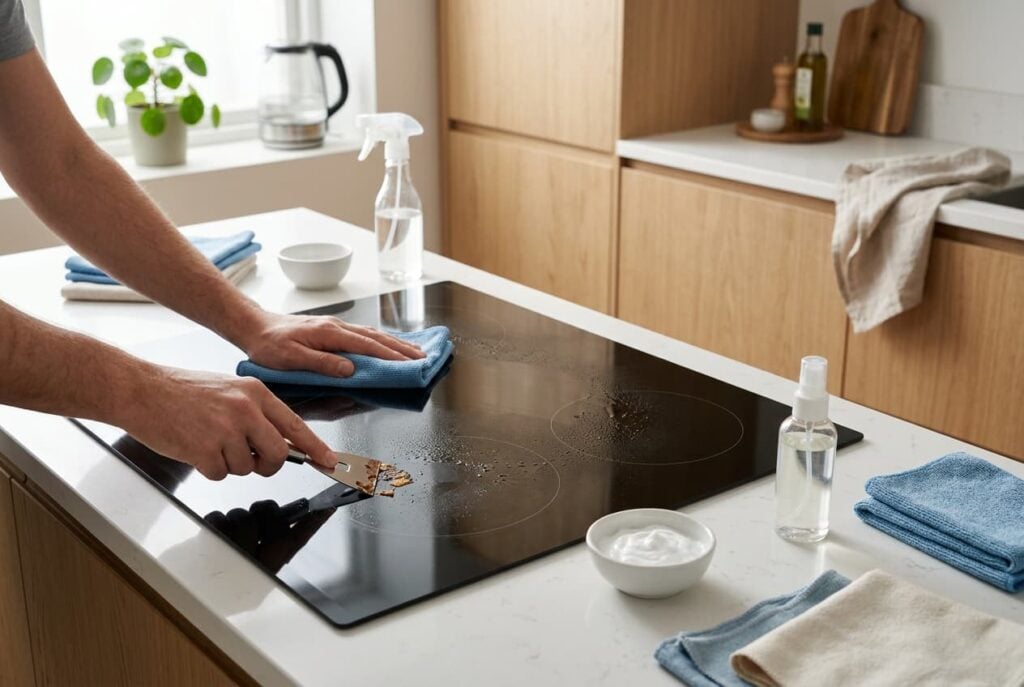
What products are best to clean a glass stovetop?
You don’t need a cupboard full of sprays. The most effective glass stovetop cleaning kit is refreshingly simple, and you likely have most of it already. Products like baking soda, white vinegar, a nonabrasive cleaning pad, a dedicated cooktop cleaner and a soft, dry cloth can all help keep your cooktop looking its best.
Here’s a quick shopping list before you start:
- Baking soda — a mild abrasive that lifts food stains without scratching.
- White vinegar — cuts grease and dissolves cloudy mineral film. Our guide on whether distilled vinegar is the same as white vinegar helps you pick the right bottle.
- A spray bottle — for mixing your own cleaning solution.
- A few drops of washing-up liquid — for everyday grease.
- Microfibre or paper towel — for wiping and buffing.
- A cooktop scraper with a single-edge razor blade — for stubborn burnt-on bits.
Keep a soft, dry cloth to hand for the final polish. That’s genuinely all it takes to clean a glass stovetop beautifully.
How to clean a glass stovetop: the everyday method
For daily grease and light marks, this quick routine keeps your glass stovetop spotless. Always let the surface cool completely first — cleaning while it’s hot risks burns and can bake cleaner onto the glass.
- Wipe away loose crumbs and grease with a damp cloth.
- Spritz the cooktop surface with vinegar (or your chosen cleaner) and let it sit for 10 to 15 minutes.
- Wipe the surface clean with a soft cloth or cleaning wipes — avoid scouring pads and scrub brushes, as these may damage the surface.
- Using a clean, dry cloth or paper towel, gently and thoroughly polish the entire cooktop surface.
You can also make your own cleaning solution: combine equal parts water and vinegar in a spray bottle, then add a few drops of dish soap and spray your cooktop. It’s cheap, effective and food-safe — perfect for a quick daily refresh. If you’re doing a full kitchen blitz, our kitchen cleaning hacks pair nicely with this routine.
How do you clean burnt food stains off a glass stove top?
Burnt-on food is the classic glass stovetop problem, and baking soda is the hero. Power through kitchen messes like burnt food by making a paste using baking soda and water. Here’s the method that works every time:
- Spread a baking-soda-and-water paste over the burnt food stains and let it dry.
- Once dry, gently scrape it off. Spray the area with white vinegar to dissolve whatever remains — it fizzes as it lifts the residue.
- For really stubborn spots, lay a hot, damp towel over the paste and leave it for 15 minutes (or a few hours for baked-on tomato sauce and similar), then wipe clean.
For carbonised deposits that won’t budge, use a proper cooktop scraper. Fit it with a clean single-edge razor blade and hold the blade against the cooktop surface at roughly a 45-degree angle to scrape away food stains and metal stains (which often look like scratches). Keep the blade flat and let it glide — never gouge. Baking soda has dozens of other uses too, as our baking soda cleaning guide explains.
How to remove cloudy residue from a glass stove top
That hazy, cloudy film is usually a mix of hard-water minerals and old cleaning-product buildup. To clear it:
- Squirt washing-up liquid or spray cleaner over the cloudy area.
- Sprinkle baking soda on top, then spray the whole thing with white vinegar so it foams.
- Lay a hot, damp towel over the surface and let it sit for 15 minutes — longer for stubborn haze.
- Wipe away with a microfibre or paper towel, then buff dry.
A vinegar-and-water mix in a spray bottle used weekly stops the cloudiness returning. This same mineral film builds up on kettles and glass shower screens too, so it’s worth tackling everywhere at once.
Can I clean a glass stovetop with baking soda?
Absolutely — baking soda is one of the safest and most effective options for a glass stovetop. Because it’s a mild abrasive, it lifts burnt food and food stains without scratching the cooktop surface the way steel wool or powder cleansers would. Make a paste for tough spots, or sprinkle a light dusting over a vinegar spray for everyday cleaning. Just rinse thoroughly afterwards, as any dried baking-soda residue can itself look cloudy once the surface dries.
Cleaning a glass stove top with toothpaste
A lesser-known trick: plain white toothpaste (not gel) works as a gentle glass stovetop polish. Its mild abrasives are similar to baking soda, so it can buff out light marks and small water spots. Dab a little onto a damp cloth, rub in small circles over the mark, then wipe away and buff dry. Avoid whitening toothpastes with harsh grit, and always test a small area first. Toothpaste is handy for the odd blemish, but for large surfaces, baking soda remains quicker and cheaper.
How to clean a glass stovetop without damaging it
Knowing what not to use matters just as much as the method. The wrong products or tools can scratch or cloud the glass permanently. To avoid damage to your glass top stove, refrain from using steel wool, abrasive powder cleansers, chlorine bleach, rust remover or ammonia in your cleaning process. Also skip abrasive washcloths and rough paper towels, as these harsh cleaners may damage your cooktop surface.
| ✅ Safe to use | ❌ Avoid |
|---|---|
| Baking soda paste | Steel wool / scouring pads |
| White vinegar | Chlorine bleach |
| Washing-up liquid | Abrasive powder cleansers |
| Dedicated cooktop cleaner | Rust remover & ammonia |
| Cooktop razor scraper (45°) | Cleaning while hot |
Two more golden rules: never scrape or scrub while the cooktop is still very hot (you could melt a plastic scraper or burn yourself), and never use the surface to cook, heat or re-heat anything to “dry” it after cleaning. If you do spot fine scratches from grit or an old scraper, our guide on removing scratches from glass covers your options.
Best glass stovetop cleaners and polishes
If you’d rather buy a ready-made product, a dedicated glass stovetop cleaner or stovetop polish gives a streak-free, glossy finish and often adds a protective layer that repels spills. Popular UK options include HG glass stove cleaner and creamy cooktop polishes that you apply, buff and wipe off.
| Cleaner type | Best for | How to use |
|---|---|---|
| Cream cooktop cleaner / polish | Everyday shine & protection | Apply, buff with dry cloth, wipe off |
| HG glass stove cleaner | Grease & light burnt marks | Spray, leave 10–15 min, wipe |
| Baking soda + vinegar (DIY) | Burnt food & cloudy film | Paste, rest, scrape, rinse |
| Cooktop scraper | Carbonised, baked-on stains | 45° angle, flat blade |
For brand-specific advice — say, cleaning stove top glass on a Whirlpool cooktop — the process is the same: remove food and residue with a ceramic-glass scraper, apply a few dime-sized drops of cooktop cleaner to the affected areas, then polish with a clean, dry cloth or paper towel. Select models even come with wipe-clean coatings that reduce scrubbing altogether.
Keep your glass stovetop gleaming
A glass stovetop rewards small, regular habits: wipe spills once the surface cools, deal with burnt food using a baking soda paste, clear cloudy film with a vinegar spray, and always finish with a dry-cloth polish. Steer clear of harsh cleaners and steel wool, and your cooktop surface will stay glossy for years. While you’re at it, don’t forget the extractor hood filters above it — grease up there ends up back on your lovely clean hob.
FAQ
How often should I clean my glass stovetop?
Wipe it after every use once it has cooled, and give it a deeper baking-soda-and-vinegar clean once a week. Regular light cleaning stops food stains baking on and prevents that cloudy build-up in the first place.
Is it safe to use a razor scraper on a glass cooktop?
Yes, as long as it’s a scraper designed for ceramic glass cooktops with a fresh single-edge blade. Hold it at a shallow 45-degree angle and keep it flat so it glides rather than digs — that’s how you lift burnt food without scratching.
Can I use glass cleaner or Windex on a glass stovetop?
A glass cleaner is fine for a quick shine on a cool surface, but it won’t shift burnt-on food or cloudy mineral film. For those, baking soda and vinegar or a dedicated cooktop cleaner work far better.
Why does my glass stove top look cloudy after cleaning?
Usually it’s leftover baking soda or hard-water minerals drying on the glass. Rinse with a damp cloth, spray lightly with a vinegar cleaning solution, then buff dry with a soft cloth or paper towel for a streak-free finish.
Does a glass stovetop scratch easily?
It can if you use steel wool, powder cleansers or grit trapped under a cloth. Stick to soft cloths, baking soda and a proper cooktop scraper, and the surface will stay scratch-free.
What’s the best homemade glass stovetop cleaner?
Equal parts water and white vinegar in a spray bottle with a few drops of washing-up liquid. It cuts grease, dissolves cloudiness and costs pennies — a genuinely brilliant all-rounder.