Summarise this article with:
 ChatGPT
 Mistral
 Claude
 Perplexity
 Grok
Grok
Bathrooms take a daily beating. Steam, soap scum, limescale, splashes of toothpaste, and damp air combine to create the perfect environment for grime to settle on every surface. Add hard water and you quickly end up with dull taps, cloudy shower glass and stubborn marks around the toilet bowl.
Many people turn to commercial cleaning products, but there is a growing interest in homemade cleaning products for bathroom spaces. The goal? Reduce exposure to harsh chemical formulas, limit plastic waste, and still achieve professional-level results.
The good news: with the right ingredients, correct dilution, and realistic expectations about antibacterial properties, you can create effective homemade bathroom cleaners that genuinely help you clean surfaces and maintain a fresh, hygienic room.
How to Clean a Bathroom ?
A clean bathroom is not about spraying and hoping for the best. It is about method, contact time, and choosing the right solution for each area.
When using homemade bathroom cleaners, always work in this order:
- Remove clutter and dust first (vents, shelves, top of cabinets).
- Apply your mixture and allow it to sit.
- Agitate with the right tool: sponge, old toothbrushes, or toilet brush.
- Rinse with a cup water and wipe with a damp cloth for a streak-free finish.
This structure prevents spreading grime from one surface to another and ensures your cleaning solution actually has time to break down buildup.
For routine maintenance, natural formulas are suitable. For deep descaling or mould removal, stronger targeted action may still be required.
Homemade Bathroom Cleaner Recipe
A proper homemade bathroom cleaner is balanced. It must cut through soap scum, loosen light limescale, and leave a pleasant aroma without damaging chrome, grout or sealant.
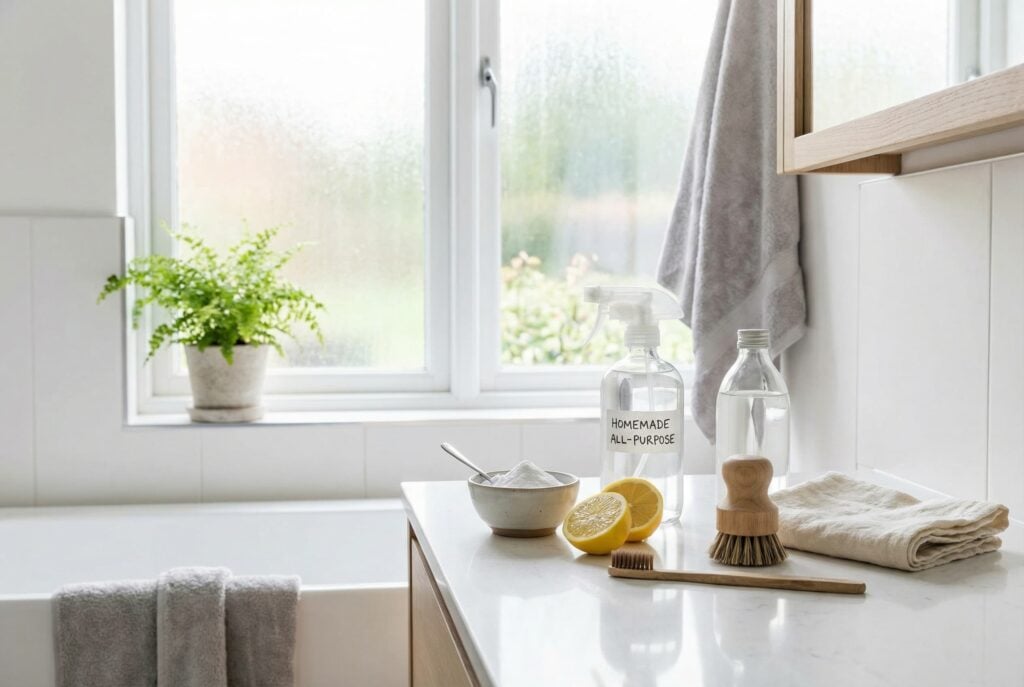
Simple all-purpose bathroom cleaning spray
This homemade cleaning spray works well on sinks, tiles and external toilet areas.
Recipe:
- 1 cup water
- 1 cup white vinegar
- 10 drops of tea tree
- Optional: 5 drops lemon essential oil for a fresher scent
Pour into a spray bottle, shake gently to combine the mixture, and label it clearly.
Spray generously onto the surface, leave for 5–10 minutes, wipe with a damp cloth, then rinse if needed.
This formula is one of the most popular homemade cleaning products for bathroom use because white vinegar helps dissolve mineral deposits while tea tree oil contributes mild antibacterial properties.
Do not use on natural stone. Vinegar is acidic and may etch marble or limestone.
If you are exploring other diy cleaning agents, the same principles apply: correct dilution, correct ingredients, correct dwell time.
Homemade Cleaning Spray
A targeted homemade cleaning spray for heavier buildup requires extra cleaning power.
Baking soda paste for stubborn marks
For taps, grout and shower trays:
Mix:
- 3 tablespoons baking soda bathroom grade bicarbonate
- Small amount of cup water to create a thick paste
Apply the mixture directly to the stained area. Let it sit for 20 minutes. Scrub gently using old toothbrushes. Rinse thoroughly.
Baking soda bathroom applications are effective because bicarbonate acts as a mild abrasive and odour neutraliser. It is not a disinfectant, but it improves the overall result visually and physically.
When extra limescale is present, spray cleaner using vinegar over the paste. The fizzing reaction helps lift debris. However, once the bubbling stops, the chemical reaction is neutralised. At that stage, mechanical scrubbing does the real work.
Natural Bathroom Cleaner
A natural bathroom cleaner can maintain cleanliness between deeper cleans. It is ideal for families wanting to reduce reliance on conventional household cleaning products.
Gentle daily wipe-down solution
Combine:
- 1 cup water
- 1 tablespoon liquid castile soap
- 5 drops drops of tea tree
- 5 drops lemon
Store in a spray bottle and shake before use. This light solution works well on bathroom mirror frames, countertops and external fixtures.
For glass or bathroom mirror cleaning, avoid soap-based formulas. Instead, use diluted white vinegar and buff dry immediately with a lint-free damp cloth.
Many people look into broader natural cleaning products, but remember: natural does not automatically mean disinfecting. For high-risk areas like the inside of the toilet bowl, proper sanitation is essential.
Baking Soda for Bathroom Cleaning
Baking soda bathroom cleaning is one of the oldest and safest methods when used correctly.
It is particularly effective for:
- Neutralising odours in the toilet bowl
- Scrubbing grout
- Lifting light stain remover tasks
- Refreshing drains
Sprinkle bicarbonate directly into the toilet bowl, let it sit for 30 minutes, scrub with a toilet brush, then flush. For extra effect, combine with white vinegar.
Keep in mind that baking soda bathroom treatments are ideal for maintenance, not for removing heavy limescale scale built over years.
Vinegar Bathroom Cleaner
A cleaner using vinegar is best for limescale around taps, shower screens and the shower head.
Descaling the shower head
Remove the shower head if possible. Soak it in equal parts white vinegar and warm cup water for one hour. Rinse thoroughly and reattach.
If it cannot be removed, fill a bag with the solution, secure it around the shower head, and leave to soak.
This is one of the most reliable homemade bathroom cleaners for mineral deposits.
However, avoid prolonged contact with rubber seals. Always rinse properly to prevent damage.
Best Cleaning Products for Bathroom
Even when using homemade cleaning products for bathroom, you must recognise their limits.
Here is a practical comparison:
| Area | Recommended homemade solution | Contact time | Notes |
|---|---|---|---|
| Tiles | White vinegar + cup water spray | 10 mins | Avoid stone |
| Grout | Baking soda bathroom paste | 20 mins | Scrub gently |
| Toilet bowl | Vinegar + baking soda | 30 mins | Use toilet brush |
| Shower head | Vinegar soak | 60 mins | Rinse thoroughly |
| Mirror | Diluted vinegar | Immediate wipe | Use damp cloth |
The best cleaning products for bathroom maintenance can absolutely be homemade — but only when used correctly and consistently.
Best Cleaning Recipe for Bathroom Tiles
Tiles collect residue quickly. Steam encourages soap scum to cling to walls.
To clean surfaces effectively:
- Spray cleaner using vinegar.
- Leave for 10 minutes.
- Scrub grout with old toothbrushes.
- Rinse using cup water.
- Dry thoroughly.
Drying is crucial. Leaving moisture behind encourages mould and reduces the final result quality.
For deeper grout work, you may explore specialised homemade grout cleaner approaches, but always test a small area first.
Natural Cleaning Products for Toilet Bowls
When using natural cleaning products for toilet bowls, focus on contact time.
Pour 1 cup white vinegar into the toilet bowl. Leave overnight if possible. In the morning, add baking soda bathroom powder, scrub with a toilet brush, and flush.
Tea tree oil (a few drops of tea tree) may add light antibacterial properties, but it does not replace proper disinfectant where hygiene risks are high.
For heavy staining, a commercial stain remover may still be necessary.
Natural Cleaning Products for Shower
The shower accumulates limescale, residue and body oils daily.
Spray a homemade cleaning spray of white vinegar and cup water after each use. Wipe with a damp cloth to prevent build-up.
Regular prevention avoids needing stronger action later. If residue persists, revisit your dilution ratios or extend dwell time.
Many households interested in homemade cleaning products for bathroom care also explore broader homemade cleaning products for kitchens. For instance, adapting a formula similar to a homemade dishwasher cleaner can help descale bathroom drains too.
Do Baking Soda and Vinegar Actually Clean ?
Yes — but not in the way many believe.
When combined, baking soda bathroom bicarbonate and white vinegar react and neutralise each other. The fizz helps dislodge debris, but after the reaction ends, cleaning relies on physical scrubbing.
Individually:
- White vinegar dissolves mineral deposits.
- Baking soda bathroom powder acts as a mild abrasive and deodoriser.
They clean, but they are not powerful disinfectants. For genuine sanitation, especially in the first place after illness, you may need certified disinfecting cleaning products.
What is the Best Homemade Bathroom Cleaner?
The best homemade bathroom cleaners are tailored to the task.
For general maintenance: vinegar + cup water + drops of tea tree.
For scrubbing: baking soda bathroom paste.
For descaling: concentrated white vinegar soak.
There is no universal recipe. The right solution depends on the type of dirt, the surface, and frequency of cleaning.
What is the Best Natural Product to Clean a Bathroom?
The most versatile natural product is white vinegar.
It tackles limescale, deodorises drains, and restores shine to taps. It is affordable, widely available in any kitchen cupboard, and has a long shelf life.
However, for grease-heavy residue, soap-based formulas perform better. A balanced toolkit of natural cleaning products delivers the best overall result.
How do you Wash the Bathroom?
Work methodically.
Start high, finish low. Apply your chosen homemade cleaning spray, respect contact time, scrub where required, rinse with cup water, and dry with a damp cloth.
Focus on high-touch points. Do not forget light switches and door handles.
Use appropriate tools:
- Toilet brush for the bowl
- Old toothbrushes for grout
- Microfibre damp cloth for mirrors
- Dedicated cloths per zone to prevent cross-contamination
If you are looking to reduce reliance on commercial formulas entirely, exploring broader homemade cleaning products for bathroom alongside other diy cleaning agents can help create a cohesive, lower-waste routine and reduce plastic waste over time.
FAQ
Are homemade bathroom cleaners safe for all surfaces?
No. Acidic white vinegar can damage marble, limestone and some sealants. Always test first and check manufacturer guidance.
Do natural disinfectants really have antibacterial properties?
Some essential oils, including drops of tea tree, show mild antibacterial properties, but they do not replace regulated disinfectants in high-risk scenarios.
How long do homemade cleaning solutions last?
Most vinegar-based solution mixes have a good shelf life of several weeks if stored in a sealed spray bottle away from direct sunlight.
Can I use fabric softener in bathroom cleaning?
Fabric softener is sometimes used to reduce static or add fragrance, but it is not recommended for cleaning bathroom surfaces. It leaves residue and does not contribute to hygiene.