Summarise this article with:
 ChatGPT
 Mistral
 Claude
 Perplexity
 Grok
Grok
Feeling like your dishwasher’s playing favorites? When bottom dishes sparkle while the top rack remains stubbornly grimy, it’s enough to make you want to throw in the tea towel! Don’t worry—Wecasa will be there for you!
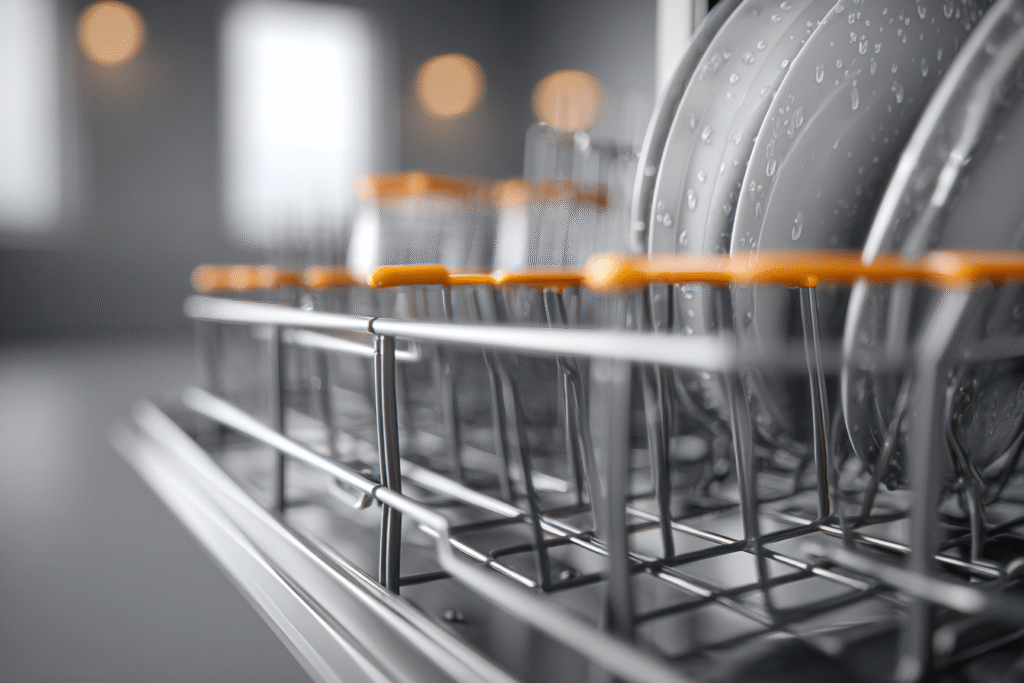
Why isn’t the top shelf of your dishwasher getting clean? (Possible causes explained)
Common signs your top rack isn’t working properly
Spotting the telltale signs early can save you time and frustration. Look out for these warning signals that your top shelf isn’t performing:
| Signs | Likely Cause |
|---|---|
| Food particles stuck to dishes | Blocked spray arms or low water pressure |
| Cloudy glasses with white spots | Hard water mineral deposits |
| Partially dissolved detergent pods | Insufficient water circulation |
| Gritty residue on mugs | Poor rinsing or filter issues |
Large items in your bottom rack might be blocking proper water flow, whilst an overloaded dishwasher prevents adequate coverage. These common reasons point to simple solutions that don’t require replacement parts.
What makes top rack cleaning different
Your top rack faces unique challenges because water pressure naturally decreases as it travels upward through the spray system. This reduced force, combined with cooling high temperature water by the time it reaches the upper level, makes dissolving grease and food residues more difficult compared to items closer to the heating element. The dishwasher manual typically recommends different loading strategies for each rack precisely because of these differences.
Dishwasher not rinsing properly? Quick checks
Your upper rack is coming out with spots or residue? Try these quick fixes:
• Run your hot water tap for 30 seconds before starting – water needs to be at least 120°F (49°C) for detergents to dissolve properly.
• Check your rinse aid dispenser is full – it reduces water surface tension, preventing spots especially on glassware.
• Inspect your water inlet valve under the sink – if it’s not fully open, your dishwasher won’t get enough pressure to rinse the upper rack thoroughly.
These possible causes are often the culprits behind disappointing top rack results!
Check your upper spray arms first (top rack not spinning?)
Remove and clean blocked upper spray arms
Start by removing the upper rack to access the spray arm. Most models use a twist-lock or central screw that unscrews by hand. Inspect spray holes for blockages from food particles or mineral deposits that reduce water pressure.
Soak the arm in warm soapy water for 15-30 minutes to loosen stubborn debris. Use a toothpick to clear each blocked hole from both sides.
What you’ll need:
- White vinegar
- Cocktail sticks
- Warm soapy water
- Old toothbrush
This is one of the most common causes listed in Dishwasher Not Cleaning Properly? — depending on the type of fault.
| Problem | Quick fix | Tool | Time |
|---|---|---|---|
| Visible blockage | Poke holes | Toothpick | 5 min |
| Mineral buildup | Vinegar soak | Bowl + vinegar | 30 min |
| Sluggish rotation | Lubricate pivot | Soapy water | 10 min |
| Stuck debris | Deep clean | Toothbrush | 15 min |
Clear clogged holes and spinning issues
Food particles and mineral deposits hide in those tiny spray holes, creating blockages that reduce cleaning power. Hold each arm up to light—blocked holes appear as dark spots.
Remove debris with a cocktail stick, pushing through from both directions. For stubborn mineral buildup, soak in white vinegar overnight. Give each arm a vigorous shake after cleaning—you should hear water sloshing freely inside.
Test spray arm rotation and water flow
Spin each arm by hand—they should rotate freely without catching. Run a quick test cycle to check water distribution. After two minutes, carefully open the door to observe spray patterns.
Listen for unusual sounds during operation—grinding or irregular spinning indicates internal damage.
Upper spray arm not spinning on Whirlpool or LG models
Whirlpool dishwashers often develop issues with their water inlet valve where the arm connects to water supply. A worn gasket causes pressure loss that prevents proper spinning.
LG dishwashers have unique middle spray arm docking stations with flappers that can become stuck. Bosch models typically have fewer spray arm issues but require checking the water pressure regulator if problems occur.
Both Whirlpool and LG may need circulation pump inspection if arms spin freely by hand but don’t move during operation—often appearing as “buzzing” without water movement.
Water-pressure woes: dishwasher not washing clean?
Boost water pressure and heat
- Check household water pressure to the dishwasher. Run a tap while your dishwasher operates—weak flow elsewhere means you’ve got a home-wide pressure problem needing attention.
- Inspect your water supply valve. Located under the sink or near the dishwasher connection, turn it fully anticlockwise to maximize flow. This valve often works loose over time without anyone noticing!
- Examine the inlet hose for kinks or mineral buildup. Disconnect carefully and check for obvious bends or internal blockages that might be restricting water flow.
• Run hot water before starting. Flush cold water from pipes by running your kitchen tap for 30 seconds before starting a cycle. Your dishes will thank you!
• Maintain proper temperature. For effective cleaning, your dishwasher needs water at least 49°C (120°F) to dissolve detergent and break down food residue.
• Check water heater settings if dishes consistently come out with residue—it might be set too low for effective dishwashing.
Household hacks when your dishwasher is not rinsing properly
Feeling like your dishwasher’s giving up halfway through the job? We’ve been there! Try adding a rinse aid to improve water sheeting and prevent spotting. It’s like giving your dishwasher a little confidence boost!
For stubborn rinsing issues, check if your filter needs cleaning—it’s often the unsung hero of proper water circulation. A clogged filter is one of the common reasons your dishes might come out looking like they’ve only had a quick splash.
Still struggling? Run a cleaning cycle with white vinegar (just pop a cup on the top rack) to dissolve mineral buildup that might be restricting water flow. Easy, peasy, lemon squeezy!
Loading mistakes that stop proper cleaning (avoid an overloaded dishwasher)
Avoid overloading your top rack
When it comes to dishwasher troubles, cramming too many items into your top rack is like trying to fit your entire Taylor Swift playlist onto a cassette tape – it just won’t work properly!
- Leave a finger-width gap between each item for proper water circulation
- Never stack cups or bowls inside one another – this creates “nesting” that blocks water jets
- Position items at slight angles rather than perfectly upright for better cleaning
Remember, your dishwasher needs enough space between items to work its magic – just like you need space on the dance floor!
Position dishes for maximum water reach
- Face all items downward and toward the center where spray arms can hit them directly
- Place cups and glasses upside down along the sides of the rack from front to back
- Position bowls between tines at an angle – think of them catching a wave of cleaning power!
Never let items hang through the rack – they can block the rotating spray arms below, which is the number one cause of poor dishwasher performance.
Stop cloudy glasses on the top rack
- Add rinse aid to your dishwasher to prevent water spots and mineral deposits
- Soak already cloudy glasses in white vinegar for five minutes or wipe with a baking powder paste
- Position glasses between tines rather than over them to avoid wet contact points
For best results, make sure glasses aren’t touching each other in the rack – this prevents both scratches and those annoying cloudy spots that ruin your drinking experience!
Troubleshooting by make: Brand-specific issues
Bosch & Beko
Bosch dishwashers struggle with tablet dissolution due to their unique collecting tray design. Try selecting a higher temperature cycle for stubborn cases. Beko models commonly experience top rack issues from their unique spray arm system that’s prone to blockage. Ensure water hardness settings are properly configured as dishes are dirty when this setting is incorrect.
Samsung & Whirlpool
Samsung requires firm pressure when inserting the top rack until you hear a definitive click. Otherwise, water connection issues leave dishes dirty. Whirlpool’s diverter motor frequently malfunctions, controlling water flow between racks. Their roller system on top racks can slip out of alignment—check for mineral buildup in feed tubes which affects upper rack performance.
Neff, Siemens & Smeg
These German-engineered machines share similar water pressure components with specialized bearing plate clips that ensure proper spray system alignment. Smeg units feature a unique filter position that requires monthly cleaning to prevent pressure loss to the top rack. When malfunctioning, all three brands show similar symptoms with cloudy glassware.
LG, Kenmore & others
LG and Kenmore feature adjustable upper racks that accidentally shift during use, requiring precise alignment with the water supply connection. Most modern dishwashers now include height adjustment mechanisms that can become locked in the wrong position. If your top rack isn’t cleaning properly, verify the spray arm height hasn’t changed. For persistent issues, Wecasa can help with professional appliance repairs.
Keep your dishwasher cleaning like new
Clean filters to prevent gritty residue
Don’t let food particles sabotage your clean dishes! Remove and rinse your dishwasher filter monthly to prevent that annoying gritty residue from reappearing on your glassware. Simply twist out the cylindrical filter from the base, rinse under warm water, and gently scrub away stubborn bits with an old toothbrush. This five-minute job makes a world of difference—like giving your dishes a VIP cleaning experience!
Monthly maintenance routine
Give your dishwasher some TLC with this simple three-step routine:
- Clean the filter as mentioned above—it’s the unsung hero of proper water circulation.
- Run an empty hot cycle with a cup of white vinegar in a dishwasher-safe container on the top rack to dissolve mineral buildup.
- Sprinkle a cup of baking soda across the bottom and run another short hot cycle to neutralise odours and freshen the interior.
For a thorough refresh every three months, deep-clean your dishwasher using our simple step-by-step guide. Bookmark this routine – your future self (and glasses) will thank you!
FAQ – Dishwasher Not Cleaning Top Rack
Why is my dishwasher not cleaning the top rack?
+Check spray arms for blockages first. Food particles often clog water jets, preventing proper circulation to the upper level. Low water pressure and incorrect loading also contribute to dirty dishes up top.
How can I fix a dishwasher that is not cleaning the top rack?
+Remove and clean the upper spray arm with a toothpick to clear blocked holes. Ensure water temperature reaches 49°C and the supply valve is fully open during wash cycles.
How do I clean the top rack of a dishwasher?
+Slide out the rack completely using the side release tabs. Soak in warm soapy water, scrub corners with a soft brush, and rinse thoroughly before reinstalling.
Why is my dishwasher not cleaning properly?
+Avoid overloading and use correct detergent amounts. Clean the filter regularly to prevent debris buildup that restricts water flow throughout the machine and affects cleaning performance.
When should I call a professional for this issue?
+Contact experts when you notice strange noises, persistent drainage problems, water leaks, or electrical issues that remain after basic troubleshooting. Professional help is recommended for dishwashers over five years old.