ChatGPT
 Mistral
 Claude
 Perplexity
 Grok
Pulling out cloudy glasses or plates with bits of last night’s dinner still stuck on? Annoying, yes. Rare, not really.
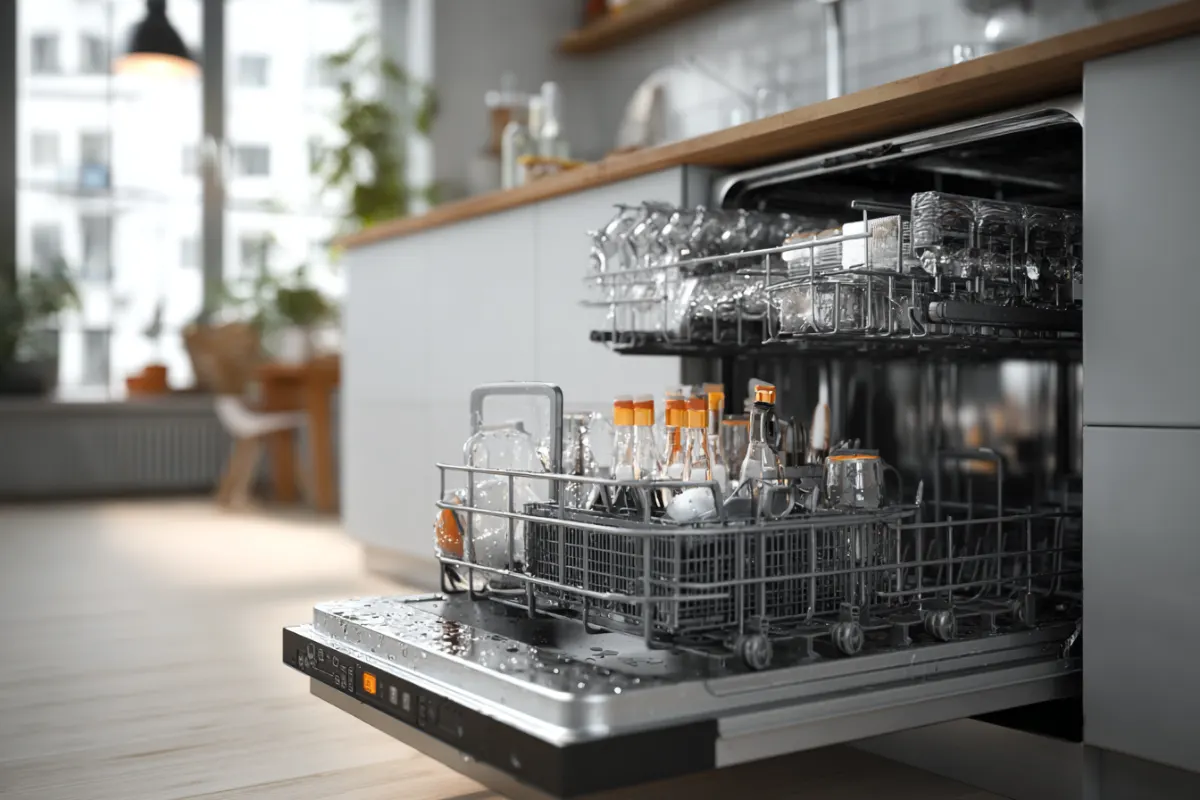
It’s one of the most common kitchen frustrations out there, and the good news is that most of the usual causes are quick to check yourself. This guide walks through the likely causes behind the problem, simple step-by-step fixes, brand-specific checks and the trickiest spots for dishes to come out less than spotless.
Why Is My Dishwasher Not Cleaning Things Properly?
Noticed your “clean” dishes coming out with crusty bits still stuck on? Before you panic or start googling replacement machines, know this: poor wash results usually come down to a handful of common issues, and most are quick to check.
Common Reasons Your Dishwasher Stops Cleaning
When a machine suddenly stops delivering a proper clean, it’s usually one (or more) of these usual suspects:
- A clogged filter, which disrupts water flow and stops dirt draining away.
- Blocked spray arms, so water can’t reach every corner of the load.
- An undissolved tablet, often caused by a blocked dispenser door.
- Overloading, which blocks the spray pattern from reaching all your dishes.
- Low water temperature, meaning grease simply won’t lift off.
Run through that list and you’ll likely spot your problem straight away.
Why Is My Dishwasher Leaving Food Residue on My Dishes?
Here’s the thing about food debris: it doesn’t just sit still. When water flow gets disrupted by a clogged filter or a blocked spray arm, the dirty water carrying loosened food particles can’t drain properly, so that debris gets redeposited right back onto your “clean” dishes. Overloading makes it worse, since cramped plates block the water’s path and give grime nowhere to go but back onto your crockery.
When Hard Water Is the Hidden Culprit
If you’re in a hard-water part of the UK, cloudy glasses or a gritty film might have nothing to do with your machine at all. Limescale builds up inside the appliance over time, while low salt or rinse aid levels leave minerals behind instead of rinsing them away. The fix is usually just topping up both and letting your dishwasher do the rest.
How to Fix a Dishwasher That Is Not Cleaning Properly
Right, time to roll up your sleeves. Here’s a simple step-by-step you can work through in about 15 minutes, no engineer call-out required.
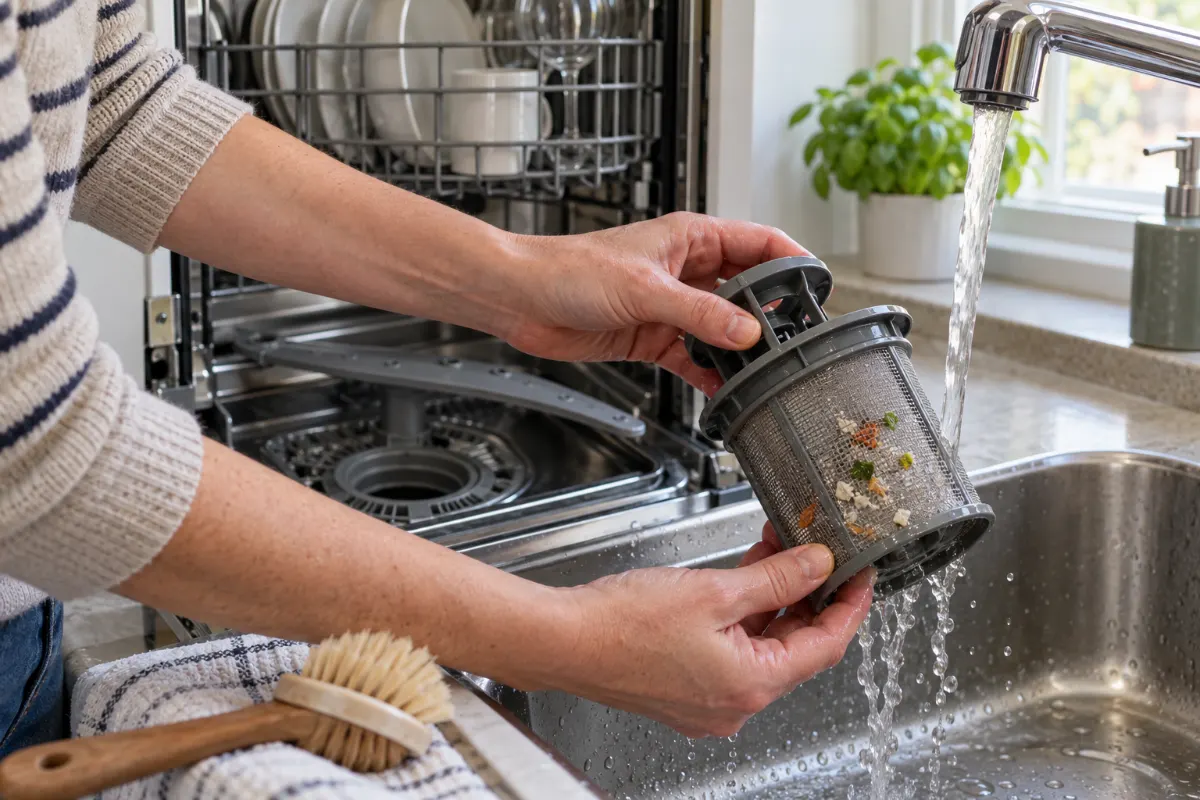
Remove and rinse the filter. Pull out the filter at the bottom of the machine and rinse it under running water, using a soft brush to loosen any trapped food. Skip anything abrasive like a scourer, as it can damage the mesh and let debris straight back through.
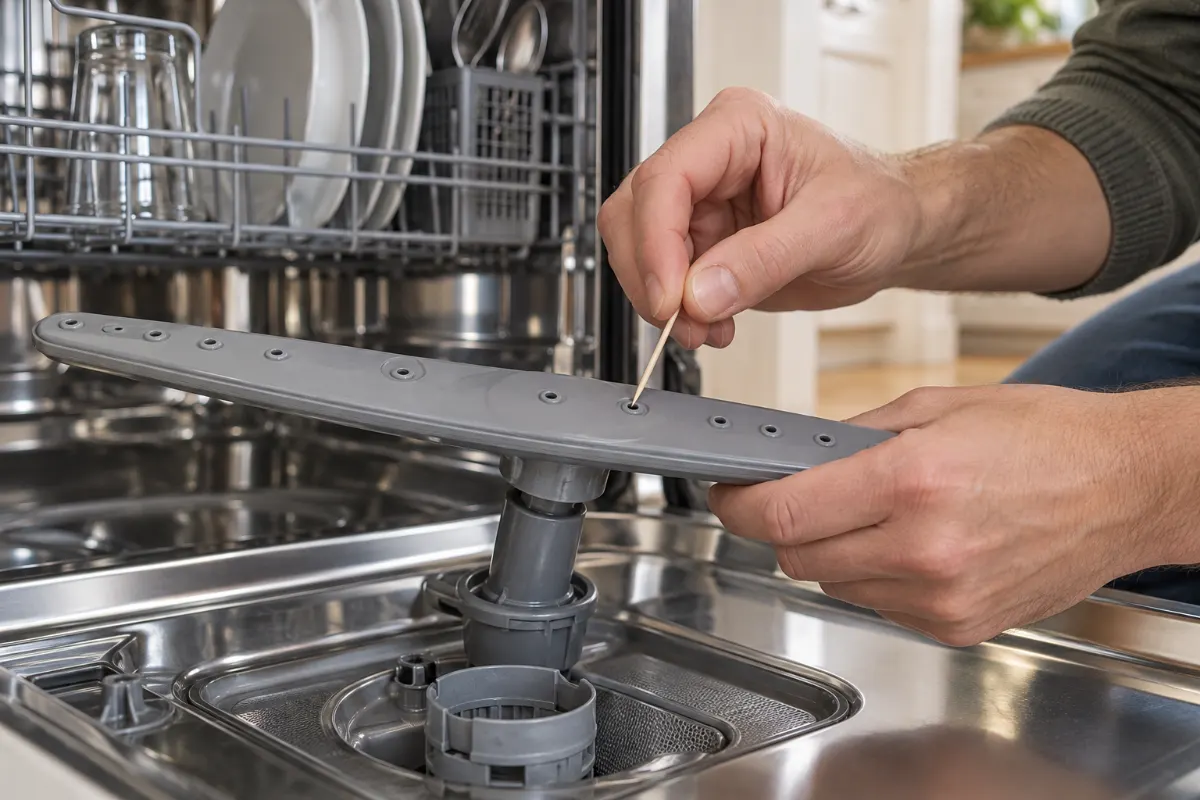
Check the spray arms. Give them a spin by hand. If they’re stiff or won’t rotate, they may be clogged. Peer at the small holes along each arm and clear any blockages with a toothpick or cocktail stick so water can jet through properly.
Run a hot maintenance cycle. Pop a dedicated dishwasher cleaner in an empty machine and run it on the hottest cycle available. This helps shift built-up grease and limescale that everyday washes simply can’t touch.
Reload and reprogramme. Go back to how you’re stacking dishes: overcrowding blocks water circulation, even with a perfectly clean filter and spray arms. For heavily soiled loads, switch to a hotter, longer cycle instead of your usual quick setting.
Pro Tip: Always double-check nothing is blocking the detergent dispenser door, like an overhanging pan handle or tall glass. If it can’t flip open mid-cycle, your tablet or powder simply won’t reach the dishes, no matter how clean everything else is.
Fixing Glasses, Cups and Top Rack Cleaning Problems
Still pulling cloudy glasses out of a cycle that should’ve sorted them? This one’s almost always down to two things, and both are easy to put right.
Why Glasses and Cups Come Out Cloudy

Quick test: wipe a glass with white vinegar. If the haze comes off, it’s limescale; if it stays, the glass itself may be etched, which can’t be reversed, especially if you’re in a hard water area. Low rinse aid is often the culprit too, since it’s what stops water spots forming as dishes dry. Top up your rinse aid, check your salt levels, and run a hot cycle with a proper dishwasher cleaner to dissolve built-up limescale and bring the sparkle back.
Dishwasher Leaving Gritty Residue on the Top Rack
Gritty bits on your top rack point to a clogged filter or weak water flow from the upper spray arm, both of which stop food particles washing away properly. Overloading the top basket doesn’t help either, as it blocks water reaching every corner. Clear the filter, check the spray arm holes, and don’t overload. A hot, empty maintenance cycle then gives the whole machine a thorough clean.
And if you’d rather hand over the rest of the kitchen while you sort the appliance, Wecasa’s professional cleaners can take care of pretty much anything, from worktops to floors, so you’re not juggling it all yourself.
FAQ
Why Is My Dishwasher Not Washing Dishes but Water Is Running?
If water is running but your dishes still come out dirty, the water simply isn’t reaching them properly. The usual culprits are a blocked spray arm, a faulty wash pump, or a programme that’s too gentle for the job. Check the spray arm holes for trapped food bits first, as this is the easiest fix. If everything looks clear and the problem continues, the pump motor itself may need a professional look.
Why Is My Dishwasher Not Cleaning Properly or Draining?
Poor cleaning and poor draining usually share the same root causes: a clogged filter, a kinked or blocked drain hose, or a worn-out drain pump. Start by removing and rinsing the filter, then check the hose for any obvious kinks or debris. If your dishwasher still won’t drain after that, it’s worth calling in a qualified appliance engineer rather than guessing further.
How Often Should I Clean My Dishwasher Filter?
For consistently spotless results, your manual will give the right interval for your model. As a rule of thumb, check the filter whenever you notice food bits left on your dishes. Busy households or hard-water areas may need it slightly more often, since grease and limescale build up faster and affect how well your machine performs.