Summarise this article with:
 ChatGPT
 Mistral
 Claude
 Perplexity
 Grok
Grok
Knowing how to clean the refrigerator water dispenser is one of those small kitchen jobs that makes a surprisingly big difference to the water you drink every day. That chilled water passes over a nozzle, a drip tray and (on many models) an internal tank or water line — all damp spots where mould, slime and limescale love to settle. The good news? You don’t need any special products. A bottle of white vinegar, some warm soapy water and ten minutes are usually all it takes to get your fridge water dispenser fresh, clear and tasting clean again.
Do refrigerator water dispensers really need cleaning?
Yes — and more often than most people think. Because the dispenser stays moist and is rarely wiped, it’s a perfect home for bacteria and black mould, especially around the nozzle and inside the drip tray. Limescale from hard water also builds up on the spout, slowing the flow and leaving a chalky residue. If your water has started to taste odd or smells musty, the dispenser is the first place to check — much like the way odours can linger inside the fridge itself, which is why it pays to also tackle a smelly fridge at the same time.
What you’ll need to clean the water dispenser
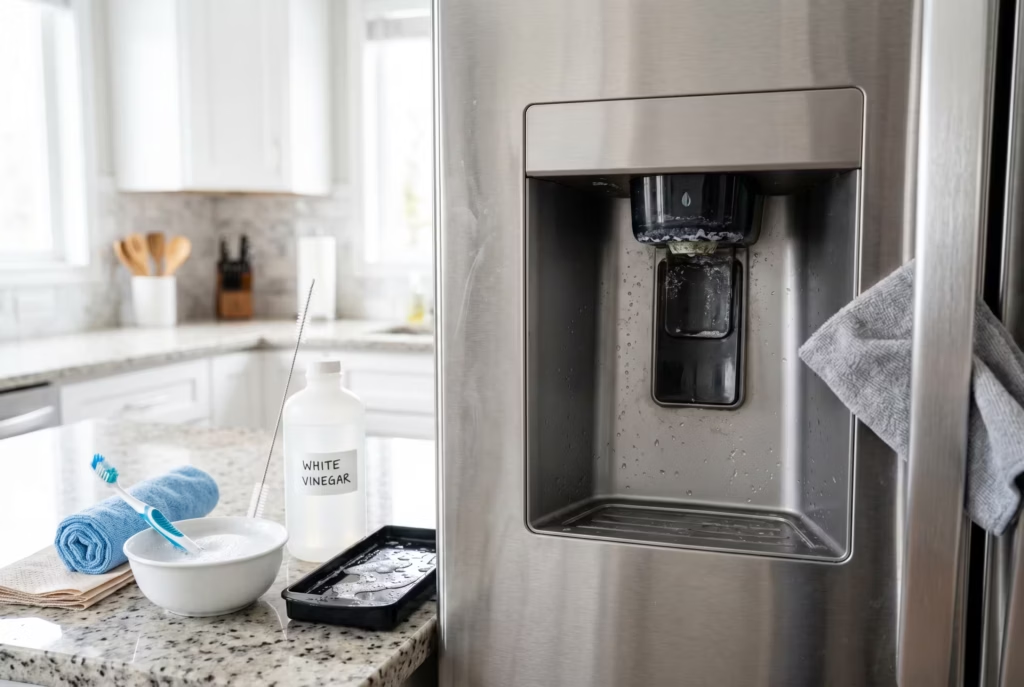
- Distilled white vinegar (your main cleaner and natural mould-killer)
- A bowl, plus paper towels and a rubber band
- A small brush — an old toothbrush or a straw cleaner
- Warm soapy water and a soft cloth
- A clean jug for flushing
How to clean the refrigerator water dispenser step by step
Work from the outside in. The first two steps cover every fridge; steps 3 and 4 depend on whether your model is plumbed in or uses a refillable tank.
Step 1 — Clean the drip tray. Lift out the removable drip tray and wash it in warm soapy water. For stubborn slime or watermarks, spray it with a half-and-half mix of water and white vinegar, leave for a few minutes, then wipe and rinse.
Step 2 — Soak and scrub the nozzle. Soak a few paper towels in vinegar, wrap them around the spigot, and secure with a rubber band for 30–60 minutes to dissolve limescale. Remove, then push a small brush up into the nozzle and scrub away any interior build-up.
Step 3 — Wash the internal tank (non-plumbed fridges). On a refillable model, lift out the shelf and water tank, separate the lid, and remove the small rubber ring at the base. Wash the tank, lid and ring with a mild detergent like washing-up liquid, rinse, dry and refit — making sure the seal is seated so it doesn’t leak.
Step 4 — Flush the water line (plumbed fridges). Switch off the water supply, then, if you can reach the water linebehind the fridge, flush 2–3 cups of vinegar through it and out of the water dispenser. Reconnect the supply and run fresh water through until at least two glasses come out clear with no vinegar taste.
How to clean a fridge water dispenser with vinegar
Vinegar is the hero here because it cuts grease, dissolves minerals and kills mould — all while being food-safe once rinsed. The same principle applies right across your kitchen, which is why white vinegar is such a reliable cleaning all-rounder.
| Cleaning solution | Best for | How to use |
|---|---|---|
| Neat white vinegar | Limescale on the nozzle | Soak 30–60 min, then scrub |
| 1 part vinegar : 2 parts water | Drip tray & exterior | Spray, wait, wipe, rinse |
| 2–3 cups vinegar (flushed) | Internal water line | Run through, then flush with water |
| Warm soapy water | Tank, lid & rubber seal | Hand-wash, rinse, dry |
How to remove mould from the water dispenser
Spotted something dark around the nozzle or inside the drip tray? That’s mould — and it thrives anywhere moisture lingers.
Mix equal parts white vinegar and warm water in a spray bottle, then spritz the affected area generously. Use a cotton swab or small brush to work the solution into tight corners, twirling as you go to lift the build-up. For the drip tray, a 20-minute soak in the same mix does the job — then rinse under the kitchen sink and dry thoroughly.
Mineral buildup alongside mould? A tablespoon of baking soda dissolved in a quart of warm water makes a gentle scrub that tackles both at once without damaging plastic parts.
Once clean, dry every surface completely before reassembling — lingering moisture is what lets mould come back.
Cleaning by brand: Samsung, Whirlpool & Frigidaire
The method is the same across brands; only the parts that come apart differ.
| Brand | Removable parts | Tip |
|---|---|---|
| Samsung | Drip tray + nozzle | Wipe behind the cradle with a vinegar cloth |
| Whirlpool | Drip tray, some with filter | Clean after each filter change |
| Frigidaire | Drip tray, ice chute | Don’t forget the ice chute flap |
| Beko (non-plumbed) | Tank, lid, rubber ring | Hand-wash only — not dishwasher safe |
How often should you clean it?
Wipe the drip tray and nozzle weekly, and flush or deep-clean the system every time you change the water filter (roughly every six months). Building this into your wider routine — alongside defrosting the fridge freezer and a proper whole-fridge clean — keeps your water fresh and your appliance running well for longer.
FAQ
What kills mould better, bleach or vinegar?
For a fridge water dispenser, white vinegar is the better choice because it kills most household mould and is food-safe once rinsed. Bleach works but must be heavily diluted and flushed out completely before you drink the water again.
How do I clean the tube that dispenses water in my fridge?
On plumbed models, switch off the water, flush 2–3 cups of vinegar through the water line, then reconnect and run fresh water until it tastes clean. Many manufacturers note the internal tube needs little routine maintenance, so focus on flushing only if the water tastes off.
Can I put the water tank in the dishwasher?
No. On non-plumbed fridges the tank, lid and rubber ring should be hand-washed in warm soapy water only, as dishwasher heat can warp the plastic.
How do I clean the drip tray properly?
Lift it out, wash it in warm soapy water, and treat any residue with a vinegar spray before rinsing. It’s the easiest part to clean and should be wiped weekly.
Why does my dispenser water taste strange?
Usually it’s limescale, trapped air, or an old filter. Clean the nozzle, flush the line and replace the filter — if a musty smell remains, mould in the drip area is the likely cause.
How do I stop limescale building up again?
Wipe the spigot dry after use, clean weekly, and run a vinegar soak monthly if you live in a hard-water area.