Summarise this article with:
 ChatGPT
 Mistral
 Claude
 Perplexity
 Grok
Grok
White sheets are a bedroom classic — fresh, clean, and effortlessly elegant. But if you’ve noticed your once-bright cotton sheets slowly turning grey or yellow, you’re far from alone. Body oil, sweat, dead skin cells, and product build-up all take their toll over time, leaving even premium linens looking tired.
The good news? Whitening cotton sheets doesn’t require expensive products or professional help. With a few things you probably already have at home — baking soda, white vinegar, lemon juice — you can restore your sheets to their original brilliance. This guide covers every proven method, from natural products to bleach, plus expert tips for keeping your bedding white long-term.
Why Do White Sheets Turn Yellow?
Understanding the cause is the first step to fixing the problem. Yellowing bed sheets are typically caused by:
- Body oil and sweat: Your skin releases oils and moisture every night. Over time, these soak into cotton fibres and oxidise, creating that familiar yellow tinge.
- Dead skin cells: Millions are shed nightly, feeding bacteria that contribute to discolouration and odour.
- Detergent and fabric softener build-up: Using too much product — or not rinsing properly — leaves residue that dulls white fabric. The fabric softener dispenser is often the hidden culprit.
- Hard water minerals: Calcium and magnesium deposits from hard water leave a greyish cast on white sheets.
- Fake tan and lotions: Cosmetic products transfer onto pillowcases and sheets, causing stubborn stains that worsen with every wash.
- Incorrect storage: Sheets stored in damp, poorly ventilated spaces yellow even when freshly laundered.
Every one of these causes is reversible — you just need the right approach. If your sheets are looking dull despite regular washing, it’s almost certainly a build-up issue rather than permanent damage.
How Do You Whiten Cotton Sheets?
There’s no single formula — the best results come from choosing the right method for your level of discolouration. Below are the most effective techniques, from gentle maintenance washes to deep whitening treatments. Always check the care label before trying any new method.
Whiten Bed Sheets with Baking Soda in a Washing Machine
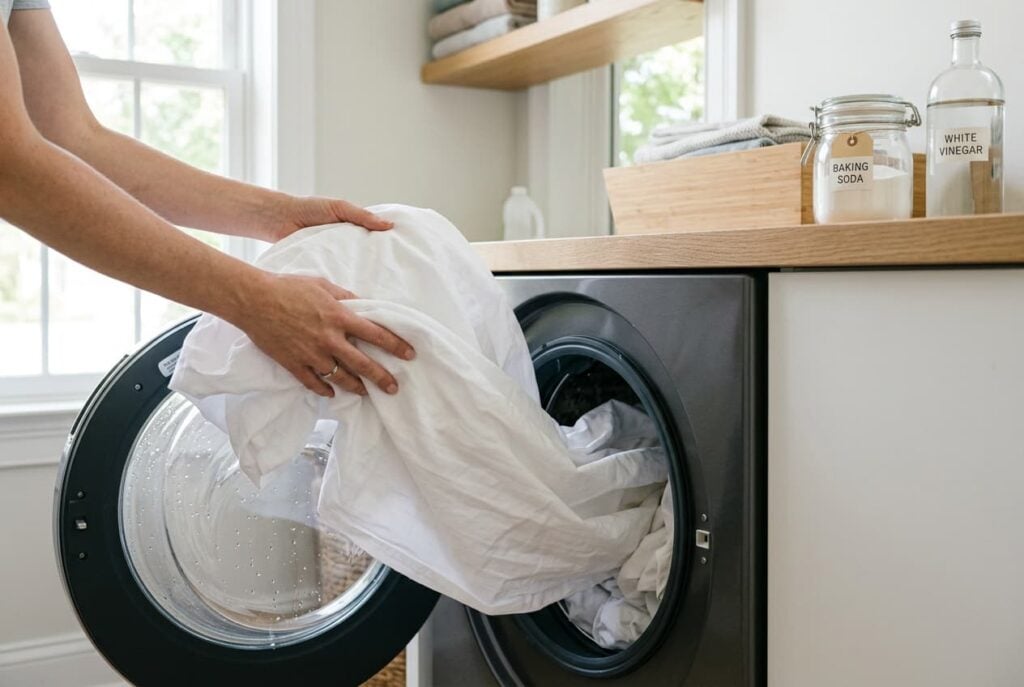
Baking soda is one of the most reliable natural products for whitening sheets. It breaks down body oil residue, neutralises odours, and gently lifts yellowing without damaging cotton fibres.
How to use it:
- Fill a basin or bathtub with hot water.
- Dissolve 100–150g of baking soda and stir well.
- Submerge your sheets and soak for at least two hours — overnight for stubborn stains.
- Transfer to the washing machine and wash at 60°C on a standard cotton cycle.
- For extra power, add another 50g of baking soda directly to the drum at the beginning of the cycle alongside your usual detergent.
Baking soda is safe for regular use and works beautifully on linens and cotton alike. For a full breakdown of this method across different fabrics, our guide on whitening clothes with baking soda covers everything.
White Vinegar Rinse
White vinegar dissolves mineral deposits, strips detergent build-up, and naturally brightens white cotton. It’s also a much better alternative to fabric softener for maintaining long-term whiteness.
How to use it:
- Pour 250ml of distilled white vinegar into the fabric softener dispenser of your washing machine.
- Wash at 60°C on a normal cotton cycle.
- The vinegar scent vanishes completely during the wash — your sheets will smell fresh, not acidic.
For sheets that have gone grey from hard water, combine a white vinegar rinse with a baking soda soak for the best results.
Whiten Bed Sheets Naturally with Lemon Juice and Sunlight
If you prefer to avoid any chemicals altogether, this method uses nothing more than citric acid and the sun. Lemon juice gently bleaches white fabric, and UV light amplifies the effect significantly.
How to use it:
- Squeeze the juice of two lemons into your washing machine drum.
- Run a standard 40–60°C cotton cycle with your usual detergent.
- Hang your sheets outside in direct sun to dry rather than using the tumble dryer.
The sun’s UV rays naturally bleach and disinfect white cotton, reinforcing the citric acid’s brightening action. This works especially well for light yellowing and regular maintenance rather than deep-set stains.
Bleach Cotton Sheets — The Right Way
For heavily yellowed or neglected sheets, an oxygen-based (non-chlorine) bleach delivers the most powerful results. Unlike chlorine bleach, it won’t weaken cotton fibres or cause thinning with repeated use.
How to use it:
- Dissolve the recommended amount of oxygen bleach in hot water (follow the packet instructions).
- Soak your cotton sheets for four to six hours — or overnight for severe discolouration.
- Wash at 60°C on a normal cycle with a small amount of detergent.
Chlorine bleach can be used occasionally on pure white cotton, but it’s not recommended long-term. It reacts with protein stains (like sweat) and can actually make yellowing worse. Oxygen bleach is the safer, more effective choice for regular whitening. For more detail on using bleach safely, see our guide on cleaning with bleach.
Borax Soak
Borax with a gallon of warm water creates a powerful whitening soak that’s particularly effective against hard water staining and product build-up. It boosts your detergent’s performance and brightens cotton fibres in one step.
How to use it:
- Dissolve half a cup of borax in a gallon of hot water.
- Soak your sheets for two to four hours.
- Wash on a standard cotton cycle at 60°C.
Borax is widely available in UK supermarkets and can be used monthly as a maintenance treatment for white linens and bed sheets.
How Do You Get White Cotton Sheets White Again?
If your sheets have crossed into deep-yellow territory, a single method alone may not be enough. The most effective approach is to combine techniques. Here’s a comparison to help you choose:
| Method | Best For | Soak Time | Frequency |
|---|---|---|---|
| Baking soda soak | General yellowing, odour | 2+ hours | Weekly/fortnightly |
| White vinegar rinse | Detergent build-up, grey cast | None (in-cycle) | Every wash |
| Lemon juice + sun | Light yellowing, maintenance | None (in-cycle) | Fortnightly |
| Oxygen bleach soak | Heavy yellowing, deep stains | 4–6 hours | Monthly |
| Borax soak | Hard water stains, dullness | 2–4 hours | Monthly |
For the best results on truly discoloured sheets, start with a borax or oxygen bleach soak, follow with a 60°C wash using baking soda in the drum, add white vinegar to the rinse, and dry in direct sun. This combination tackles every layer of build-up in a single wash day.
How Do You Remove Yellow Stains from White Cotton Sheets?
Targeted stains need pre-treatment before a full whitening wash. The approach depends on the type of stain:
| Stain Type | Treatment | Key Rule |
|---|---|---|
| Pesky yellow stains (sweat/oil) | Baking soda + white vinegar paste, 30 min | Wash at 60°C after |
| Fake tan marks | Washing-up liquid, soak 1 hour | Treat before machine washing |
| Protein stains (blood, food) | Cold water rinse, baking soda paste | Never use hot water — it sets protein stains |
| Cosmetic/lotion marks | Enzymatic stain remover, 1 hour | Check the care label first |
For blood stains specifically, acting quickly with cold water is essential. Our article on removing blood stains from bed sheets covers the full process step by step.
How Do Hotels Keep White Bedding White?
Ever wondered why hotel sheets always look impossibly bright? It comes down to a few things most of us skip at home:
- They wash bedding weekly — sometimes even more frequently. Consistent laundering prevents body oil and stains from ever setting in deeply.
- They use oxygen bleach as standard — not chlorine. Oxygen bleach whitens without degrading fibres, making it sustainable for commercial laundering.
- They skip fabric softener entirely — hotel laundries use white vinegar or specialist rinse agents instead, avoiding the build-up that causes yellowing.
- They wash at high temperatures — most hotel sheets are laundered at 60°C or above, which kills bacteria and releases oils far more effectively than a 30°C quick wash.
- They iron everything — the heat from pressing not only smooths fabric but also helps seal in whiteness.
You don’t need a commercial washing machine to replicate these results. Washing your bed sheets at 60°C, using baking soda and white vinegar, and drying in the sun will get you remarkably close to that hotel-fresh feel. If you need a refresher on the full washing process, our guide on how to wash bed sheets in a washing machine has you covered.
Yellowing Bed Sheets: How to Prevent It
Prevention is always easier than cure. A few simple habits will keep your cotton sheets white for far longer:
- Shower before bed — removing body oil, fake tan, and cosmetics before getting into bed dramatically reduces yellowing over time.
- Wash sheets at least bedding weekly — don’t let stains set. The longer body oil sits in the fibres, the harder it is to remove. Keeping to a regular schedule, like changing your sheets every week, prevents deep discolouration.
- Use the right amount of detergent — more doesn’t mean cleaner. Excess detergent leaves residue that builds up and dulls white fabric.
- Ditch the fabric softener — replace it with 250ml of white vinegar in the fabric softener dispenser. Your sheets will be softer and whiter.
- Dry in the sun — UV light is a free, natural whitener. Whenever possible, line-dry your white sheets outdoors.
- Store clean sheets properly — a cool, dry, well-ventilated shelf or cotton storage bag. Avoid damp cupboards at all costs.
FAQ
Can I whiten cotton sheets that have been yellow for months?
Yes — even deeply yellowed sheets can be rescued. Start with a six-hour oxygen bleach soak in hot water, then wash at 60°C with baking soda in the drum and white vinegar in the rinse. Repeat the process once more if needed. For very old stains, two rounds of treatment usually deliver the best results. Cotton is a resilient natural product and can handle repeated whitening without damage.
Does washing at a higher temperature help whiten sheets?
Absolutely. Body oil and sweat don’t fully release from cotton fibres below 40°C, meaning cooler washes leave invisible residue behind that yellows over time. A 60°C wash is the sweet spot for white cotton — hot enough to dissolve oils and activate whitening agents, without risking fibre damage. Always check the care label first, especially for blended fabrics.
Are natural whitening methods as effective as bleach?
For light to moderate yellowing, common household items like baking soda, lemon juice, and white vinegar deliver excellent results. For heavy discolouration, oxygen bleach is more powerful — but the natural products approach works beautifully for regular maintenance. The key is consistency: whitening your sheets monthly with natural products prevents the kind of deep build-up that requires bleach in the first place.
How often should I deep-whiten my cotton sheets?
Once a month is ideal if your sheets are in regular use. Between deep treatments, adding white vinegar to every wash and drying in the sun keeps things bright. If you wash your sheets weekly at 60°C with the right detergent dosage, monthly whitening is more than enough.
Should I wash new white sheets before using them?
Always. New sheets often arrive with chemical finishes — sizing agents, dyes, and starches — from manufacturing. Running them through an initial wash removes these and gives you a clean foundation. Our guide on washing new bedding before use explains why this step matters.
Bright, crisp white sheets aren’t just for five-star hotels — with the right routine, yours can look just as pristine. And if you’d rather skip the soaking and scrubbing, a professional cleaning service can handle your bedding and the rest of your home for you.