Summarise this article with:
 ChatGPT
 Mistral
 Claude
 Perplexity
 Grok
Grok
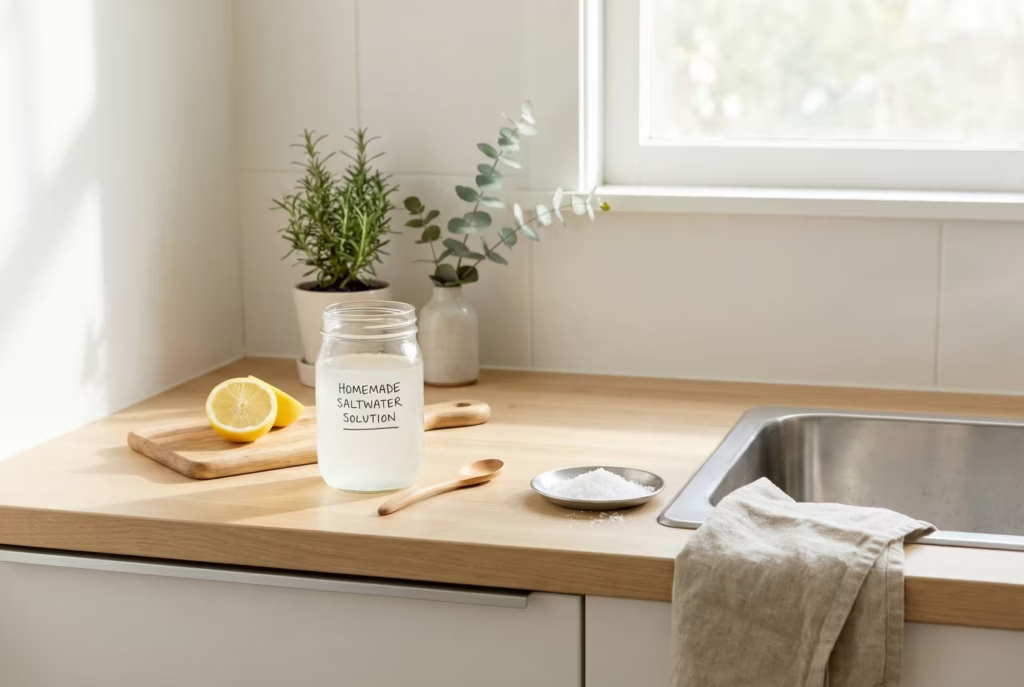
Salt water for cleaning might be the simplest eco-friendly way to tackle everything from grimy kitchen sinks to fresh piercings. This humble mix has become a staple among natural cleaning products fans because it works—and costs pennies per litre. Ready to discover practical household and personal-care tips you can try today?
The Science of Using Salt Water to Clean
When you dissolve salt (NaCl) in water, it breaks into sodium and chloride ions that help loosen grime and lift dirt from surfaces. The coarse grains also provide mild abrasive action, scrubbing away stuck-on food without scratching most materials. That’s why a simple sprinkle works wonders on cutting boards and cookware.
Here’s where it gets interesting: through electrolysis, you can transform salt, water and a bit of vinegar into hypochlorous acid—a natural disinfectant that kills bacteria effectively. When an electric current passes through the salt solution, it produces HOCl at the anode and sodium hydroxide at the cathode, creating a powerful yet eco-friendly cleaning agent used in commercial disinfectants.
That said, salt water has its limits. It won’t replace heavy-duty bleach for deep sanitisation in medical settings or tackle mould in every scenario. For everyday household cleaning, though, it’s a brilliant choice.
5 Household Surfaces Salt Water Cleans Brilliantly
1. Cutting Boards & Wooden Utensils
Sprinkle coarse salt generously over your wooden board, then scrub with half a lemon, squeezing as you go. The combination acts as a mild abrasive whilst cleaning with lemon naturally deodorises and lifts stains. Let it sit for five minutes, scrape off the grey residue with a spatula, then wipe with a damp cloth.
You’ll need: Coarse salt, lemon half, spatula, clean cloth.
2. Degreasing the Kitchen Sink
Salt breaks down grease beautifully on stainless steel. Sprinkle a handful directly onto your kitchen Sink, add a few drops of washing-up liquid, then scrub in circles with a sponge. Rinse with hot water to reveal a sparkling finish.
You’ll need: Salt, washing-up liquid, sponge, hot water.
3. Ovens and Baking Trays
While trays are still warm (not hot), sprinkle a thick layer of salt to absorb excess grease. For burnt-on spots, add hydrogen peroxide or rub with a lemon half dipped in salt, then scrub and rinse.
You’ll need: Salt, lemon (optional), warm water.
4. Brass, Copper & Metal Fixtures
Mix equal parts salt and flour, add vinegar to form a paste, then rub onto tarnished metal with a soft cloth. The salt’s abrasive action restores shine without scratching. Rinse and buff dry.
You’ll need: Salt, flour, vinegar, soft cloth.
5. Drains and Rubbish Bins
Pour half a cup of salt down slow drains, follow with boiling water to dissolve grease. For smelly bins, scrub with a mixture of salt, vinegar and warm water to kill bacteria and neutralise odours.
You’ll need: Salt, vinegar, boiling water, scrubbing brush.
4 Personal Care Uses for Saline Solution
Salt water isn’t just for household chores—it’s a gentle, natural option for several personal-care needs. Understanding the difference between isotonic and hypertonic solutions helps you choose the right strength. Isotonic (0.9% salt) matches your body’s natural salinity and is ideal for sensitive tasks like eye rinses and piercings, while hypertonic (higher salt concentration) can help draw out mucus or soothe sore throats but may irritate delicate tissues.
| Solution Type | Best For |
|---|---|
| Isotonic (0.9%) | Eyes, piercings, wounds |
| Hypertonic (>0.9%) | Nasal rinses, sore throats |
1. Cleaning Ears Gently
Saline Solution can soften earwax and help flush it out safely. Mix ¼ teaspoon of salt into 240 ml of warm water, let it sit in your ear for three to five minutes, then tilt your head to drain. Pat the outer ear dry with a soft cloth. If you have a perforated eardrum or persistent blockage, see a doctor before trying this at home.
2. Rinsing Eyes Safely
For irritated or itchy eyes, a sterile isotonic saline rinse (0.9% salt) can wash away dust and allergens without stinging. Use pre-packaged sterile saline whenever possible; homemade versions risk contamination. Never use tap water directly in your eyes, and if redness or pain persists, consult an optician.
3. Caring for New Piercings
Professional piercers recommend ¼ teaspoon of fine-grain, non-iodised sea salt dissolved in 240 ml of warm water for piercing aftercare. Soak the area twice daily or use a sterile wound-wash spray to avoid getting the ratio wrong. Pat dry with a clean soft cloth and avoid touching the piercing with unwashed hands—improper care can lead to infection.
4. Salt and Water Mouthwash
A simple rinse of ½ teaspoon salt in a cup of warm water can reduce plaque, soothe gum inflammation and freshen breath. Swish for 30 seconds after brushing or following dental work. For a hint of freshness, add one drop of peppermint essential oils and cleaning your mouth naturally, though plain salt water is perfectly effective on its own.
How to Make Homemade Saline Solution Safely
Basic 9-Gram Recipe (Everyday Cleaning)
For general household cleaning, mix 1 teaspoon of salt into 240 ml of tap water. Boil the water first, then let it cool to room temperature before use. If you’re making a smaller batch, use a tablespoon of water with a pinch of salt (roughly ¼ teaspoon). Store your solution in a clean glass jar covered with a soft cloth to reduce plastic waste. This basic mix works brilliantly for cutting boards, sinks and light surface grime.
Safety tips:
- Do boil water before mixing to kill bacteria
- Don’t store for more than 24 hours at room temperature
Best Salt for Cleaning and Eco-Friendly Tips
When choosing the best salt for cleaning, grain size and cost matter. Table salt has fine grains that dissolve quickly, making it affordable but less abrasive for scrubbing. Kosher salt offers larger, flat flakes that work brilliantly as a mild abrasive on cast iron or cutting boards, and it’s easy to pick up with your fingers. Sea salt sits somewhere in between, with grain sizes ranging from 1 to 6 mm, though it’s typically pricier than table or kosher.
To cut plastic waste, buy salt in bulk from zero-waste shops or large cardboard boxes. A salt mixture combining equal parts salt and baking soda delivers gentle scrubbing power for most household surfaces. For stubborn rust on metal fixtures, cream of tartar paste (mixed with hydrogen peroxide) is an ideal choice that dissolves iron oxide naturally.
Quick comparison:
- Table salt: Low cost, widely available, low abrasiveness
- Kosher salt: Moderate cost, high availability, moderate abrasiveness
- Sea salt: Higher cost, moderate availability, moderate abrasiveness
Salt Water vs Other Natural Cleaning Solutions
Salt water earns its place among natural cleaning products, but how does it stack up against other eco-friendly favourites? Baking Soda acts as a mild abrasive and odour-absorber, making it brilliant for scrubbing surfaces and tackling grease. Citric acid brings a power that lifts stains and disinfects countertops, whilst cleaning with lemon also leaves a fresh scent. Soda crystals include heavy-duty degreasing in laundry and unblocking drains.
Many homemade cleaning products combine these ingredients for extra punch: salt mixed with baking soda creates a gentle scouring paste, whilst salt and lemon juice tackle rust on metal.
| Cleaner | Best For | Caution |
|---|---|---|
| Salt Water | Drains, cutting boards, gentle disinfecting | Won’t cut heavy grease alone |
| Baking Soda | Odours, ovens, mild abrasion | Avoid on aluminium |
| Lemon Juice | Stains, polishing metal, freshening | Can damage marble |
FAQ – Salt Water Cleaning
Is salt water good for cleaning?
+Yes, salt water works brilliantly for many household tasks like degreasing surfaces and as a mild abrasive. However, it won’t replace heavy-duty disinfectants for every scenario, so keep stronger natural cleaning products on hand for tougher jobs.
How do you use salt water for cleaning?
+Dissolve one teaspoon of salt in warm water, apply it to the surface with a soft cloth, scrub gently, then rinse thoroughly. Always test on a small area first to avoid damage to delicate materials.
How do you make salt water for cleaning piercings?
+Mix ¼ teaspoon of non-iodised salt in 240 ml of boiled, cooled water to create a sterile 0.9% solution. Soak the piercing for five minutes twice daily, then pat dry gently with a clean soft cloth.
How do you make salt water for cleaning wounds?
+Use ½ teaspoon of salt in 240 ml of sterile or boiled water, cooled to body temperature. Gently irrigate the wound, but always consult a doctor for proper wound care guidance and to rule out infection.
What is cleaning salt?
+Cleaning salt refers to coarse, non-iodised salts like rock salt or kosher salt, formulated for household scrubbing tasks. While not a traditional stain remover, it pairs well with lemon or baking soda for tougher marks.