ChatGPT
 Mistral
 Claude
 Perplexity
 Grok
Spotted black mould creeping into the corners of your bathroom, around your windows or behind furniture? It’s not a pleasant discovery, but it’s a common problem in homes affected by damp and condensation.
The good news is that very small patches of mould on suitable hard surfaces can sometimes be cleaned safely. However, getting rid of black mould means more than wiping away the visible marks. You also need to tackle the moisture that’s allowing it to grow.
Whether you’re dealing with mould on a wall, in your bedroom or around the shower, here’s how to approach the problem, choose the right cleaner and know when to call a professional.
Health note: Damp and mould can affect your health, particularly if you have asthma, allergies or another respiratory condition. If you’re concerned about symptoms, speak to a healthcare professional. This guide draws on UK government and NHS guidance.
What exactly is black mould?
Black mould is a general term for dark-coloured mould that grows in damp conditions.
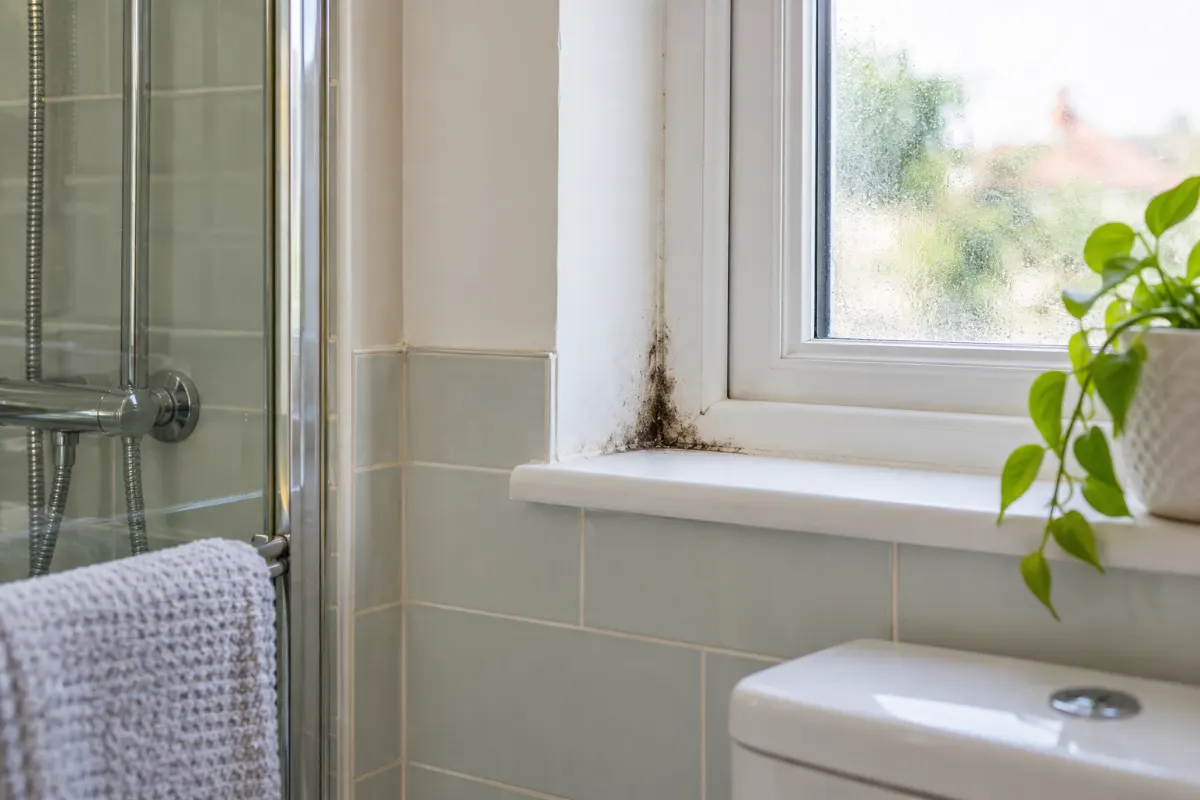
It isn’t a single species. Several types of mould can appear black or dark green, and you can’t reliably identify them by colour alone.
One species commonly associated with the term is Stachybotrys chartarum, but not every patch of black mould belongs to this species.
Mould is a type of fungus that grows where moisture is present. In homes, it often develops because of:
- Condensation on cold surfaces
- Poor ventilation
- Leaking pipes or roofs
- Water damage
- Inadequate heating or insulation
- Persistent damp in walls or floors
You might notice dark spots around bathroom tiles, window frames, ceilings or behind furniture.
Some mould grows in hidden areas, so a musty smell without visible patches can also be a sign that further investigation is needed.
The important thing is to identify where the moisture is coming from rather than focusing only on the colour of the mould.
Is black mould dangerous to your health?
Damp and mould can affect anyone’s health, but some people are more vulnerable than others.
According to UK government health guidance, damp and mould mainly affect the airways and lungs, although they can also irritate the eyes and skin.
Possible health effects include:
- Coughing and wheezing
- A runny or blocked nose
- Sneezing and other allergy symptoms
- Shortness of breath
- Eye irritation
- Skin irritation or eczema
- Worsening asthma symptoms
Exposure to damp and mould is also associated with an increased risk of certain respiratory infections.
Who is most at risk?
Some people are more likely to experience health problems from damp and mould, including:
- Babies and young children
- Older people
- People with asthma or other lung conditions
- People with allergies
- People with weakened immune systems
- People with certain long-term health conditions
You can’t determine how harmful mould is simply by looking at its colour.
There’s also no reliable visual way to tell whether a particular patch produces mycotoxins.
If you have persistent coughing, wheezing or other symptoms that concern you, speak to your GP.
Don’t wait for symptoms to develop before addressing damp and mould in your home.
What are the dangers of mould in a bedroom?
Finding mould in your bedroom can be particularly concerning, especially if it appears near your bed, behind a wardrobe or around a window.
Bedrooms are spaces where we spend several hours every night, so ongoing exposure to damp and mould deserves attention.
Mould can release spores, allergens and irritants into the indoor environment. These may trigger allergic reactions or worsen existing respiratory conditions, including asthma.
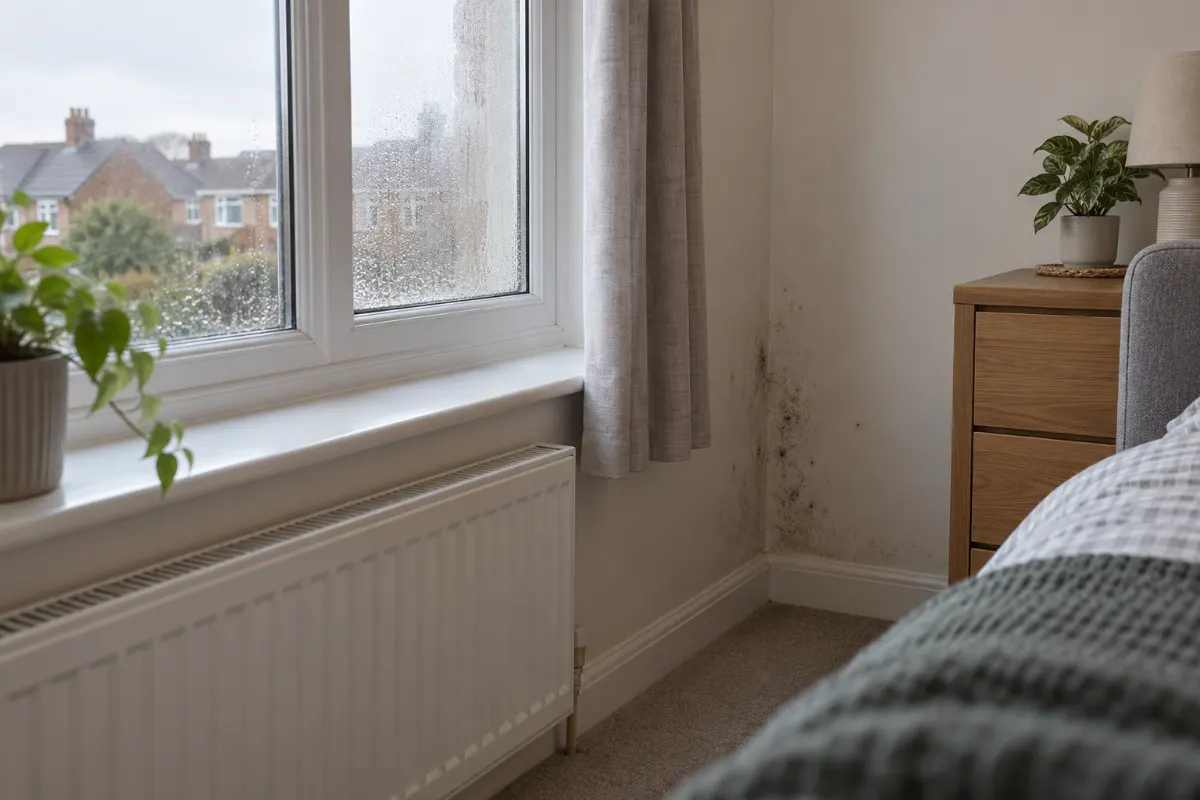
However, the health risk depends on several factors, including the extent of the damp, the duration of exposure and individual vulnerability.
Where does bedroom mould usually appear?
Common places include:
- Behind wardrobes and large furniture
- Around windows and window frames
- On external walls
- In cold corners
- Behind wallpaper
- Near areas affected by leaks or condensation
Furniture placed directly against a cold or damp wall can restrict airflow, making it harder for moisture to escape.
What should you do if you find mould in your bedroom?
Don’t ignore it or simply cover it with paint.
Check for signs of condensation, water damage or leaks, and report the problem to your landlord if you’re renting.
Very small patches on suitable hard surfaces may be manageable with an appropriate cleaning product.
However, mould on wallpaper, plasterboard, carpets or other absorbent materials may require professional assessment.
If mould covers a large area, keeps returning or appears behind furniture and wall coverings, ask a qualified professional to investigate.
If someone sleeping in the room has asthma or another condition that increases their vulnerability, seek advice promptly.
How to get rid of black mould safely
The right approach depends on how much mould is present, where it’s growing and what’s causing the damp.
Very small patches on suitable hard surfaces may be manageable with an appropriate mould and mildew cleaner.
However, larger areas, recurring mould or mould affecting porous materials may require professional assessment and removal.
Before you start cleaning
Take a few precautions before dealing with any mould.
- Wear protective equipment: Use suitable gloves, eye protection and a mask appropriate for the task.
- Ventilate the room: Open a window during and after cleaning where possible.
- Keep the affected area contained: Close doors to other rooms to help prevent spores spreading.
- Follow product instructions: Use a cleaner suitable for the surface and observe the recommended contact time.
- Avoid dry brushing: Scrubbing dry mould can release particles into the air.
- Never mix cleaning chemicals: In particular, mixing bleach with vinegar or other products can release dangerous gases.
If you have asthma triggered by mould, a weakened immune system or another condition that puts you at greater risk, avoid cleaning mould yourself.
Step 1: Check the extent of the problem
Look at the affected area before reaching for cleaning products.
A few small spots on a bathroom tile are different from a large patch spreading across a bedroom wall.
Check whether the surface is hard and washable or porous and absorbent.
If mould covers a large area, keeps returning or appears to be growing inside walls or other building materials, seek professional advice.
Step 2: Choose a suitable mould cleaner
For a very small patch on a suitable hard surface, use a mould and mildew remover approved for that material.
Follow the instructions on the product label, including any requirements for ventilation, protective equipment and rinsing.
Don’t assume that an ordinary bathroom spray or homemade mixture is suitable for removing mould.
Step 3: Remove the visible mould
Apply the cleaner according to its instructions.
Use a suitable cloth or sponge to remove the mould without unnecessarily disturbing the affected area.
Avoid aggressive dry scrubbing, particularly on painted surfaces, grout or other materials that can be damaged.
Dispose of contaminated cleaning materials safely or clean them according to the product and official guidance.
Step 4: Dry the area thoroughly
Once the mould has been removed and the surface has been rinsed where required, allow it to dry completely.
Leaving moisture behind creates conditions in which mould can return.
Use appropriate ventilation and address any condensation or water leaks contributing to the problem.
Step 5: Find and fix the source of moisture
This is the most important step.
Cleaning visible mould won’t solve the problem if the wall, ceiling or window area remains damp.
Check for:
- Leaking pipes
- Condensation
- Damaged window seals
- Poor ventilation
- Roof or gutter problems
- Cold surfaces caused by inadequate insulation
- Water entering through external walls
Some problems can be reduced through everyday moisture management. Others require repairs or improvements to the building.
If you’re renting, report damp and mould to your landlord or property manager promptly.
What is the best mould remover for your home?
The best mould remover depends on where the mould is growing, the surface material and the extent of the problem.
There isn’t one product that’s suitable for every situation.
For very small patches on hard, washable surfaces, a mould and mildew remover designed for that material may be appropriate.
However, cleaning products aren’t always enough for mould affecting porous materials such as plasterboard, wallpaper or carpets.
Choosing a mould remover for walls
If you’re looking for a mould remover for walls, first check what the wall is made of and whether the surface is washable.
A product suitable for bathroom tiles may damage painted plaster or wallpaper.
Before applying anything:
- Check the product’s compatibility with painted or plastered surfaces.
- Read the instructions and safety warnings.
- Test it on a small, inconspicuous area if recommended.
- Avoid soaking the wall with cleaning solution.
- Follow the required contact time and drying instructions.
Don’t use a strong bathroom cleaner on painted walls simply because both surfaces have black mould.
If the wall is soft, bubbling, damp beneath the surface or repeatedly affected by mould, cleaning products alone won’t solve the problem.
Which mould cleaners should you avoid?
Be particularly cautious with:
- Homemade bleach mixtures
- Vinegar combined with bleach or other chemicals
- Abrasive cleaning products on delicate surfaces
- Products not intended for the affected material
- Ordinary household sprays that make unsupported mould-removal claims
For small patches on suitable hard surfaces, use a mould and mildew product according to its label.
For larger or persistent problems, seek professional advice instead of trying progressively stronger chemicals.
Removing mould from walls: what works?
Mould on walls needs particular care because painted plaster, wallpaper and plasterboard can absorb moisture.
The right treatment depends on the surface and how deeply the damp has affected it.
Small patches on painted walls
If the mould is limited to a very small area and the surface is sound and washable, a suitable mould cleaner may help.
A cautious approach is to:
- Check that the wall is dry enough and suitable for cleaning.
- Wear appropriate protective equipment.
- Apply a compatible mould remover according to its instructions.
- Remove the visible mould gently without dry brushing.
- Rinse if the product requires it.
- Allow the wall to dry completely.
- Investigate the moisture source.
Avoid soaking plasterboard or damaging the paint.
If the surface is peeling, soft or crumbling, stop and seek professional advice.
What if mould is growing inside a wall?
Visible mould doesn’t automatically mean that insulation or structural materials are affected.
However, recurring mould, damp patches, damaged plaster or a persistent musty smell may indicate a problem behind the surface.
Don’t remove wallpaper, plasterboard or insulation yourself if you suspect hidden mould.
A qualified damp specialist can assess the moisture problem and determine whether further investigation or remediation is necessary.
Can anti-mould paint help?
Anti-mould paint may help protect suitable surfaces after the underlying problem has been addressed.
However, it won’t repair leaks, improve inadequate ventilation or dry out water-damaged building materials.
Painting over visible mould without proper treatment is unlikely to provide a lasting solution.
How to get rid of black mould in the bathroom
Bathrooms are particularly prone to mould because showers and baths produce warm, moist air.
You may notice dark patches around tiles, grout, shower screens and silicone sealant.
Which bathroom black mould remover should you use?
For very small patches on compatible bathroom tiles or other hard surfaces, a mould and mildew cleaner intended for bathrooms may be suitable.
Check that the product can be used on your specific surface, especially if you have natural stone, painted surfaces or delicate sealant.
Follow the instructions carefully and use the required protective equipment.
Don’t assume that a bathroom mould remover is appropriate for walls, ceilings or every type of grout.
Cleaning small patches on bathroom surfaces
For small amounts of mould on compatible hard surfaces:
- Check that the surface is suitable for the cleaning product.
- Put on appropriate protective equipment.
- Apply a mould and mildew cleaner according to the label.
- Gently remove the mould with a suitable cloth or sponge.
- Rinse if required.
- Dry the area thoroughly.
Take care when cleaning grout or sealant, as aggressive scrubbing can damage them.
If mould has penetrated silicone sealant, cleaning the surface may not be enough. The sealant may need replacing.
How to prevent mould returning in the bathroom
A few simple habits can help reduce moisture:
- Use an extractor fan when showering and afterwards.
- Wipe excess water from shower screens and tiles.
- Keep ventilation systems clear and working.
- Repair leaking taps and shower fittings.
- Allow damp surfaces to dry between uses.
If your bathroom doesn’t have adequate ventilation, cleaning alone may not prevent recurring mould.
How to get rid of black mould around windows
Window frames and surrounding walls are common places for mould to develop.
Condensation often forms when warm, moist indoor air meets cold glass or window surfaces.
Over time, repeated moisture can encourage mould growth around seals, frames and nearby walls.
Cleaning mould around window frames
For very small patches on suitable hard surfaces, use an appropriate mould and mildew cleaner.
Check the product’s compatibility with the frame material, particularly if you have painted timber, aluminium or delicate sealant.
Follow the instructions carefully and dry the cleaned area thoroughly.
If mould appears to have penetrated wooden frames or surrounding plaster, seek advice rather than repeatedly applying cleaning chemicals.
How to reduce window condensation
To help prevent moisture building up:
- Wipe away condensation when it appears.
- Use existing ventilation openings as intended.
- Ensure extractor fans are working properly.
- Avoid blocking ventilation with furniture or curtains.
- Check damaged seals and window fittings.
- Keep rooms adequately heated where possible.
If windows remain heavily affected by condensation despite reasonable ventilation and heating, the property may need further assessment.
Can you remove black mould with vinegar?
White vinegar is often suggested as a homemade mould remover.
However, claims that vinegar kills 80% of mould species or permanently prevents regrowth aren’t sufficiently supported for general household advice.
Its acidity can also damage certain surfaces.
UK government guidance recommends using appropriate mould and mildew cleaning products rather than relying on bleach or unverified homemade treatments.
For small patches on suitable hard surfaces, choose a product intended for mould removal and follow its instructions.
Never mix vinegar with bleach. The reaction can release toxic chlorine gas.
What about bicarbonate of soda?
Bicarbonate of soda is often used for everyday household cleaning.
However, it shouldn’t be treated as a proven solution for removing mould from building materials.
A bicarbonate paste may remove some visible dirt, but that doesn’t mean it will eliminate mould or prevent it from returning.
For actual mould growth, use an appropriate treatment for the affected surface and address the moisture problem.
Is bleach effective against black mould?
Bleach can affect mould on some hard surfaces, but it isn’t the preferred general solution for household mould removal.
It may damage materials, irritate the eyes and airways, and create dangerous fumes if mixed with incompatible cleaning products.
UK government guidance recommends suitable mould and mildew removers in preference to bleach for household mould cleaning.
Avoid making your own bleach mixtures for mould removal.
If a product contains bleach, follow its label carefully and never combine it with vinegar, ammonia or another cleaning product.
Remember that removing or killing surface mould isn’t enough if moisture continues to enter the affected area.
When should you call a professional for mould treatment?
Not every small mould mark requires specialist treatment, but certain situations shouldn’t be handled as an ordinary cleaning job.
Seek professional advice if:
- Mould covers a large area.
- It keeps returning after cleaning.
- You suspect mould behind walls or inside building materials.
- The property has significant water damage.
- Mould is affecting carpets, insulation or other porous materials.
- The cause of the damp isn’t clear.
- Someone in the household is particularly vulnerable to mould-related health problems.
A qualified damp specialist or appropriate building professional can help identify the underlying cause and recommend suitable repairs or remediation.
If you rent your home, report the issue promptly to your landlord or housing provider.
How to prevent black mould coming back
Preventing mould means reducing persistent moisture and addressing the problems that allow it to develop.
Control condensation
Condensation can develop during everyday activities such as cooking, showering and drying clothes indoors.
Use extractor fans, wipe away excess moisture and maintain appropriate ventilation.
Simple habits can help, but they shouldn’t replace necessary repairs or improvements to heating, insulation and ventilation.
Improve ventilation
Ventilation allows moist air to escape.
Make sure extractor fans and other ventilation systems are working and maintained properly.
If your home regularly suffers from condensation, a ventilation specialist may be able to assess whether improvements are needed.
Fix leaks promptly
Check for leaking pipes, damaged roofs, blocked gutters and faulty window seals.
Even a small leak can create persistent dampness if it goes unnoticed.
Report repairs promptly if you’re renting.
Keep your home adequately heated
Cold walls and surfaces can encourage condensation.
Maintaining suitable indoor temperatures, alongside effective ventilation and adequate insulation, may help reduce the risk.
However, heating alone won’t resolve structural damp or water leaks.
Consider a dehumidifier
A dehumidifier can help reduce excess moisture in some rooms.
It may be useful while other improvements are being arranged, but it isn’t a substitute for fixing the underlying problem.
Check affected areas regularly
Pay particular attention to bathrooms, bedrooms, kitchens, window frames and places where damp has appeared before.
If mould returns, investigate the cause rather than simply cleaning the same patch again.
Frequently asked questions
Can I remove black mould myself?
Very small patches on suitable hard surfaces may be cleaned using an appropriate mould and mildew remover, provided you follow the safety instructions.
Larger areas, recurring mould, hidden mould or mould affecting porous materials may require professional removal. People particularly vulnerable to mould exposure should avoid cleaning it themselves.
What is the best mould remover for walls?
The best mould remover for walls depends on the wall material and the extent of the problem.
A product suitable for painted, washable surfaces may help with very small patches, but mould affecting plasterboard, wallpaper or damp building materials may require professional treatment.
What is the best way to clean black mould?
For a very small amount of mould on a suitable hard surface, use a mould and mildew cleaner according to its instructions, remove the visible mould and dry the area thoroughly.
The most important step is identifying and correcting the moisture problem that caused it.
Can black mould be killed with bleach?
Bleach can affect mould on certain surfaces, but UK government guidance recommends suitable mould and mildew cleaners instead.
Bleach doesn’t fix the underlying damp problem and must never be mixed with vinegar or other cleaning products.
Is black mould in a bedroom dangerous?
Damp and mould in a bedroom can affect respiratory health, particularly for people with asthma, allergies or other vulnerabilities.
It’s important to address the mould and its moisture source promptly rather than simply covering the marks.
What kills mould permanently?
No cleaning product can guarantee that mould will never return.
Effective treatment involves removing existing mould, finding and fixing the source of moisture, and improving the conditions that allowed it to grow.
Is it safe to clean black mould yourself?
It depends on the extent of the mould, the affected material and your health.
Very small amounts on appropriate hard surfaces may be manageable with suitable protection and cleaning products.
If the mould is extensive, hidden, recurring or linked to significant damp, seek professional advice.
How do you clean mould with vinegar?
Although vinegar is often recommended online, it’s not a reliable general solution for removing household mould.
For small patches on suitable hard surfaces, an appropriate mould and mildew cleaner is preferable.
Never combine vinegar with bleach, and don’t rely on homemade treatments to solve persistent damp problems.
How do you stop black mould growing on walls?
Start by identifying why the wall is damp.
Possible solutions include repairing leaks, improving ventilation, addressing cold surfaces and fixing building defects.
Cleaning visible mould is important, but it won’t prevent regrowth if the moisture problem remains.
Should I tell my landlord about black mould?
Yes. If you’re renting and notice damp or mould, report it to your landlord or housing provider promptly.
Describe where the mould appears and whether there are signs of leaks, condensation or water damage.
Keep a record of the problem and any communication about repairs.
Can a regular domestic cleaner remove black mould?
Standard domestic cleaning isn’t the same as specialist mould removal.
Routine cleaning can help maintain bathrooms, kitchens and other household surfaces, but significant mould growth, recurring damp and contaminated building materials require appropriate assessment and treatment.