Résumer cet article avec :
 ChatGPT
 Mistral
 Claude
 Perplexity
 Grok
Grok
Your pillows work hard every night, but when did you last give them a proper wash? If you’re wondering how to wash pillows correctly to avoid ruining them, you’re not alone. We know it seems daunting – nobody wants to ruin their favourite pillow. The good news is that most pillows can be safely cleaned at home with the right approach, keeping them fresh and extending their life.
Check your pillow’s care label first
Before you start any cleaning method, locate that little tag sewn into your pillow’s seam. This care label holds the key to keeping your perfect pillow in top condition.
Most care labels use symbols rather than words, but don’t worry – they’re easier to decode than you think. Look for these common indicators:
- Machine wash symbol (washing basin): Safe for your washing machine
- Hand wash only (hand in basin): Requires gentle hand cleaning
- Dry clean only (circle): Professional cleaning needed
- Temperature numbers: Maximum warm water temperature allowed
Foam pillows and latex pillows often require special care, while cotton and synthetic fills are typically machine-friendly. No label? Check the manufacturer’s website or err on the side of caution with a gentle cycle and small amount of detergent.
The instructions on the label will save you from turning your beloved pillow into an expensive mistake.
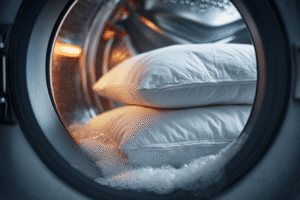
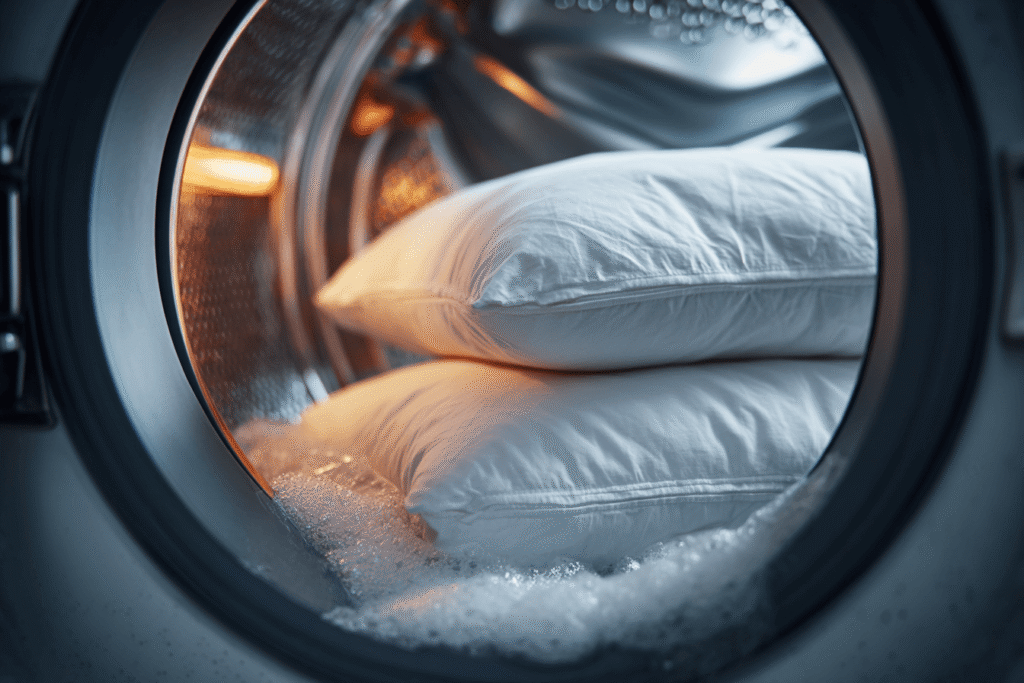
Machine washing pillows: the proper way
Washing feather and down pillows safely
Feather and down pillows need extra care, but they’re surprisingly resilient when washed properly. Start by checking for any tears in the fabric – mend these first to prevent filling from escaping during the wash.
Use your washing machine’s gentle cycle with cold water and just a small amount of detergent – too much soap causes clumping. Skip the fabric softener entirely, as it weighs down the feathers. Instead, add half a cup of white vinegar to keep them fluffy.
Key washing tips:
- Wash two pillows together for better balance
- Use dryer balls or clean tennis balls during drying
- Set dryer to low heat and expect a few hours of drying time
- Fluff the pillows every 30 minutes during drying
The pillow protector you use daily will reduce how often you need to wash – aim for every six months rather than monthly cleaning.
Can memory foam pillows go in the washer?
Memory foam pillows present a tricky situation – most shouldn’t go near your washing machine. The foam structure breaks down under aggressive agitation, turning your supportive pillow into a lumpy mess.
However, shredded memory foam pillows often buck this trend. Check your care label carefully, as some are designed for machine washing on a gentle cycle with cold water.
Solid memory foam washing guidelines:
- Hand wash only in lukewarm water
- Use a small amount of detergent and gentle squeezing
- Air dry completely to prevent mould – this takes a few hours
- Never wring or twist the foam
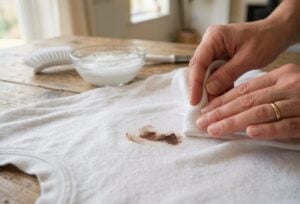
Better option? Invest in washable pillow protectors and spot-clean stains with baking soda. Your memory foam pillow will thank you for the gentler approach.
Synthetic and cotton pillow washing tips
Good news – synthetic and cotton pillows are the easiest to tackle. These sturdy materials handle machine washing beautifully, making your cleaning routine simple.
You can also read our article about cleaning your mattress.
Basic washing approach:
| Pillow Type | Water Temperature | Cycle Setting | Drying Method |
|---|---|---|---|
| Cotton fill | Warm water | Gentle cycle | Low heat with dryer balls |
| Synthetic fill | Warm water | Normal cycle | Medium heat, check regularly |
Remove pillowcases first and wash two pillows together for balance. Use your regular small amount of detergent – nothing fancy needed. Dust mites hate hot washing, so these materials give you that advantage.
Air dry in direct sunlight when possible to eliminate odours naturally. If your pillow feels lumpy after washing, don’t panic – a good shake and a few hours on the drying rack usually sorts things out.
How do you get yellow stains out of pillows?
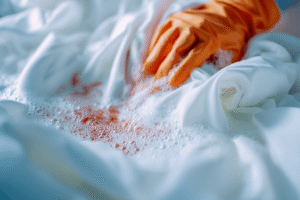
Yellow stains from sweat and body oils don’t mean you need a new one – they’re surprisingly manageable with the right approach.
Pre-treatment options:
- Mix baking soda with water into a paste, apply to stains for 30 minutes
- Combine equal parts white vinegar and warm water for a natural solution
- Use hydrogen peroxide directly on stubborn marks
Machine washing method:
| Stain Type | Pre-treatment | Wash Temperature |
|---|---|---|
| Fresh sweat stains | Baking soda paste | Warm water |
| Set-in yellowing | Vinegar soak | Hot water (if care label allows) |
Add half a cup of white vinegar to your wash cycle alongside regular detergent. The acidity breaks down oils while brightening fabric naturally.
Top tip: Use pillow protectors underneath your pillowcases to catch sweat before it reaches the pillow itself – much easier than deep cleaning later.
Drying pillows without going lumpy
The secret to fluffy, lump-free pillows lies in proper drying technique rather than expensive equipment.
Machine drying essentials:
| Method | Heat Setting | Key Addition |
|---|---|---|
| Tennis balls | Low to medium | 2-3 clean balls in socks |
| Dryer balls | Low heat | Wool balls work best |
Stop your dryer every 15 minutes to manually fluff and check progress. Complete drying typically requires two full cycles – patience prevents that dreaded lumpy texture.
Air drying alternative: Lay pillows flat on a drying rack in direct sunlight when possible. Turn and massage every hour to break up clumps as they form. The fold test works perfectly here – if your pillow in half stays folded after drying, it needs more time.