Résumer cet article avec :
 ChatGPT
 Mistral
 Claude
 Perplexity
 Grok
Grok
Leather is durable, elegant, and built to last — but when stains appear, they can feel permanent. Unlike fabric, leather does not absorb and release stains in the same way. Instead, marks sit on or slightly penetrate the surface of the leather, making the cleaning process more delicate and precise.
Whether you are dealing with a sofa, car seats, or a favourite leather handbag, the key is to act quickly and use the right method. With the correct leather stain remover, gentle handling, and the right technique, most common stains can be removed without damaging the material.
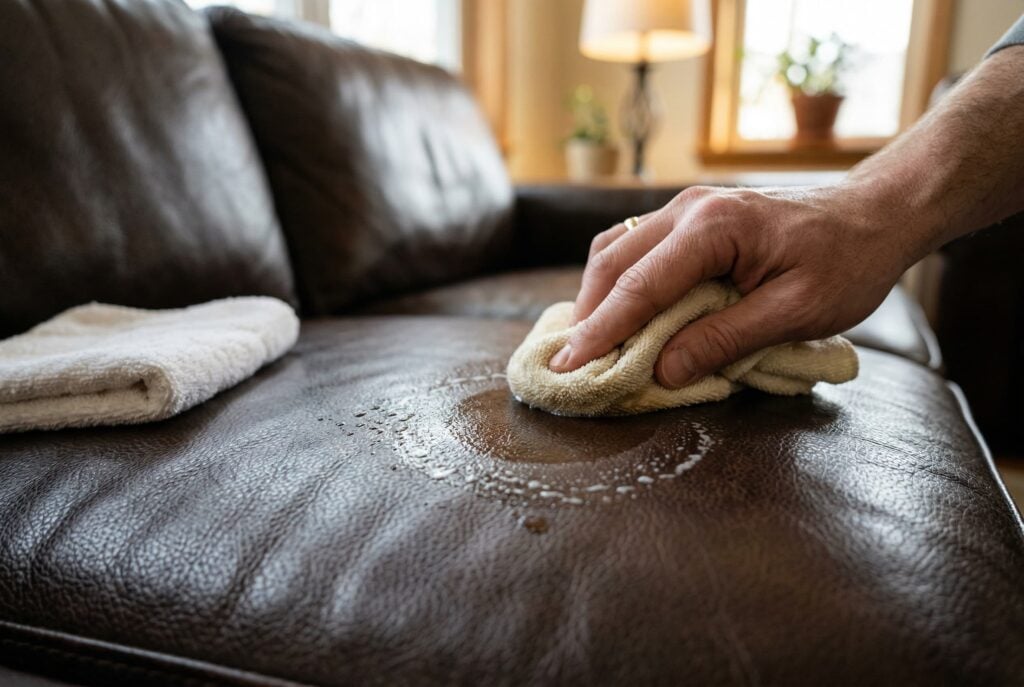
Cleaning leather sofa stains
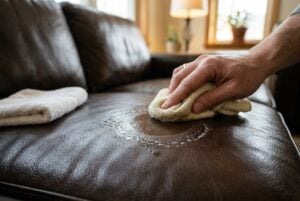
A leather sofa is one of the most exposed leather items in the home. Daily use leads to spills, body oils, and perspiration stains, all of which can affect the finish over time.
Start by wiping the area with a damp cloth using cold water. This removes surface dirt without pushing the stain deeper into the material. Always use a clean towel and avoid soaking the leather, as excess moisture can damage the protective coating.
For deeper stains, apply a small amount of leather stain remover or a blend of mild solvents. Work in a circular motion, gently lifting the stain without scrubbing. This protects the surface of the leather while gradually removing the mark.
Removing stains from leather
When removing stains from leather, the type of stain matters. Oil, ink, and dye transfer all require slightly different approaches.
Always begin with a gentle clean using a damp cloth. If the stain persists, move to a targeted solution. This layered approach is the safest way to treat various types of stains without causing damage.
For example, food-based stains behave similarly to situations where you might clean a tomato sauce stain or clean a curry stain, but leather requires far less moisture and more controlled application.
Stain removal on car seats
Leather car seats face constant exposure to friction, spills, and sunlight. This makes stain removal on car seats slightly more complex.
Car owners should avoid harsh scrubbing. Instead:
- Use a damp cloth with cold water
- Apply a small amount of cleaner
- Work gently in a circular motion
Because car interiors are often exposed to direct sunlight, it is important to dry the area naturally and avoid heat, which can crack the leather.
Clean leather safely
To clean leather effectively, you need to respect its structure. Leather is not a uniform material — it varies between faux leather, nubuck leather, and colored leather, each requiring slightly different care.
| Leather Type | Cleaning Method | Notes |
|---|---|---|
| Smooth leather | Damp cloth + mild cleaner | Most durable |
| Faux leather | Mild soap + water | Less sensitive |
| Nubuck leather | Dry cleaning methods | Avoid water |
| Colored leather | Gentle cleaner only | Protect dye |
Using the wrong method can lead to discolouration or damage to the leather products.
Leather spot remover
A leather spot remover is useful for targeting small stains without affecting the surrounding area.
Apply the product to a clean towel, not directly onto the leather. This prevents over-saturation and gives better control. Work gently and allow the area to dry naturally.
This technique is especially effective for stubborn stain areas that require precision.
Ink leather remover
Ink stains are among the most difficult to remove from leather. They penetrate quickly and bond with the surface.
Use a specialised ink leather remover or a blend of mild solvents. Apply with a cotton pad and dab gently — never rub aggressively.
This approach is similar in precision to methods used when you clean an ink stain from delicate fabrics, where control is essential.
What removes stains from leather?
The most effective solutions depend on the stain type, but common options include:
- Mild soap solutions
- White vinegar (diluted)
- Specialised leather stain remover
- Absorbent powders for grease
Each method targets different various types of stains, making it important to identify the stain before cleaning.
Can leather be permanently stained?
Yes, some stains can become permanent on leather. Water damage, deep oil penetration, and dye transfer represent the most challenging scenarios. When liquid sits too long or penetrates beyond the surface, it may alter the leather’s structure permanently.
White vinegar solutions work well for fresh marks, but once stains set into the fibres, removal becomes difficult. Leather except suede responds better to early treatment — the longer you wait, the harder restoration becomes.
However, many seemingly permanent marks can still be improved. Professional restoration techniques or stains from coated leather treatments may lighten severe discolouration. Even stubborn cases aren’t always hopeless, though complete removal isn’t guaranteed. Store leather properly and treat spills immediately to prevent permanent damage.
How do you remove colour transfer from leather?
Color transfer happens when dye from clothing, particularly dark denim, bleeds onto your leather items. Don’t panic — we’ve got your back with these tried-and-tested methods.
Act quickly, that’s the golden rule. The sooner you tackle color transfer, the better your chances of complete removal. Once dye penetrates deep into the leather surface, it becomes much trickier to shift.
Here’s your step-by-step approach:
| Method | Best For | What You’ll Need | Risk Level |
|---|---|---|---|
| Gentle cleaning | Fresh transfer | Damp cloth, mild leather cleaner | Low |
| Eye makeup remover | Light color transfer | Cotton pad, eye makeup remover | Moderate |
| Specialist cleaner | Stubborn dye stains | Leather dye transfer remover | Low |
| Alcohol solution | Set-in stains | Isopropyl alcohol, cotton swab | High |
Start with the gentlest option first. Use a damp cloth with cold water to remove any surface residue. If that doesn’t shift it, try a mild leather cleaner applied with a clean towel in circular motions.
For tougher cases, eye makeup remover works surprisingly well — many of our customers swear by it! Test on a small, hidden area first, then gently dab the affected spot with a cotton pad.
Professional leather dye transfer cleaners are your heavy-duty option. These specialized products lift color without damaging the leather finish, but always follow the manufacturer’s instructions to the letter.
Remember the golden rules: Never rub aggressively, always test products first, and condition your leather afterwards to restore moisture. If you’re dealing with expensive items or the stain won’t budge, consider professional leather restoration — sometimes it’s worth calling in the experts.
Want to prevent future mishaps? Apply a leather protector regularly — it creates a barrier that makes color transfer much easier to remove next time round.
How do you remove stains from leather?
The general step-by-step process is as follows:
- Wipe with a damp cloth and cold water
- Apply a suitable cleaner
- Work gently in a circular motion
- Dry with a clean towel
This method protects the surface of the leather while lifting the stain gradually.
How do you remove marks from leather?
Marks and scuffs can often be removed with gentle cleaning and conditioning.
After cleaning, apply a leather conditioner. This restores moisture and helps blend the treated area with the rest of the surface.
How do you clean spots on leather?
Spot cleaning requires precision. Use a clean towel and apply the cleaner only to the affected area.
Avoid spreading the stain by working outward from the centre.
How do you remove stains from a leather bag?
A leather handbag is often exposed to oils, dirt, and daily wear.
Clean the affected small area first before treating the entire bag if needed. Always test products to avoid damaging the finish.
How do you remove a grease stain from leather?
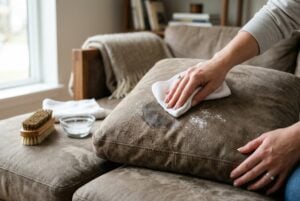
Grease stains require absorption first. Apply baking soda and leave it for a few hours to draw out the oil.
Then wipe gently with a damp cloth. This method is similar to techniques used when you want to remove an oil stain, but adapted for leather’s lower absorbency.
How do you remove stains from a leather sofa?
Follow the same method as general cleaning, but work in sections. Avoid soaking the material and use a clean towel to control moisture.
How do you remove leather stains from fabric or clothes?
When leather transfers stains onto fabric, treat the fabric separately using appropriate methods.
For example, dye transfer or spills may require approaches similar to cleaning a red wine stain or even a chocolate stain, depending on the source.
How do you remove stains from a leather couch?
A leather couch requires consistent care. Clean regularly to prevent buildup and treat stains as soon as they appear.
How do you remove stains from a leather jacket?
Leather jackets require extra care due to their flexibility and exposure.
Spot clean gently and avoid over-wetting. For large stains, consider professional cleaning.
How do you remove stains from leather car seats?
Use gentle cleaners and avoid excessive moisture. Car seats are sensitive to heat and friction, so always dry naturally.
How do you remove stains from leather shoes?
Leather shoes can be cleaned using a damp cloth and conditioner.
Avoid soaking and always restore moisture after cleaning.
Practical tips for leather care
Maintaining leather is easier than removing stains later. Follow these tips:
- Clean spills immediately
- Avoid direct sunlight
- Use a leather conditioner regularly
- Test products on a small area
Even when dealing with difficult stains — similar to cases where you might need to get stains out of suede — patience and gentle handling are essential.
Leather cleaning methods comparison
| Method | Best For | Risk Level |
|---|---|---|
| Damp cloth | Light stains | Very low |
| Mild soap | General cleaning | Low |
| Vinegar solution | Odours, light stains | Moderate |
| Leather cleaner | Deep stains | Low |
| Professional cleaning | Severe damage | Very low |
Choosing the right method depends on the stain and the type of leather item.
FAQ
What is the safest way to clean leather?
Use a damp cloth, mild cleaner, and gentle motion. Avoid harsh chemicals and excess water.
Can you use water on leather?
Yes, but only in small amounts. Too much water can damage the surface of the leather.
How often should you clean leather?
Light cleaning should be done regularly, with deeper cleaning as needed.
When should you call a professional?
For stubborn stain issues or valuable leather products, professional cleaning is the safest option.
Leather may seem tricky, but with the right products, a gentle approach, and consistent care, you can keep your leather looking clean and well-maintained for years.