Résumer cet article avec :
 ChatGPT
 Mistral
 Claude
 Perplexity
 Grok
Grok
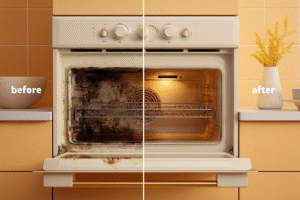
Cleaning an oven is not just an aesthetic problem. Layers of grease, burnt-on food and carbonised spills interfere with heat circulation around the heating elements, generate persistent odours and make everyday cooking less hygienic. Left untreated, this build-up turns oven cleaning into a time-consuming job that requires far more elbow grease than necessary. The good news is that a controlled method using baking soda and white vinegar delivers reliable oven cleaning results without relying on harsh chemicals.
Our professional cleaners use this approach daily because it allows for regular maintenance as well as deeper cleans, protects enamel surfaces and works on the oven floor, walls and oven door equally well.

Baking soda oven cleaner
Baking soda works as an oven cleaner because it is mildly abrasive and alkaline, which means it breaks down grease while remaining gentle on oven coatings. When mixed correctly into a baking soda paste, it adheres to vertical surfaces instead of dripping, allowing consistent contact time. This reduces the amount of physical effort required later and makes the job far more controlled.
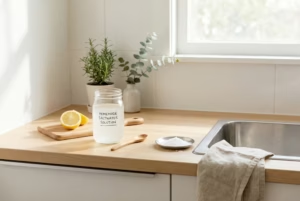
To prepare the paste, use a small bowl and combine baking soda with warm water until thick and spreadable. The paste should be dense enough to stay in place on the oven floor and walls, but soft enough to spread without scratching.
Within this method, effectiveness depends on three key factors embedded in the process:
- thickness of the baking soda paste
- contact time of at least a few hours
- gentle removal using a damp cloth rather than abrasive tools
Used properly, this baking soda oven cleaner is a better way to handle routine oven cleaning without exposing surfaces or people to harsh chemicals.
Clean oven vinegar and baking soda
Baking soda does the main degreasing work, but white vinegar is essential for lifting residue during removal. Once the baking soda paste has dried, spraying vinegar over it triggers a mild chemical reaction that loosens softened grime from enamel and corners.
Use a spray bottle filled with white vinegar and lightly mist the dried paste. Focus on high-build-up areas such as the oven floor, back wall and edges around the heating elements. This step significantly reduces elbow grease and improves results during deeper cleans.
How baking soda and vinegar work together
| Ingredient | Role in oven cleaning | When to use |
|---|---|---|
| Baking soda | Breaks down grease, softens carbon | Applied first, left for a few hours |
| White vinegar | Lifts residue, aids removal | Sprayed during wipe-down |
This pairing is particularly useful when cleaning ovens that have not been maintained regularly.
Best way to clean your oven
The best way to clean your oven is not about speed, but about structure. Rushing the process usually leads to repeated scrubbing and uneven results. A professional method prioritises time over force.
The sequence below is embedded into our routine oven cleaning work:
- remove and clean your oven racks and accessories
- apply baking soda paste to all internal surfaces
- leave to work for a few hours or overnight for deeper cleans
- activate residue with white vinegar
- wipe thoroughly using a damp cloth
This approach ensures consistent oven cleaning results while preserving seals, coatings and heating elements.
Cleaning oven without self clean
Many ovens either lack a self-clean function or perform poorly when using it. High heat cycles can stress heating elements, damage seals and release unpleasant fumes. Cleaning oven without self clean is often the safer and more reliable option.
Baking soda allows full control over the job, works at room temperature and avoids the risks associated with extreme heat. For domestic settings, this remains the better way to maintain an oven long term.
Lemon baking soda oven cleaner
Lemon is not essential for degreasing, but it is useful for odour control. Adding lemon juice to a baking soda paste improves freshness after deeper cleans and leaves the oven smelling clean rather than chemical.
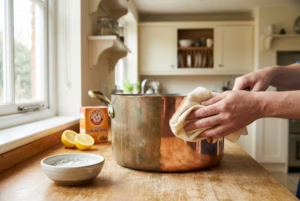
Mix a small amount of lemon juice into the small bowl before applying the paste. This variation is most effective as a finishing step rather than a replacement for white vinegar.
Oven cleaning hacks
Professional cleaners rely on technique rather than shortcuts, but certain habits consistently improve results. Integrated into the method, these adjustments reduce effort and prevent damage:
- always start with the oven floor, where grease is thickest
- avoid scraping near heating elements
- use a damp cloth instead of dry wiping
- allow the baking soda paste to sit for a few hours before removal
These practices limit elbow grease and improve overall oven cleaning efficiency.
Cleaning oven glass
Cleaning oven glass requires patience rather than pressure. Apply baking soda paste directly to the inner oven door glass and leave it for a few hours. This softens baked-on grease without scratching the surface.
When removing, use a damp cloth in circular motions. For stubborn areas, activate with white vinegar using a spray bottle. Avoid blades or abrasive pads, which can permanently mark the glass.
Is baking soda in oven dangerous ?
Baking soda itself is not dangerous, but misuse can cause problems. It should never be heated dry or left in contact with active heating elements.
Safe use within this method involves:
- keeping the oven switched off
- avoiding thick paste on heating elements
- wiping all residue away with a damp cloth before use
When applied correctly, baking soda remains a safe option for oven cleaning.
Deep clean an oven
To deep clean an oven that has been neglected, time is the most important factor. Leaving the baking soda paste overnight allows carbonised grease to soften fully, reducing the need for repeated scrubbing.
For heavily soiled ovens, expect to repeat the process. This staged method is standard for professional deeper cleans and prevents surface damage caused by aggressive products.
Domestic oven cleaners
Commercial domestic oven cleaners often rely on caustic agents. While effective, they introduce fumes and risks, especially in poorly ventilated kitchens.
Baking soda provides a better way to manage routine oven cleaning without exposing the household to harsh chemicals, while still delivering reliable results on the oven floor, walls and oven door.
Non-Toxic Oven Cleaning: The Professional Method
Cleaning oven non toxic is not only about ingredients, but about the entire method. Using baking soda, white vinegar, a spray bottle, a small bowl and a damp cloth allows precise control and repeatable outcomes.
This approach is the professional standard for safe, domestic oven cleaning.
FAQ – Baking soda for oven cleaning
Is it safe to put baking soda in the oven?
+Yes, as long as the oven is switched off and the baking soda residue is completely removed before reheating. Baking soda should never come into direct contact with active heating elements. Used correctly, it is a safe and non-abrasive option for oven cleaning.
What is the best way to clean a very dirty oven?
+For heavy grease and baked-on residue, apply a thick baking soda paste to the interior surfaces and leave it overnight. The next day, spray white vinegar to activate the reaction, then wipe away the softened dirt. This method delivers a deeper clean without damaging enamel or seals.
How do you clean oven glass with baking soda?
+Spread a baking soda paste directly onto the oven door glass and leave it to work for at least 30 minutes. Gently wipe with a damp cloth, then finish with a light spray of vinegar if grease marks remain. Avoid abrasive pads to protect the glass surface.
How do you clean an oven without scrubbing using baking soda?
+The key is contact time. Leaving baking soda paste on oven surfaces for several hours or overnight allows grease to break down naturally. The longer it sits, the less scrubbing is needed, making oven cleaning far easier and safer.
How do you clean oven racks with baking soda?
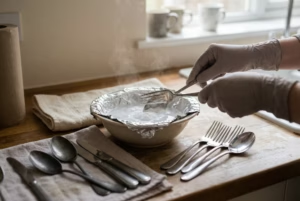
+Remove the racks and soak them in hot water mixed with baking soda for several hours. Once loosened, wipe away grease and residue with a cloth or soft brush, then rinse thoroughly before placing them back in the oven.