Summarise this article with:
 ChatGPT
 Mistral
 Claude
 Perplexity
 Grok
Fingerprints around light switches, scuff marks in the hallway and greasy splashes in the kitchen can make even freshly decorated rooms look a little tired. But before you reach for a sponge, it’s worth knowing how to clean walls without damaging the paint.
The best cleaning method depends on your paint finish and the type of dirt you’re dealing with. Some painted walls can handle a gentle wash, while others may mark if you use too much water or scrub too hard.
From everyday dusting to removing stubborn stains, here’s how to get your walls looking fresh again without ruining the paintwork.
What’s the best way to clean walls?
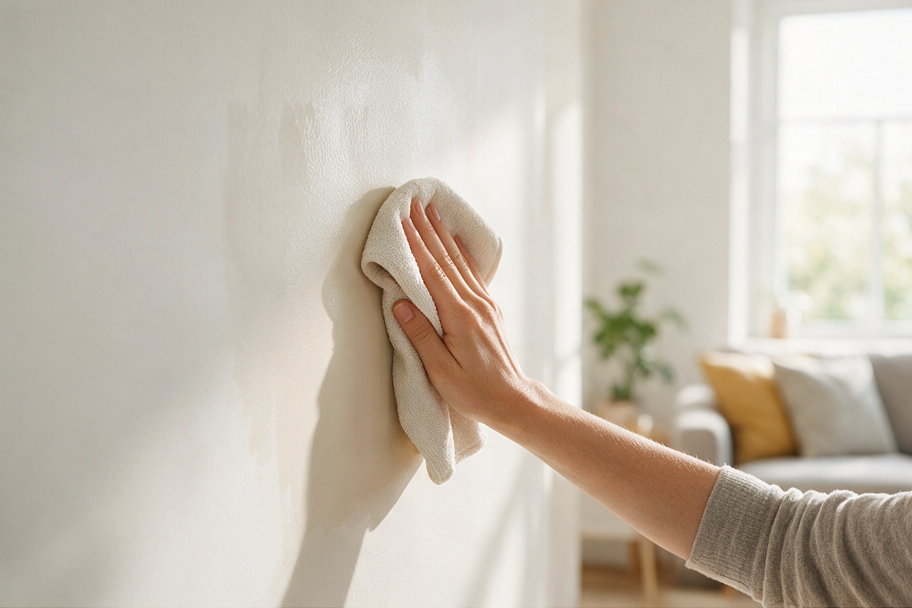
The best way to clean walls is to start with the gentlest method and only use cleaning products when necessary.
For most walls, begin by removing loose dust with a soft microfibre cloth or vacuum brush attachment. If the paint is washable, you can then tackle fingerprints and light grease with a well-wrung-out cloth and a little warm soapy water.
A few basic rules apply:
- Dust the walls before using water.
- Test your cleaning method on a hidden area.
- Use a soft cloth rather than an abrasive sponge.
- Work in small sections without scrubbing.
- Avoid soaking the paint.
- Dry the surface after cleaning.
Always check what type of paint you have before applying water or cleaning products. This makes a big difference to how much cleaning the surface can tolerate.
Know your wall finish before cleaning
Not all painted walls respond to cleaning in the same way.
Matt finishes
Matt paint has a low-sheen appearance that helps disguise small imperfections.
However, some matt finishes mark easily when rubbed or exposed to too much moisture.
For ordinary matt paint, start with gentle dry dusting. If the paint is washable, use a barely damp cloth and very light pressure.
Avoid scrubbing or repeatedly wiping the same spot, as this can create shiny patches.
Some modern washable matt paints are more resistant, so always check the manufacturer’s care instructions.
Satin, eggshell and gloss finishes
Satin, eggshell and gloss paints generally have a more durable surface than traditional matt paint.
This often makes them easier to clean, particularly in kitchens, bathrooms and busy areas.
For suitable washable finishes, mild soapy water and a soft cloth may be enough to remove fingerprints and light grease.
Even with tougher paint, avoid abrasive tools and strong cleaning chemicals that could damage the finish.
Wallpapered and textured walls
Wallpaper needs extra care because some types can be damaged by moisture.
Non-washable wallpaper is usually best cleaned with a soft, dry cloth or vacuum brush attachment.
Washable wallpaper may tolerate gentle wiping, but check the manufacturer’s instructions first.
Textured walls can collect dust in grooves and uneven areas. A soft brush or suitable vacuum attachment can help remove loose dirt.
Cleaning painted walls without damaging the paint
If your walls have a washable finish, a little preparation and a gentle technique can help you remove dirt without leaving marks.
Step 1: Prepare the room
Move smaller pieces of furniture away from the walls and protect nearby floors with an old towel or dust sheet.
Gather your cleaning supplies:
- Soft microfibre cloths
- A non-abrasive sponge
- A bucket of warm water
- Mild washing-up liquid, if suitable for the paint
- A clean, dry towel
- A soft brush or vacuum attachment
Inspect the wall for peeling, flaking or damaged paint before starting.
Keep water away from sockets, switches and other electrical fittings. Never spray cleaning products directly around them.
If the walls have recently been painted, check the manufacturer’s recommended curing time before washing them.
Step 2: Remove dust
Use a soft microfibre cloth or vacuum brush attachment to remove dust.
Work from the top down, paying attention to corners, edges and skirting boards.
Removing dust first helps prevent muddy streaks when you start wiping.
Step 3: Prepare a gentle cleaning solution
For suitable washable paint, add a few drops of mild washing-up liquid to a bucket of warm water.
You don’t need much detergent. Using too much can leave residue on the surface.
For delicate matt paint, start with a barely damp cloth and no detergent unless the manufacturer recommends otherwise.
Step 4: Clean small sections
Dip a soft cloth or sponge into the solution and wring it out thoroughly.
Gently wipe a small area using light pressure.
Avoid scrubbing, even if the stain doesn’t disappear immediately.
On suitable satin or gloss finishes, you may be able to leave a compatible cleaner briefly on a greasy mark if its instructions permit this.
On matt paint, wipe away moisture promptly rather than allowing the solution to sit on the surface.
Step 5: Rinse and dry
If you’ve used detergent, wipe the area with a second, barely damp cloth to remove any residue.
Finish by gently drying the surface with a clean towel.
Once the wall is dry, check for shiny patches, discolouration or other changes to the finish.
If you notice damage, stop cleaning rather than rubbing harder.
What is the best cleaner for painted walls?
| Cleaner | Best suited to | What to consider |
|---|---|---|
| Warm water | Light marks on washable paint | Avoid excess moisture |
| Diluted washing-up liquid | Everyday grease and fingerprints | Rinse away residue |
| Sugar soap | Removing grease before painting | Check compatibility and dilution |
| Dedicated wall cleaner | More stubborn marks | Follow the product instructions |
| Melamine sponge | Certain scuff marks | May damage or polish matt paint |
The best cleaner for painted walls depends on the paint finish and the type of stain.
For everyday dirt and fingerprints, warm water with a little mild washing-up liquid is often enough on suitable washable paint.
For stubborn kitchen grease, a cleaner specifically designed for painted surfaces may be more effective.
If you’re preparing walls for decorating, sugar soap can also be useful.
No single product is suitable for every painted surface, so always test a small area first.
What’s a good alternative to sugar soap?
If you don’t have sugar soap at home, warm water with a small amount of mild washing-up liquid can be a simple alternative to sugar soap for light grease and everyday dirt.
Use a soft, well-wrung-out cloth and wipe the surface gently.
Remove any detergent residue with a second, barely damp cloth, then dry the area.
For heavier grease or walls being prepared for repainting, you may need a dedicated cleaning product.
Avoid using vinegar or bicarbonate of soda as an automatic substitute. Vinegar is acidic, while bicarbonate of soda is mildly abrasive, and both can affect certain paint finishes.
Can you use a melamine sponge on painted walls?
Melamine sponges, sometimes called magic sponges, can help remove certain scuff marks.
However, they’re mildly abrasive and can damage paint if used too firmly.
On matt finishes, they may leave a shiny patch that’s more noticeable than the original mark.
Test a small, hidden area first and rub very lightly.
Stop immediately if the colour or sheen begins to change.
How to use a wall cleaner mop
Cleaning large walls or high ceilings can be awkward with an ordinary cloth.
A wall cleaning mop can make the job easier, especially when you have a lot of surface area to cover.
Can you use a wall cleaner mop on painted walls?
Yes, a wall cleaner mop can be useful for dusting painted walls, provided the mop head is soft and clean.
A flat microfibre mop with an extendable handle is often a practical choice.
For washable walls, you may be able to use it slightly damp, but make sure the mop head is thoroughly wrung out.
Avoid applying too much pressure or using a wet mop on delicate matt paint.
For non-washable finishes, stick to dry dusting.
How to clean ceilings and high walls
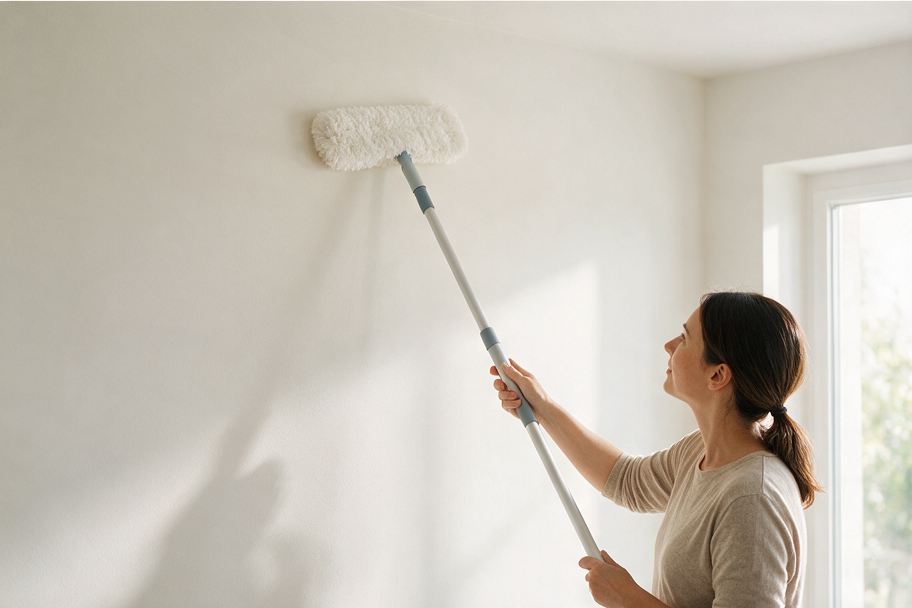
An extendable duster or long-handled microfibre mop can help you reach higher areas without climbing on furniture.
Work gently in small sections and avoid pressing hard against the surface.
For textured or delicate ceilings, dry dusting is usually preferable to wet cleaning.
If an area is beyond your safe reach, use appropriate access equipment or seek professional help.
How to clean marks off painted walls
Different marks need different treatment. The key is to remove the dirt without spreading it or wearing away the paint.
Removing kitchen grease
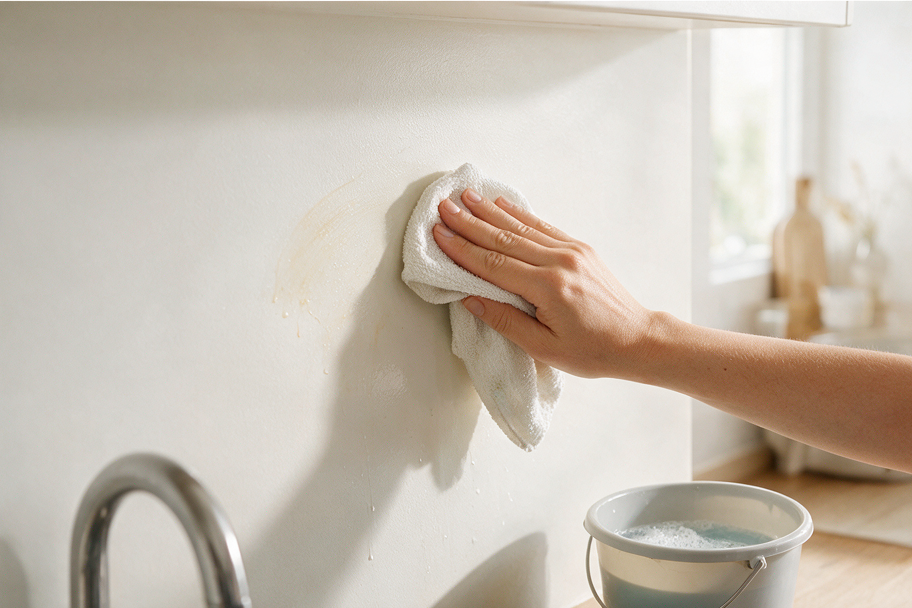
Kitchen walls can collect greasy splashes around hobs, worktops and cooking areas.
For washable paint, start with warm water and a little mild washing-up liquid.
Use a well-wrung-out cloth and gently wipe the affected area.
For stubborn grease, a compatible wall cleaner may help.
Avoid allowing cleaning solutions to run down the wall or collect near electrical fittings.
Removing fingerprints and everyday marks
Fingerprints often appear around doors, light switches and busy family areas.
For washable paint, a lightly damp microfibre cloth may be enough.
Work gently and avoid repeatedly rubbing the same spot.
If the mark doesn’t lift, check whether a suitable painted-surface cleaner is recommended.
Removing scuff marks
Shoes, bags and furniture can leave dark scuff marks on painted walls.
Start with a soft, dry cloth.
If the mark remains, try a barely damp cloth on a compatible washable surface.
A melamine sponge may help with certain scuffs, but it should be used cautiously because it can affect the paint’s sheen.
If the paint itself has been scratched or removed, cleaning won’t repair it. You may need to touch up the area with matching paint.
Removing pen and marker stains
Ink and permanent marker stains can be difficult to remove without damaging paint.
Start with a gentle cleaning method approved for the finish.
Avoid strong solvents, alcohol or abrasive pastes unless the paint manufacturer specifically recommends them.
If the ink has penetrated the coating, a small repair or repaint may be more effective than repeated scrubbing.
How to remove water marks on painted walls
Water marks on painted walls can appear as pale rings, streaks or brownish patches.
Sometimes they’re caused by using too much water while cleaning. In other cases, they may indicate condensation, a leaking pipe or moisture entering through the wall.
If the mark appeared after washing the wall, allow it to dry completely before doing anything else.
For suitable washable paint, gently remove any remaining cleaning residue with a barely damp cloth, then dry the area immediately.
If the mark remains, avoid repeated scrubbing. The paint may have been damaged and could need touching up.
Brown stains, peeling paint or recurring damp patches should be investigated, as cleaning the visible mark won’t fix an underlying moisture problem.
Removing cigarette smoke stains
Cigarette smoke can leave yellow or brown residue on walls and ceilings.
On compatible washable paint, a suitable degreasing cleaner may remove some of the surface staining.
For heavy or long-standing stains, professional surface preparation and repainting may be necessary.
Ordinary cleaning won’t necessarily remove all residues from years of smoking.
How to clean walls before painting
Preparing walls properly before painting helps the new finish adhere and look even.
Simply painting over grease, dust or loose paint can lead to disappointing results.
Start by removing dust and checking the wall for cracks, peeling paint or damp.
Any repairs should be completed before applying a new coat of paint.
How to use sugar soap to clean walls
Sugar soap to clean walls is a common choice in the UK, particularly before decorating.
Despite its name, sugar soap doesn’t contain ordinary household sugar. It’s an alkaline cleaner designed to remove grease and grime.
To use it:
- Check that the existing wall finish is suitable for sugar soap.
- Dilute the product according to its instructions.
- Wear protective gloves if recommended.
- Apply the solution with a soft sponge or cloth.
- Work in manageable sections without soaking the wall.
- Rinse or wipe away residue as directed on the label.
- Allow the surface to dry fully before painting.
Sugar soap is particularly useful for greasy kitchen walls or surfaces with accumulated dirt.
However, it’s not suitable for every delicate finish, so always check the product and paint instructions first.
Do you have to use sugar soap before painting?
Not necessarily.
If the wall is already clean and free from grease, dust and other contamination, a gentler cleaning method may be sufficient.
The important thing is to prepare the surface according to the new paint manufacturer’s instructions.
Some walls may also need filling, sanding or priming before painting.
If you’re working with older painted surfaces, take care before sanding or disturbing the coating, as some older paints can contain hazardous substances.
How to deal with mould on painted walls
Mould is different from ordinary dirt or scuff marks.
It usually appears where moisture persists, such as around windows, in bathrooms or behind furniture against cold external walls.
Cleaning the visible marks won’t solve the problem if the underlying damp remains.
Can you remove small mould patches yourself?
For very small patches on suitable hard, washable surfaces, an appropriate mould and mildew cleaner may be used according to its instructions.
Wear suitable gloves, eye protection and a mask appropriate for the task, and ensure adequate ventilation.
Check that the product is safe for the painted surface.
Avoid dry brushing, aggressive scrubbing or soaking the wall.
Never mix bleach with vinegar or other cleaning chemicals, as dangerous gases can be released.
After cleaning, allow the area to dry completely and address the source of moisture.
When should you call a professional?
Seek professional advice if:
- Mould covers a large area.
- It keeps returning after cleaning.
- The paint is bubbling or the plaster feels damp or soft.
- You suspect mould behind wallpaper or inside the wall.
- There’s a persistent leak or water damage.
- Someone in the household is particularly vulnerable to mould-related health problems.
A qualified damp specialist can help identify the cause and recommend suitable repairs or treatment.
If you’re renting, report recurring damp and mould to your landlord or property manager.
Standard domestic cleaning isn’t a substitute for specialist mould removal.
How to keep your walls cleaner for longer
Keeping walls looking fresh doesn’t require a major cleaning session every week.
A few simple habits can help:
- Dust regularly: Remove loose dust before it builds up in corners and along skirting boards.
- Wipe marks early: Fresh fingerprints and splashes are usually easier to remove than older stains.
- Keep furniture slightly away from walls: This can help prevent scuff marks and improve airflow where appropriate.
- Use extractor fans: In kitchens and bathrooms, good ventilation helps manage moisture.
- Avoid aggressive scrubbing: Repeated rubbing can wear away the paint finish.
- Keep matching touch-up paint: Small areas of damaged paint may be easier to repair than clean repeatedly.
For everyday upkeep, gentle dusting and occasional spot cleaning are usually enough.
If you’d like help keeping on top of routine household dusting and cleaning, you can explore Wecasa’s domestic cleaning services.
Frequently asked questions
What is the best thing to wash walls with?
For suitable washable painted walls, warm water and a small amount of mild washing-up liquid are often enough. Use a soft, well-wrung-out cloth and dry the surface afterwards. Always check the paint finish before using water or cleaning products.
What should you not use when washing walls?
Avoid abrasive scourers, stiff brushes, strong chemicals and excessive water. Vinegar, bicarbonate of soda and melamine sponges can also damage certain paint finishes, particularly delicate matt paint.
How do you clean walls that haven’t been cleaned in years?
Start by removing dust with a soft cloth or vacuum brush attachment. For washable paint, clean small sections using a suitable gentle cleaner. Heavy grease may require a compatible degreaser or sugar soap, especially if you’re preparing the walls for repainting.
How do you clean white painted walls?
The method depends on the paint finish rather than the colour. Start with gentle dusting, then use a lightly damp cloth on washable paint. Avoid scrubbing, as this can leave shiny or uneven patches that are especially visible on white walls.
How do you clean matt painted walls?
Dust the surface first with a soft cloth. If the paint is washable, use a barely damp cloth and very light pressure. Wipe and dry promptly, and avoid abrasive tools that can create shiny marks. Some matt paints aren’t designed for wet cleaning.
How do you clean walls and skirting boards?
Dust the walls and skirting boards first, paying attention to corners and edges. For compatible painted surfaces, wipe gently with a slightly damp cloth and mild soapy water. Dry afterwards and avoid letting water collect along joints or the floor.
Can you use sugar soap on painted walls?
Sugar soap can be used on some compatible painted surfaces, particularly before decorating. However, it may be too strong for delicate or non-washable finishes. Follow the product instructions and test a small area before use.
Can you clean walls without repainting them?
Yes, if the paint is in good condition and suitable for cleaning. Gentle dusting and spot cleaning can remove many everyday marks. However, damaged paint, deep stains or persistent water marks may require repair or repainting.