Summarise this article with:
 ChatGPT
 Mistral
 Claude
 Perplexity
 Grok
Nothing ruins a morning cup of tea quite like floating white flakes drifting across the surface of your mug. If you live in an area supplied with hard water, these chalky deposits are an all too familiar nuisance. Over time, naturally occurring minerals such as calcium carbonate crystallise inside your appliance, coating the base and the heating element in stubborn limescale build-ups.
The good news is that learning how to descale a kettle is straightforward, inexpensive, and does not require harsh chemical treatments. With simple household staples like white vinegar, citric acid, or baking soda, you can get it back in good shape with very little effort. In this handy guide, we will walk you through the most effective natural methods and practical steps to keep your kettle clean, protect its energy efficiency, and ensure every hot drink tastes fresh and delicious.
How to descale a kettle naturally
Vinegar
Check your kettle’s manual first, as some manufacturers recommend a specific descaler.
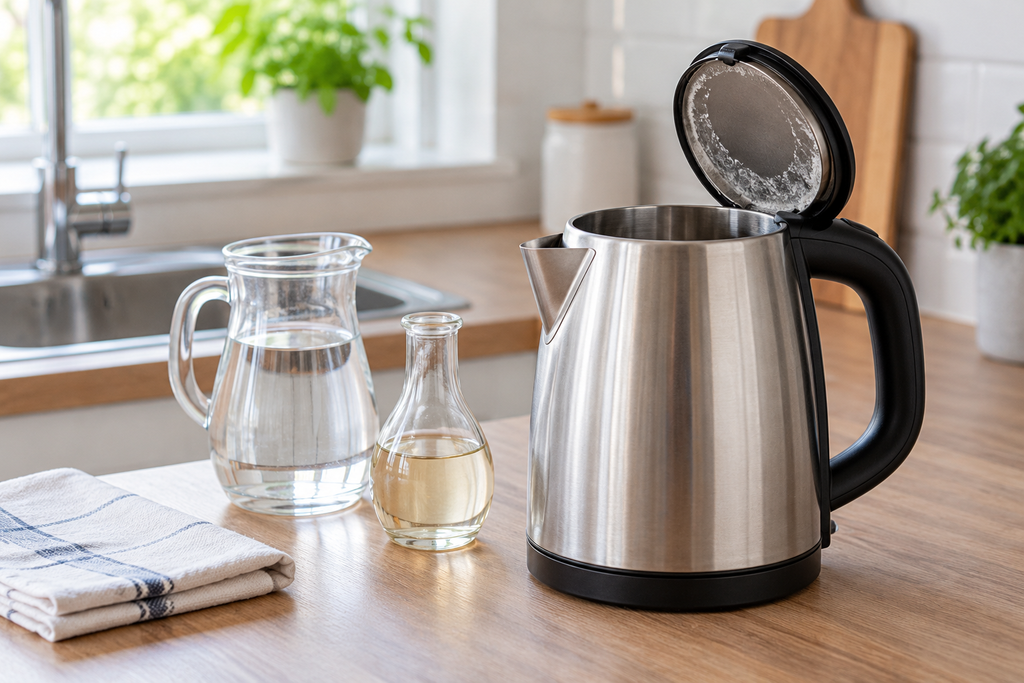
Here are the simple steps to follow to descale a kettle with equal parts solution:
- Prepare the cleaning solution: Fill the kettle halfway to three-quarters full using equal parts white vinegar and tap water. Ensure the liquid covers all visible limescale on the heating element and base.
- Boil and steep: Switch the kettle on and bring the mixture to a boil. Once boiled, turn the appliance off and leave it to soak for at least 30 to 45 minutes to let the acid break down the chalky build-up.
- Clean the filter and interior: Remove the anti-limescale spout filter and soak it in a small amount of neat white vinegar for 10 to 15 minutes. Use a damp cloth to gently wipe away any softened residue lingering inside.
- Rinse and boil clear: Empty the vinegar solution and thoroughly rinse the appliance with cold water. Fill it back up to the maximum line with fresh water, boil it, and discard the water. Repeat this boiling step once or twice to eliminate any lingering vinegar smell or aftertaste.
Baking Soda
Baking soda (bicarbonate of soda) is an excellent, odourless choice for gentle cleaning of the interior, lifting light surface marks and removing tea stains. However, because limescale is calcium carbonate that requires an acid to dissolve, alkaline bicarbonate of soda is not powerful enough to fully descale a kettle on its own. It works best for light maintenance or to deodorise the appliance after using vinegar.
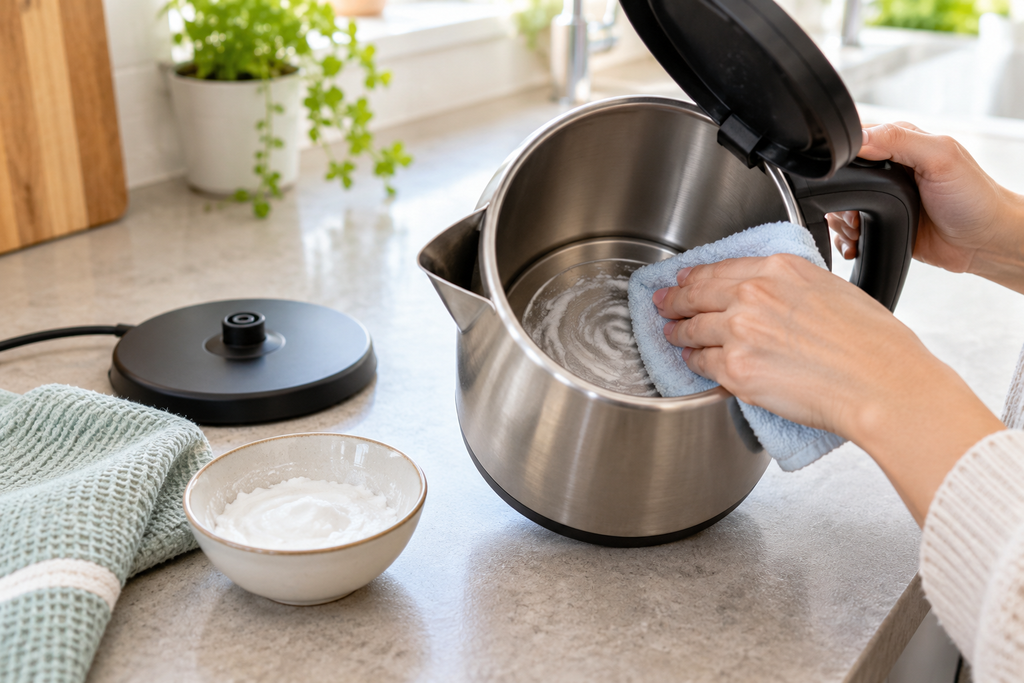
Follow these simple steps for a gentle interior clean:
- Mix the solution: Fill the kettle halfway to three-quarters full with fresh water and stir in one to two tablespoons of baking soda until dissolved.
- Boil and soak: Switch the kettle on and bring the water to a boil. Turn the appliance off and allow the mixture to sit for 20 to 30 minutes to help lift light residues.
- Tackle surface marks: For stubborn marks or light residue on the base, mix a small amount of baking soda with a few drops of water to create a paste, then gently rub the surface using a soft cloth or an old toothbrush.
- Rinse thoroughly: Discard the mixture, rinse the interior several times with clean tap water, and boil one final batch of fresh water before using the kettle as normal.
Citric Acid and Lemon
Citric acid powder offers concentrated cleaning power, making it the most potent option for tackling heavy limescale build-ups. Simply add one to two tablespoons to a half-filled kettle, boil, and leave it to dissolve stubborn mineral deposits completely odour-free in about 20 minutes.
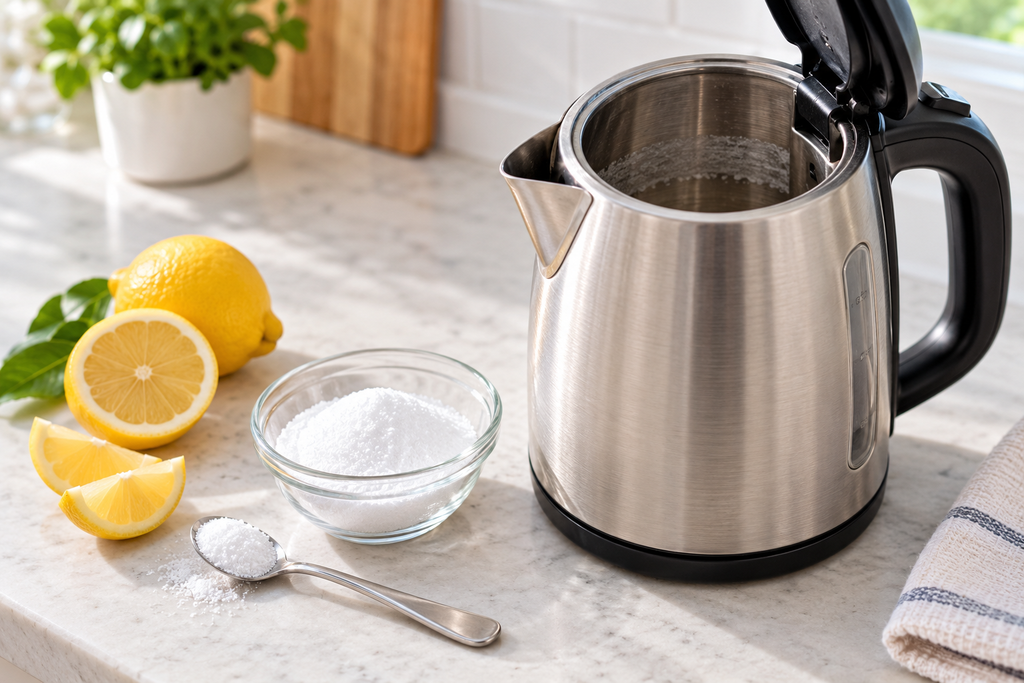
Fresh lemon juice provides a gentle, aromatic clean that leaves electric kettles smelling wonderfully fresh. Slicing a whole lemon or adding two tablespoons of juice into the water works brilliantly for light limescale and regular cleaning routines, avoiding food waste while keeping your appliance spotless.
| Feature | Citric Acid Powder | Lemon / Lemon Juice |
|---|---|---|
| Best For | Heavy, stubborn limescale build-ups | Light maintenance and routine cleaning |
| Scent | Completely odourless | Fresh citrus aroma |
| Speed | Fast-acting; dissolves deposits rapidly | Requires longer soaking for tough scale |
| Eco Benefit | Readily biodegradable mineral descaler | Natural waste reducer using leftover fruit |
Both options deliver impressive results without harsh chemicals, so choose the method that best matches your kettle’s level of limescale.
How often should you descale your kettle? UK water hardness by city
Regular descaling helps your kettle boil faster, use less energy, and prevent unsightly mineral flakes from spoiling your hot drinks. Because water hardness varies significantly across the country depending on regional geology, the rate of mineral build-up inside your appliance depends on where you live.
Water companies classify hardness into descriptive bands. In hard water areas, mineral deposits build up quickly on the element, whereas soft water regions see far slower accumulation. However, leading appliance manufacturer Russell Hobbs recommends descaling your kettle at least once a month, even in soft water areas, and more frequently if you boil it more than five times a day. Always check your kettle’s manual for specific manufacturer guidance.
The table below outlines typical water hardness bands across major UK cities based on information published by regional water suppliers. Check your postcode directly on your local supplier’s website for exact figures in your immediate area.
| City | Water Hardness Band | Water Supplier Reference |
|---|---|---|
| London | Hard | Thames Water states that all drinking water supplied across its region is naturally hard |
| Hull | Hard | Yorkshire Water notes supplies are naturally harder towards eastern areas such as Hull |
| Bristol | Moderately Hard to Very Hard | Bristol Water regional classification |
| Birmingham | Soft | Severn Trent notes Birmingham is supplied with soft water from the Elan Valley reservoirs |
| Manchester | Soft to Very Soft | United Utilities reports that most tap water in the North West is soft or very soft |
| Glasgow | Soft to Moderately Soft | Scottish Water (2024 water quality data report) |
Descale at least once a month, even in soft water areas, and check your kettle’s manual. Maintaining a regular cleaning schedule keeps the heating element clear, maintains energy efficiency, and ensures every hot drink tastes fresh.
FAQ
How to descale an electric kettle?
Fill it halfway with equal parts water and white vinegar or lemon juice, bring it to the boil, allow it to soak for 30 minutes, then empty and boil fresh water twice to rinse away any residue.
Is limescale bad for you?
No. According to Thames Water, the minerals in hard water aren’t harmful, but descaling keeps your kettle working well and stops flakes ending up in your drink.
How to descale a kettle with descaler tablets?
Fill the appliance with water to cover the limescale, drop in the manufacturer’s recommended number of tablets to dissolve, bring the solution to the boil, and let it soak before thoroughly rinsing and boiling fresh water to remove any chemical residue.