Summarise this article with:
 ChatGPT
 Mistral
 Claude
 Perplexity
 Grok
Grok
Confused by all the different vinegar labels at the shops? You’re not alone in wondering whether distilled vinegar and white vinegar are actually the same thing. We’re here to clear up the confusion once and for all. The simple truth is that these terms refer to the same clear, versatile liquid that’s brilliant for both cleaning your home and cooking your favourite dishes.
The short answer: they’re the same thing
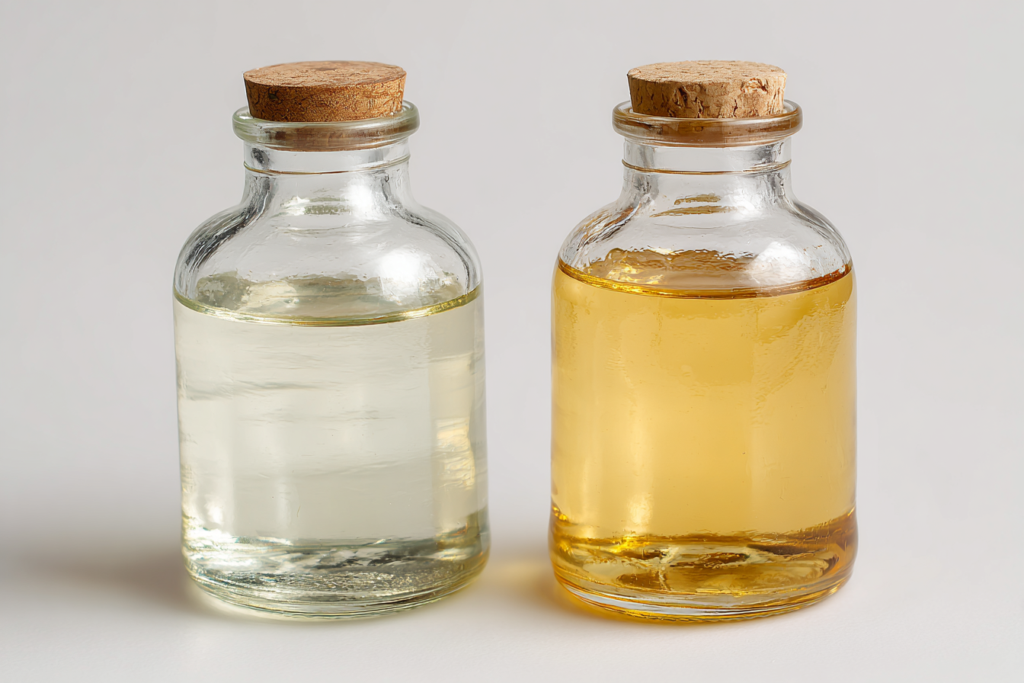
White vinegar and distilled vinegar are exactly the same product. Whether the label says “distilled white vinegar,” “white vinegar,” or “spirit vinegar,” you’re looking at an identical solution of roughly 5% acetic acid mixed with water.
The confusion comes from different naming conventions. “White” simply describes its clear, colourless appearance, whilst “distilled” refers to the manufacturing process using grain alcohol. Both terms describe the same food-grade vinegar that’s perfect for your cleaning tasks and culinary adventures.
Key facts about white/distilled vinegar:
- Contains 5% acetic acid (same concentration regardless of name)
- Made from fermented grain alcohol
- Neutral flavour makes it brilliant for cooking and cleaning
- Safe for both kitchen and household use
Don’t let the different labels fool you – grab whichever bottle is cheapest at the store!
How white and distilled vinegar are made
Both white and distilled vinegar start their journey as grain alcohol – think of it like vodka made from corn, wheat, or other grains. The magic happens when manufacturers introduce acetobacter bacteria to this alcohol solution, which has been diluted to around 10% strength.
These helpful bacteria feast on the alcohol and transform it into acetic acid through fermentation. The process typically takes just 1-2 weeks in commercial settings, where the mixture circulates through special equipment to speed things up.
Once fermentation is complete, the vinegar is diluted with water to achieve that standard 5% acetic acid concentration you’ll find in every bottle. The result? That sharp, sour taste perfect for culinary use and cleaning tasks alike.
Cleaning vs cooking: which vinegar for what?
White vinegar for cleaning tasks
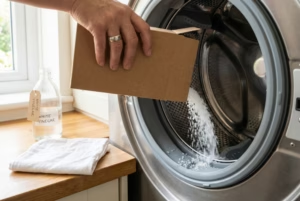
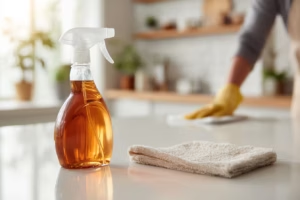
White vinegar for cleaning transforms into your home’s best mate when it comes to tackling everyday mess. Mix equal parts vinegar with water in a spray bottle for an all-purpose cleaner that works brilliantly on kitchen countertops, bathroom surfaces, and glass.
Top cleaning wins with white vinegar:
- Coffee makers: Run a cycle with equal parts vinegar and water to remove mineral buildup
- Limescale removal: Soak showerheads or taps for natural descaling power
- Deodorising: Leave a bowl out overnight to absorb stubborn odours naturally
- Stainless steel: Wipe down appliances for a streak-free shine
The high acidity cuts through grease and grime without harsh chemicals. Add a splash of baking soda for extra scrubbing power on tough stains.
Distilled vinegar for cooking and food prep
Your kitchen cupboard’s unsung hero works wonders beyond basic cleaning. Distilled vinegar brings sharp acidity that brightens flavours without competing tastes – perfect when you want clean, crisp results.
Essential cooking applications:
- Pickling vegetables: The neutral flavour preserves your ingredients’ natural taste whilst keeping them fresh for months
- Salad dressing: Mix with olive oil for a classic vinaigrette that won’t overpower delicate greens
- Meat marinades: The acid naturally tenderises tough cuts, breaking down proteins for juicier results
- Baking boost: Add a teaspoon to cake batter for extra lift when combined with baking soda
Malt vinegar makes a good substitute for fish and chips, but stick with distilled for preserving and delicate dishes. The 5% acidity gives you consistent results every time, whether you’re poaching eggs or creating homemade pickles that’ll make your neighbours jealous.
When you can swap between the two
Here’s the brilliant news: you can use white and distilled vinegar completely interchangeably for any task. Whether your bottle says “white vinegar” or “distilled vinegar,” you’ve got the same 5% acetic acid concentration working for you.
Perfect swapping scenarios:
- Emergency cleaning: Run out of your usual bottle? Grab either one from the cupboard
- Recipe flexibility: Any dish calling for white vinegar works beautifully with distilled (and vice versa)
- Bulk buying: Stock up on whichever option offers better value at your local shops
The only time you shouldn’t swap? When you’ve accidentally picked up cleaning vinegar instead – that stronger 6% acidity isn’t food-safe. Otherwise, swap away with complete confidence!
Is malt vinegar the same as white vinegar?
No, malt vinegar and white vinegar are completely different products, despite both being vinegars. Malt vinegar comes from fermented barley that’s first brewed into beer, giving it a distinctive golden-brown colour and complex, nutty flavour.
White vinegar, on the other hand, starts from grain alcohol and delivers a sharp, clean taste with no colour. The key differences show up in both cooking and cleaning:
| Aspect | Malt Vinegar | White Vinegar |
|---|---|---|
| Flavour | Sweet, complex, nutty | Sharp, acidic, neutral |
| Colour | Golden-brown | Clear |
| Best for | Fish and chips, robust dishes | Pickling, baking |
| Acidity | Milder, less aggressive | More acidic, stronger |
Malt vinegar shines with hearty foods but can overwhelm delicate recipes. For versatile home cleaning and precise cooking results, white vinegar wins every time.
Frequently Asked Questions
Is white vinegar the same as distilled white vinegar?
+Yes. White vinegar and distilled white vinegar are the same product, containing 5% acetic acid in water. The terms simply describe its clear colour and purification process, and they can be used interchangeably for cooking and cleaning.
Is spirit vinegar the same as white vinegar?
+Yes. Spirit vinegar is simply the UK term for white vinegar. Both are made from fermented grain alcohol and contain the same acetic acid concentration.
Is white vinegar the same as white wine vinegar?
+No. White vinegar is made from fermented grain alcohol and has a sharp, neutral acidity, while white wine vinegar comes from fermented wine and has a milder, more complex flavour. They are not interchangeable, especially in recipes.
Is all white vinegar distilled?
+Yes. All commercially sold white vinegar is distilled during production, ensuring its clear appearance and consistent 5% acetic acid content, regardless of how it is labelled.
Can I use white vinegar for both cleaning and cooking?
+Yes. Regular white vinegar can be used for cooking, salad dressing, pickling, and cleaning. However, never use products labelled as cleaning vinegar for food, as they are more acidic and may contain additives.
What’s the difference between cleaning vinegar and regular white vinegar?
+Cleaning vinegar contains around 6% acetic acid compared to 5% in standard white vinegar, making it stronger for tackling grease, limescale, and tough stains. It is intended for household use only and not for consumption.