Summarise this article with:
 ChatGPT
 Mistral
 Claude
 Perplexity
 Grok
Grok
Spotted those fuzzy dark patches creeping up your walls? Don’t panic! Your kitchen cupboard already holds a powerful weapon against mould: white vinegar. This budget-friendly hero tackles up to 82% of mould species without harsh chemicals, keeping your family safe.
This comprehensive guide will show you exactly how to use white vinegar on every surface—from bathroom walls to fabrics and wooden furniture. Ready to show that mould who’s boss? Let’s dive in!
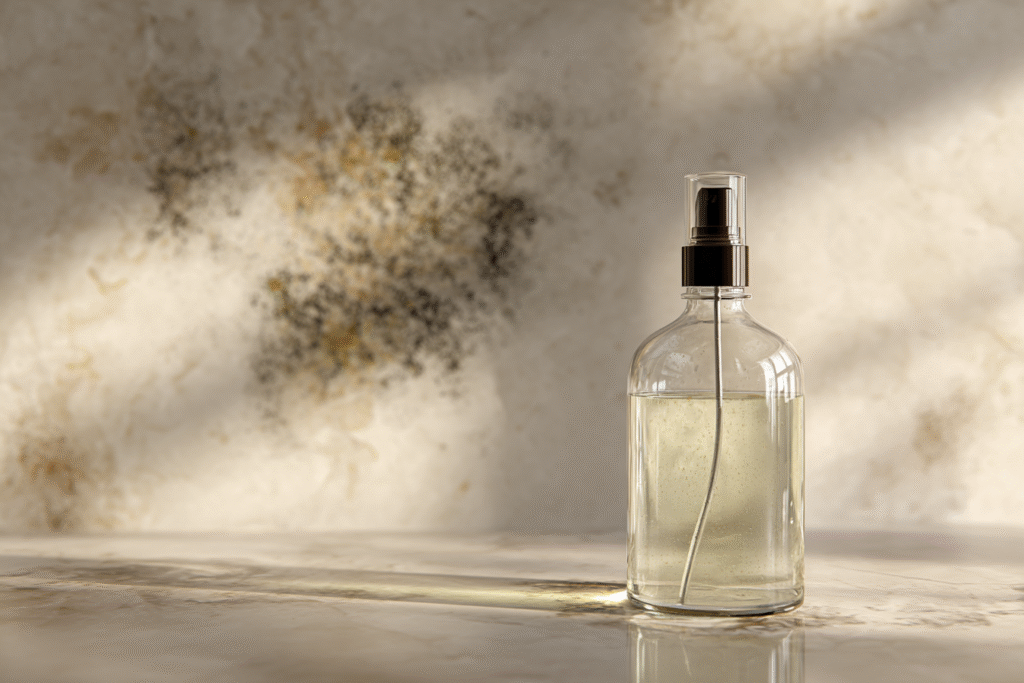
What is Mould and Why Does It Love Your Home?
Mould might seem like an uninvited guest that appears out of nowhere, but these microscopic fungi have actually been waiting for the perfect house party conditions. When mould spores find the right combination of moisture, warmth, and food sources, they multiply faster than you can say “damp patch.”
The UK’s climate is basically mould’s best friend. With our high humidity levels and frequent rain, our homes provide the perfect breeding ground. Poor ventilation makes it worse by trapping all that lovely moisture indoors.
What makes mould feel right at home?
- Moisture sources: Leaky pipes, condensation, drying laundry indoors, even breathing and cooking
- Ideal temperatures: Most moulds thrive between 15-30°C – exactly the temperature range we keep our homes
- Organic food sources: Wood, paper, fabric, dust, and even the oils from your skin
But mould isn’t just unsightly – it can be harmful to your health. Exposure to mould spores can trigger allergic reactions, respiratory issues, and even chronic fatigue. The good news? We’ll be there for you, like we’ve been there before!
Why Choose White Vinegar for Mould Removal?
White vinegar is your trusty sidekick in the battle against mould. With a pH of around 2.5, this kitchen staple creates an environment that mould absolutely hates. The science is simple—vinegar’s 5% acetic acid penetrates porous surfaces to kill mould at its roots, eliminating up to 82% of common household mould species.
Unlike harsh alternatives, vinegar works deeper and safer. It’s the environmentally friendly option that’s already sitting in your cupboard, ready to tackle multiple surfaces from bathroom tiles to wooden furniture.
| Comparison | Vinegar | Bleach | Baking Soda |
|---|---|---|---|
| Kills roots? | Yes | No (surface only) | Partially |
| Fumes? | Mild | Toxic | None |
| Cost | Low | Low | Very low |
Feeling a bit meh about your mould situation? Grab that bottle of vinegar and show those fuzzy patches who’s boss—it’s easy, peasy, lemon squeezy!
Does Bleach Kill Mould? White Vinegar vs Other Methods
Bleach myths busted
Bleach isn’t the mould-killing superhero many think it is. While it can make mould disappear visually by bleaching away the colour, it often fails to kill the root structures on porous surfaces. The mould simply comes back for an encore performance, sometimes within days!
Natural mould remover combos
White vinegar is your bestie in the battle against fuzzy invaders. With its 5% acetic acid content, it penetrates deeper into surfaces and actually kills mould by breaking down their cell walls. For extra mould-busting power, try these winning combinations:
- Vinegar + baking soda: Use vinegar to kill the mould, then follow with baking soda to absorb odours and provide gentle scrubbing action
- Tea tree oil solution: Mix 2 teaspoons of tea tree oil with 2 cups of water for a powerful natural fungicide
- Hydrogen peroxide: A 50/50 solution with water works brilliantly on non-porous surfaces while helping to remove stains
When choosing white vinegar, opt for distilled white vinegar with at least 5% acidity – cleaning vinegar with 6% is even better!
Essential Equipment and Safety First
Ready to tackle that mould? Here’s your safety checklist before you dive in:
- Protective gloves – nitrile or rubber work best to protect your skin
- Eye protection – essential when working with vinegar to prevent irritating splashes
- Mask – prevents inhalation of mould spores during the cleaning process
- Spray bottle – make sure it’s clean and hasn’t contained other chemicals
- Soft brush – an old toothbrush works perfectly for detailed scrubbing
- Proper ventilation – open windows and doors to create good air circulation
Remember to have a bin bag ready for disposing of contaminated materials. Wearing proper eye protection isn’t just a suggestion—it’s a must for keeping those peepers safe while you show that mould who’s boss!
Step-by-Step Mould Cleanup Guide: White Vinegar Spray Method
Prep & Ventilation
- Assess the situation: DIY is perfect for patches under one square metre; anything larger may need professional help
- Gear up for safety: Don protective gloves, eye protection, and a mask before starting
- Clear the area: Remove nearby items that could get contaminated, and fill a clean spray bottle with undiluted white vinegar
Spray, Wait, Scrub
- Saturate thoroughly: Spray undiluted white vinegar generously on the mouldy area and about 10cm beyond what’s visible
- Be patient: Allow the vinegar to sit for at least 15 minutes for light mould or up to an hour for stubborn patches. (Wondering “can I leave vinegar on mould overnight?” For extreme cases, you can, but it’s rarely necessary)
- Scrub gently: Using a soft brush, work in circular motions without aggressive scrubbing, especially on delicate surfaces
- For stubborn spots: Make a quick paste with baking soda and water, apply it after the vinegar treatment, and scrub lightly
Finishing Touches
- Wipe clean: Use a damp cloth to remove all loosened mould and vinegar residue
- Dry thoroughly: Ensure the area is completely dry using fans or open windows—moisture is mould’s best friend
- Monitor the area: Keep an eye on treated spots over the next few weeks. Quick regrowth suggests an underlying moisture problem
Targeted Mould Removal: Fabric, Wood & Black Mould in Bathrooms
Fabric & clothes mould removal
Found your favourite jumper looking a bit fuzzy with unwanted guests? Mould can be heartbreaking on fabrics, but white vinegar comes to the rescue:
- Machine-washable fabrics: Brush off loose spores outdoors, dab undiluted vinegar on affected areas for 30 minutes, then wash in the hottest water safe for the fabric with two cups of vinegar
- Delicates: Mix equal parts water and white vinegar, mist lightly, let sit for an hour, then gently dab clean
- Upholstery: Test on hidden areas first, apply sparingly with a soft brush, and use a fan to dry quickly
Avoid using vinegar on silk and leather – these sensitive materials need professional cleaning instead.
Black mould in bathroom corners
Shower curtain giving you horror-movie vibes? Bathrooms are mould’s favourite playground thanks to all that lovely moisture:
- Shower curtains: Soak in equal parts water and white vinegar for an hour, then machine wash with extra vinegar
- Tiles and grout: Apply undiluted vinegar, wait 30 minutes, then scrub grout lines with an old toothbrush
- Hidden areas: Don’t forget ceiling corners, window frames, and behind the toilet – these sneaky spots love to harbour mould
Always wear a proper respirator mask when dealing with black mould, as it can be particularly harmful to health.
Cleaning mouldy wood furniture
Wooden treasures require a gentle approach – vinegar can damage some finishes if you’re not careful:
- Painted/sealed wood: Test first, then apply undiluted vinegar with a cloth (not spray), working in the direction of the grain
- Raw wood: The mould roots penetrate deeper, so you might need to lightly sand after vinegar treatment
- Antique pieces: Always test on an inconspicuous area first and consider professional help for valuable items
Mould inside walls?
Spotted mould creeping from behind your skirting boards or wallpaper edges? This requires professional attention. DIY vinegar treatments can’t reach deep inside wall cavities where moisture problems often originate. Professional remediation services have specialized equipment to safely remove hidden mould and address underlying moisture issues.
Prevention: Keeping Mould Away for Good
| Problem | Quick Fix | Tool |
|---|---|---|
| High Humidity | Maintain 30-50% levels | Dehumidifier with auto-sensor |
| Water Leaks | Fix immediately (within 24-48 hours) | Sealant/professional plumber |
| Poor Airflow | Improve ventilation | Exhaust fans, open windows |
| Condensation | Reduce moisture sources | Wipe surfaces after showers/cooking |
Your mould-free maintenance checklist:
- Wipe bathroom tiles and shower screens after each use
- Run dehumidifier in problem areas, especially during damp weather
- Apply diluted vinegar spray (1:3 ratio) weekly in high-risk zones
- Conduct monthly inspections of common trouble spots (windows, corners, behind furniture)
Remember, consistent prevention is easier than dealing with unpleasant odours and health issues once mould takes hold. The key is controlling moisture before it becomes a breeding ground for those fuzzy invaders!
When to Call the Professionals
Sometimes DIY methods just won’t cut it. Call in professional help when:
- Large area coverage – If mould spans more than a few square metres, it indicates serious moisture problems requiring specialized equipment and expertise
- Recurring mould – When mould keeps returning despite your best efforts, there’s likely hidden leaks or structural issues that need professional diagnosis
- Health symptoms – If anyone in your household experiences persistent respiratory problems, allergic reactions, or other health issues related to mould exposure
FAQ – White Vinegar for Mould
How do you remove mould from walls with white vinegar?
+Spray undiluted white vinegar onto mouldy walls and leave for 30–60 minutes. Gently scrub with a soft brush (use an old toothbrush on textured areas), wipe with a damp cloth, and dry thoroughly to prevent regrowth.
How do you remove black mould with white vinegar?
+Apply undiluted white vinegar generously and leave for at least an hour. Wear proper PPE including a respirator mask. Repeat as needed. If black mould persists or the area is large, contact professionals.
How do you remove mould from fabric and clothes with white vinegar?
+Brush off loose spores outdoors. Pre-treat with undiluted vinegar for 30 minutes, then wash in the hottest water safe for the fabric with two cups of vinegar. For delicates, use a 1:1 water–vinegar mist and dab gently.
How effective is white vinegar at killing mould?
+White vinegar (≈5% acetic acid) can eliminate up to 82% of common household mould species. Unlike bleach (surface-only), vinegar penetrates porous materials to reach mould roots.
Do you dilute vinegar to kill mould?
+For active mould, use undiluted white vinegar. For prevention/maintenance, a 3:1 vinegar-to-water mix is fine; on delicate surfaces, use 1:1.
Where can you buy white vinegar for mould removal?
+It’s widely available in UK supermarkets and online. Choose distilled white vinegar with ≥5% acidity; “cleaning vinegar” at 6% offers extra strength.